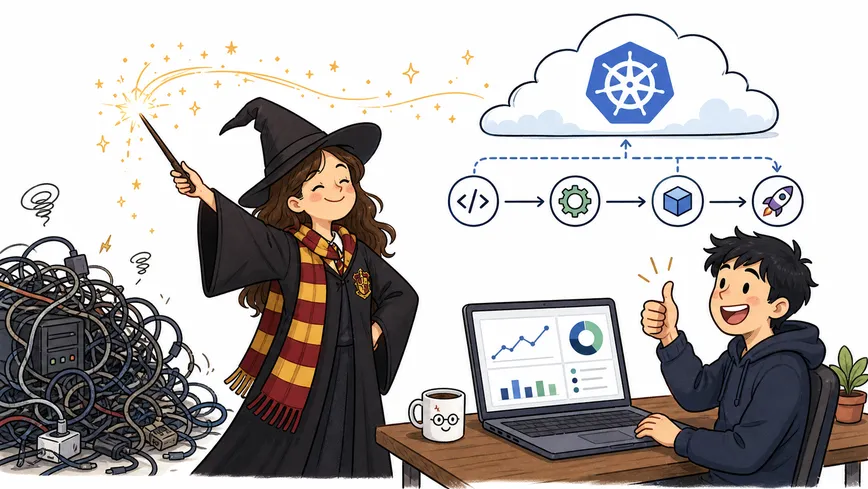
Platform engineering has gone through a quiet but radical transformation over the past decade — and most people only talk about where we are now, not how we got here or where we're heading.
This article traces the full arc: from the early days of shell scripts, Jenkins pipelines held together with prayers, and Chef cookbooks that only one person truly understood — through the Kubernetes revolution that promised developer freedom but delivered YAML overload and 3am on-call alerts — to today's modern platform teams who own living, breathing products with SLOs, roadmaps, and real users.
And then there's AI. It's no longer just a tool platform teams use — it's becoming a workload we run and a colleague we work alongside. AI-assisted incident response, auto-remediation, natural language interfaces to infrastructure, agents that write Terraform modules and open PRs. The shift is real, it's happening now, and it raises harder questions than most people are asking.
Why it matters:If you work in DevOps, SRE, or platform engineering, the role you have today looks nothing like it did five years ago — and it will look nothing like this in five more. Understanding that arc isn't just interesting history; it's essential context for where you invest your skills and how you think about your career.
The takeaway:The engineers who thrive in the AI era won't be the ones who know the most YAML. They'll be the ones who think in systems, stay close to fundamentals, and build expertise that sits above the automation — not inside it.