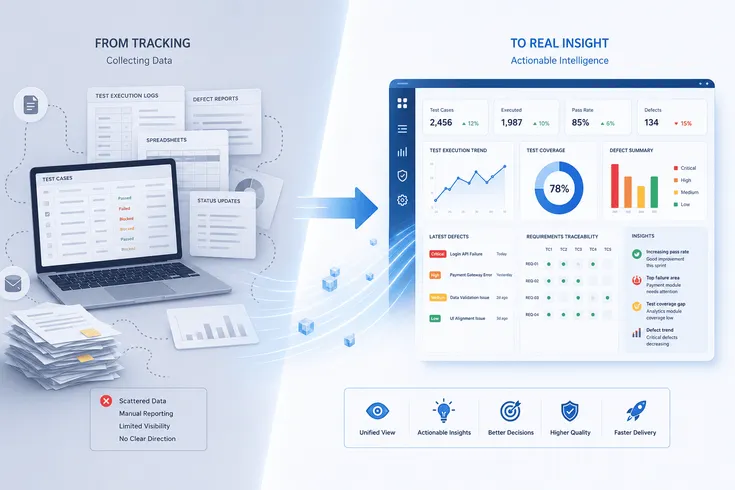
Every engineering team I have worked with has the same problem. They invested in test management tools. The implementation took weeks. The team got trained. Everyone was supposed to use it. And then, six months later, the tool was a graveyard. Test cases were out of date. Nobody was updating results. The tracking was worthless. The tool became overhead instead of help.
But here is what is interesting: the problem was never the test management tools. The problem was how teams were using them.
I have also worked with teams that got enormous value from their test management tools. Their test cases stayed current. Their tracking was accurate. They could see patterns in their testing. They could make decisions based on data. The difference was not the tool. The difference was the approach.
Test management tools are necessary. As systems grow more complex and testing becomes more sophisticated, you cannot track tests in spreadsheets or in your head. You need a system. The challenge is that test management tools only work if you use them right. Most teams do not. This article explores why test management tools often fail and more importantly, describes what actually works.
Why Test Management Tools Matter
Test management tools exist for a simple reason: testing produces information that needs to be organized and tracked. Which tests have we written? Which tests passed today? Which tests have been failing consistently? Which tests cover which features? Which bugs were caught by which tests?
Without test management tools, this information lives nowhere. It lives in developers' heads. It lives in emails. It lives in confluence documents that nobody updates. It lives in test results that scroll off the terminal and are forgotten. The information exists but is not accessible. Teams cannot see patterns. Teams cannot make decisions based on data. Teams just ship and hope.
Test management tools centralize this information. They create a single source of truth about testing. A test case management system holds all your tests. A test tracking system shows which tests ran today and what passed or failed. A test management platform brings these together with reporting and analytics.
The value is real. Teams using test management tools effectively can answer questions that teams without tools cannot answer. How much test coverage do we actually have? Which features have the least testing? Which tests are flaky? Which areas of the system are most brittle? Have we improved our testing over time?
These are not academic questions. The answers drive real decisions. A team that knows which features have the least testing can prioritize testing work. A team that knows which tests are flaky can investigate and fix them. A team that can see testing trends can tell whether their testing practice is improving or degrading.
This is why test management tools matter. They are not just tracking for the sake of tracking. They are infrastructure for making testing a data-driven practice.
The Challenge: Why Test Management Tools Fail
Despite their value, test management tools fail in most organizations. The statistics are depressing. A tool gets implemented with fanfare. A few months later, adoption is minimal. A year later, the tool is considered a failed investment. The organization either abandons it or pays for it and does not use it.
I have watched this happen enough times to see the patterns. The failures are not random. They follow predictable paths.
- The first failure mode is implementation without adoption. A tool gets selected. It gets set up. It gets configured. The team gets trained. And then nobody uses it. The training was generic. The tool was not configured for how the team actually works. The tool felt like overhead, not help. So people stopped using it.
- The second failure mode is garbage in, garbage out. The tool gets used for a while. Tests get logged. Results get tracked. But as time passes, the data gets stale. New tests are not always added to the system. Test case descriptions become outdated. Results stop being updated reliably. Eventually the tool contains old information that nobody trusts. The team stops looking at it.
- The third failure mode is too much process. Some organizations view test management tools as an opportunity to enforce testing discipline. So they add requirements. Every test case must include these fields. Every test run must be logged this way. Every result must be documented. The process becomes so burdensome that people find workarounds. They create tests outside the system. They log results in their own spreadsheets. The tool becomes an obstacle instead of a help.
- The fourth failure mode is wrong expectations. Organizations implement test management tools expecting the tool to magically improve testing. They expect that once tests are logged in the system, quality will improve. They expect that tracking test results will catch bugs. They expect that the tool will tell them which areas need more testing. The tool is just a system. It captures and organizes information. It does not think. If the thinking is not sound, the tool will not help.
The root cause of these failures is that test management tools are not autonomous solutions. They are infrastructure. Infrastructure only works if the organization is using it correctly. A test management tool without sound testing practices is just data entry. A test management tool with sound testing practices is invaluable. The difference is not the tool. The difference is the people and practices.
How Teams Are Making Test Management Tools Work
The teams that get value from test management tools do several things differently.
- First, they treat test management tools as part of their testing process, not as overhead on top of it. The question is not how much process can the tool enforce. The question is how can the tool make our existing testing process more visible and easier to manage. This mindset shift is critical. The tool should make work easier, not harder.
- Second, they use test management tools to track what actually matters. Not every detail. They focus on information that will drive decisions. Which features are tested. Which tests are flaky. Which tests consistently fail. Trends over time. They do not try to track every possible detail. They track enough to see patterns.
- Third, they keep the tool current. This requires discipline. When a test is written, it gets logged in the tool immediately. When a test changes, the tool gets updated immediately. When tests run, results get recorded. This is not optional. It is part of the process. Teams that let the data get stale find that nobody trusts the tool. Teams that keep the data current find that the tool is actually useful.
- Fourth, they integrate test management tools with their development workflow. The tool should not be separate from where developers work. If developers are working in GitHub, test information should be accessible from GitHub. If developers are working in Jira, test status should be visible in Jira. If developers are running tests locally, results should automatically sync to the tool. Integration reduces friction. Friction kills adoption.
- Fifth, they use test management tools as a source of insight, not just tracking. A test management platform should show trends. It should show which areas of the system are most tested and which are neglected. It should show whether testing is improving or degrading. It should show which tests are most valuable and which are not catching bugs. Teams that look at this data and act on it get value. Teams that just collect data without looking at it get nothing.
- Sixth, they choose test management tools that fit their organization. Some organizations need comprehensive open source test management tools. Some organizations need specialized paid platforms. Some organizations do well with minimal systems. The point is intentional choice, not default choice. A tool that fits your workflow is better than a tool that is popular.
What Actually Works: Real Practices
I worked with a team that struggled with their test management tools for over a year. They had implemented one of the open source test management tools because the cost was right. But adoption was terrible. Test cases were not being updated. Results were not being tracked. The tool was a failed investment.
The turning point came when they asked a different question. Instead of asking how to make everyone use the tool, they asked what problem the tool should actually solve. The answer was: we need to know which tests are reliable and which are flaky. We need to know what we have tested and what we have not. We need to know whether our testing is getting better or worse.
So they stripped down their test management tool use. They stopped tracking every field. They focused on three things: test name, what it tests, and whether it passed last week. That was it. They created a simple dashboard showing flaky tests. They created another showing test coverage by feature. They created another showing trends over time.
Suddenly people started using the tool. Why? Because the tool was giving them information they actually needed. It was not overhead. It was insight.
Another team I worked with solved the integration problem. They were using an open source test management solution but it was disconnected from their development workflow. Tests lived in the test management system. Code lived in GitHub. Issues lived in Jira. Developers had to jump between systems. So the team built a simple integration. When a test failed consistently, a Jira issue was automatically created. When a test was marked as covering a feature, that was visible in the feature tracking. When someone looked at a failing test, they could jump directly to the code. The tool became part of the workflow instead of separate from it.
A third team I worked with solved the staleness problem differently. They realized that test information only stays current if it is automatically updated. Manually updating test cases is a chore that nobody does consistently. So they started capturing what tests actually do by recording real test execution. They would run tests in staging. They would record which assertions passed and failed. They would capture the exact behavior. Then they would use that recorded behavior as the source of truth in their test management system.
This approach changed everything. The test management system stayed synchronized with reality. When test behavior changed, the system knew. When someone looked at a test case, they saw what the test actually did, not what someone thought it did six months ago. The gap between what tests were supposed to do and what they actually did disappeared.
The Role of Observability in Test Management
One insight that emerged from talking with teams using test management tools effectively is that test management becomes much more powerful when it is combined with observability. Test management tools track what tests you have and which passed or failed. Observability shows what the system actually did when the test ran.
When you combine them, something interesting happens. A test passes in your test management tool. But you can see from observability data that the system took a path through the code that was unexpected. A test fails in the tool. But observability shows you the exact sequence of events that led to the failure. A test is marked as covering a feature. Observability shows you whether that feature actually behaved as expected.
Some teams are now building test management practices around this. They record what systems actually do. They feed that into their test management tools. The tests in the management system are not predictions about behavior. They are documentation of actual behavior. The system then validates that behavior continues to happen. When behavior changes, the test management system knows immediately.
This is a significant evolution in how test management works. The tool is no longer just tracking. It is tracking actual system behavior.
Choosing the Right Test Management Tools
With so many test management tools available, how do you choose? The market includes everything from comprehensive open source test management tools to specialized paid platforms to simple lightweight solutions.
The answer depends on what you are trying to accomplish. If you are trying to solve the tracking problem, an open source test management tool might be sufficient. If you are trying to drive testing insights across a large organization, a paid platform with analytics might be worth the investment. If you are trying to keep things simple, a lightweight solution might be perfect.
The key is honest assessment of what you need. Do not choose a tool because it is popular. Do not choose a tool because it is free. Do not choose a tool because it has the most features. Choose a tool that solves your specific problem, fits your workflow, and you will actually use.
Moving Forward
Test management tools are not going away. As testing becomes more sophisticated and systems become more complex, the need for centralized test tracking only increases. The question is not whether to use test management tools. The question is how to use them effectively.
The teams getting the most value are the ones that treat test management tools as infrastructure for making testing visible and data-driven. They keep the data current. They use the tool to drive decisions. They integrate it with their workflow. They focus on what matters. They evolve their practices as they learn.
The future of test management tools is moving toward intelligence. Tools that automatically track testing. Tools that surface insights without requiring people to read dashboards. Tools that integrate observability data to show what tests actually validated. Tools that connect testing to quality outcomes.
But the foundation is always the same. Test management tools work when they are used as part of a sound testing practice, not as a replacement for one.
Conclusion
Test management tools have tremendous value. They bring visibility to testing. They enable data-driven decisions. They help teams understand whether their testing is improving. But they only work if they are used right.
The teams that struggle with test management tools usually struggle because they are trying to use the tools wrong. They are treating tools as solutions instead of infrastructure. They are over-engineering process. They are not integrating tools with their workflow. They are letting data get stale.
The teams that get value treat test management tools as infrastructure that makes testing visible. They keep data current. They use it to drive decisions. They choose tools that fit their needs. They focus on what matters.
If your test management tools are not working, the solution is usually not to change tools. The solution is to change how you are using them. Start with the information that matters. Keep it current. Integrate it with your workflow. Make decisions based on what you see.
Test management tools can be invaluable. But only if you use them right.