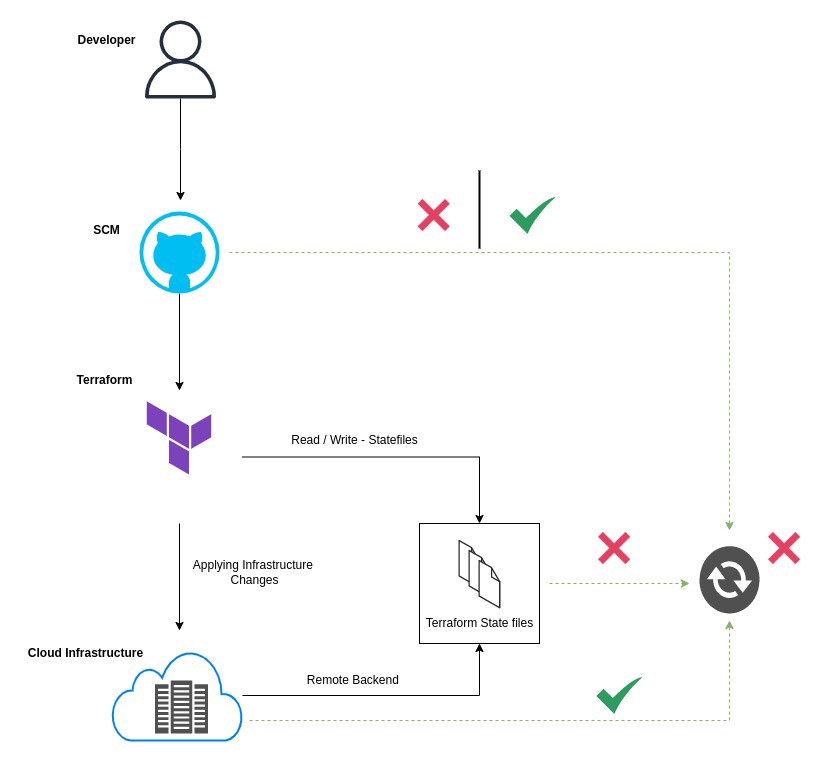
Here, the result will be out of sync, and some level of manual intervention is required to make everything in sync together. You could leverage these fixes using terraform import and the state management by going through the below concept:
The primary purpose of Terraform state is to store bindings between objects in a remote system and resource instances declared in your configuration. When Terraform creates a remote object in response to a change of configuration, it will record the identity of that remote object against a particular resource instance, and then potentially update or delete that object in response to future configuration changes.
Okay, that’s all the theory part — Following are the tool sets that we are using for the sake of quick demonstration, these could be leveraged to specific versions according to your use cases which doesn’t matter whether the state file is configured as local/remote back-end.