Join us

ContentUpdates from The Open Source Security Foundation (OpenSSF) is a...
Link
@atmosly0 shared a link, 6ย months ago
Owner, Atmosly

AI-Powered DevOps Automation for Kubernetes and Cloud DevOps

Discover how Atmosly simplifies Kubernetes operations with advanced DevOps automation, CI/CD tools, and Terraform services for multi-cloud environments.
Atmosly
Story
@laura_garcia shared a post, 6ย months ago
Software Developer, RELIANOID

๐Ÿค– RELIANOID at AI Tech Summit 2025

Weโ€™re thrilled to join AI Tech Summit 2025 on October 1st in Skopje, North Macedonia โ€” a hub for innovation, collaboration, and the latest AI insights. This summit brings together CIOs, CTOs, AI specialists, and tech visionaries to explore how AI can drive growth, create opportunities, and shape a r..

ai tech summit skopje 2025
Story
@laura_garcia shared a post, 6ย months ago
Software Developer, RELIANOID

๐Ÿš€ RELIANOID is heading to London!

Weโ€™re excited to be part of Civo Navigate London 2025 on September 30, 2025 โ€” the Sovereignty & AI Edition. This event brings together leaders shaping the future of cloud, AI, and compliance across Europe. Weโ€™ll showcase how RELIANOID enables secure, observable, and sovereignty-aligned application ..

civo navigate london event
Link
@anjali shared a link, 6ย months ago
Customer Marketing Manager, Last9

AWS Prometheus: Production Patterns That Help You Scale

Run Prometheus reliably on AWS with patterns for scale, cost control, and visibility across EKS, EC2, and multi-region setups.

Kibana logs
Link
@anjali shared a link, 6ย months ago
Customer Marketing Manager, Last9

How to Connect Jaeger with Your APM

Learn how to connect Jaeger with your APM to combine tracing and performance monitoring for deeper system visibility.

async_job_monitoring
Link
@anjali shared a link, 6ย months ago
Customer Marketing Manager, Last9

Key APM Metrics You Must Track

Understand key APM metrics like response time, error rates, throughput, and resource usage to keep your applications reliable and fast.

image
Story
@laura_garcia shared a post, 6ย months ago
Software Developer, RELIANOID

๐Ÿ”„ In case you missed it last monthโ€ฆ

๐Ÿ”’ Incident Response in 2025: Lessons Learned From food supply disruptions and airline data breaches to sector-wide attacks on insurers, Juneโ€“August 2025 highlighted how critical rapid and prepared responses are in cybersecurity. At the same time, advances like AI-powered detection and resilience fea..
Incident Response june, july, august 2025
Story
@laura_garcia shared a post, 6ย months ago
Software Developer, RELIANOID

โšก Windows Server Load Balancing Explained

Windows Serverโ€™s built-in Network Load Balancing (NLB) feature helps organizations distribute traffic, ensure redundancy, and keep mission-critical applications running without downtime. But while NLB is effective, modern workloads demand more. In our latest article, we cover: โœ”๏ธ What Windows Server..

Knowledge base Windows Server Load Balancing
Story
@laura_garcia shared a post, 6ย months, 1ย week ago
Software Developer, RELIANOID

DevOps Days Cairo is coming!

- RELIANOID at DevOpsDays Cairo 2025 On September 27th, DevOpsDays returns to Giza, Egypt, bringing its 8th edition with a strong focus on the intersection of AI ร— DevOps โ€” from MLOps and AIOps to infrastructure automation and AI-powered security. Weโ€™re excited to join this flagship DevOps event in ..

Link Xygeni Team
@mashka shared a link, 6ย months, 1ย week ago
Paid Acquisition and Growth Marketing, xygeni

Upcoming ๐–๐ž๐›๐ข๐ง๐š๐ซ: ๐€๐ˆ ๐€๐ฉ๐ฉ๐ฅ๐ข๐œ๐š๐ญ๐ข๐จ๐ง ๐’๐ž๐œ๐ฎ๐ซ๐ข๐ญ๐ฒ ๐€๐ฎ๐ญ๐จ๐ฆ๐š๐ญ๐ข๐จ๐ง!

Join Xygeni for a hands-on webinar exploring how AI can automate application security and streamline developer workflows. Learn how to move beyond noisy alerts and manual triage with intelligent, real-time remediation workflows that secure your CI/CD pipeline, without slowing developers down.

What you'll learn:

- How to auto-fix secrets, OSS vulnerabilities, and code flaws directly from alerts
- Ways to reduce false positives and focus on what really matters
- How to set up developer-friendly guardrails across your SDLC
- Practical steps to protect every commit and pull request

- and much more!
Date: October 8
Time: 17:00 CEST / 11:00 EDT
Platform: LinkedIn

The session includes live demos and real-world examples. Replay available for all registrants.

๐Ÿ‘‰ Register here: https://www.linkedin.com/events/7375842799042248704/

See you there!
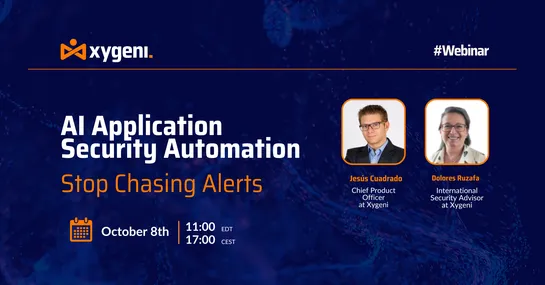
Webinar - ๐€๐ˆ ๐€๐ฉ๐ฉ๐ฅ๐ข๐œ๐š๐ญ๐ข๐จ๐ง ๐’๐ž๐œ๐ฎ๐ซ๐ข๐ญ๐ฒ ๐€๐ฎ๐ญ๐จ๐ฆ๐š๐ญ๐ข๐จ๐ง
The Open Source Security Foundation (OpenSSF) is an industry-backed foundation focused on strengthening the security of the global open source software ecosystem. It brings together major technology companies, cloud providers, open source communities, and security experts to address systemic security challenges that affect how software is built, distributed, and consumed.

OpenSSF was launched in 2021 and operates under the Linux Foundation, combining efforts from earlier initiatives such as the Core Infrastructure Initiative (CII) and industry-led supply chain security programs. Its mission is to make open source software more trustworthy, resilient, and secure by default, without placing unrealistic burdens on maintainers.

The foundation works across several key areas:

- Supply chain security: Developing frameworks, best practices, and tools to secure the software lifecycle from source to deployment. This includes stewardship of projects like sigstore and leadership on SLSA (Supply-chain Levels for Software Artifacts).

- Security tooling: Supporting and incubating open source tools that help developers detect, prevent, and remediate vulnerabilities at scale.

- Vulnerability management: Improving how vulnerabilities are discovered, disclosed, scored, and fixed across open source projects.

- Education and best practices: Publishing guidance, training, and maturity models such as the OpenSSF Best Practices Badge Program, which helps projects assess and improve their security posture.

- Metrics and research: Advancing data-driven approaches to understanding open source security risks and ecosystem health.

OpenSSF operates through working groups and special interest groups (SIGs) that focus on specific problem areas like securing builds, improving dependency management, or automating provenance generation. This structure allows practitioners to collaborate on concrete, actionable solutions rather than high-level policy alone.

By aligning maintainers, enterprises, and security teams, OpenSSF plays a central role in reducing large-scale risks such as dependency confusion, compromised build systems, and malicious package injection. Its work underpins many modern DevSecOps and cloud-native security practices and is increasingly referenced by governments and enterprises as a baseline for secure software development.