Join us

ContentUpdates from The Open Source Security Foundation (OpenSSF) is a...
Link
@faun shared a link, 5 months, 1 week ago
FAUN.dev()

OpenAI Agent Builder: A Complete Guide to Building AI Workflows Without Code

OpenAI’sAgent Builderdrops the guardrails. It’s a no-code, drag-and-drop playground for building, testing, and shipping AI workflows - logic flows straight from your brain to the screen. Tweak interfaces inWidget Studio. Plug into real systems with theAgents SDK. Just one catch: it’s locked behind P.. read more  

Link
@faun shared a link, 5 months, 1 week ago
FAUN.dev()

Write Deep Learning Code Locally and Run on GPUs Instantly

Modal cuts the drama out of deep learning ops. Devs write Python like usual, then fire off training, eval, and serving scripts to serverless GPUs - zero cluster wrangling. It handles data blobs, image builds, and orchestration. You focus on tuning with libraries like Unsloth, or serving via vLLM... read more  

Write Deep Learning Code Locally and Run on GPUs Instantly
Link
@faun shared a link, 5 months, 1 week ago
FAUN.dev()

Technical Tuesday: 10 best practices for building reliable AI agents in 2025

UiPath just droppedAgent Builder in Studio- a legit development environment for AI agents that can actually handle enterprise chaos. Think production-grade: modular builds, traceable steps, and failure handling that doesn’t flake under pressure. It’s wired forschema-driven prompts,tool versioning, a.. read more  

Link
@faun shared a link, 5 months, 1 week ago
FAUN.dev()

The RAG Obituary: Killed by Agents, Buried by Context Windows

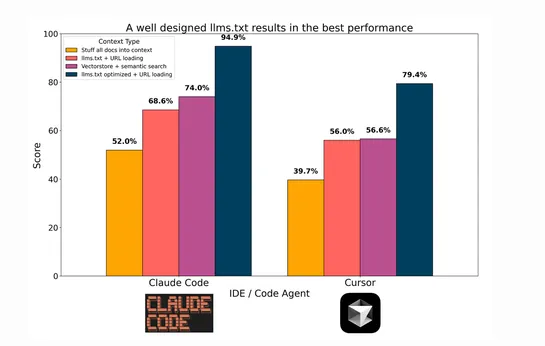
Agent-based setups are starting to edge out old-school RAG. As LLMs snag multi-million-token context windows and better task chops, the need for chunking, embeddings, and reranking starts to fade. Claude Code, for example, skips all that - with direct file access and smart navigation instead. Retrie.. read more  

The RAG Obituary: Killed by Agents, Buried by Context Windows
Link
@faun shared a link, 5 months, 1 week ago
FAUN.dev()

Serverless RL: Faster, Cheaper and More Flexible RL Training

New product, Serverless RL, available through collaboration between CoreWeave, Weights & Biases, and OpenPipe. Offers fast training, lower costs, and simple model deployment. Saves time with no infra setup, faster feedback loops, and easier entry into RL training... read more  

Link
@faun shared a link, 5 months, 1 week ago
FAUN.dev()

Seven Years of Firecracker

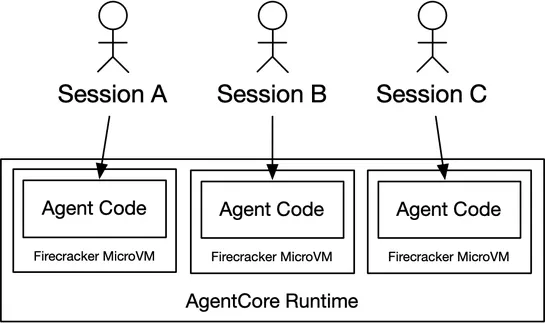
AWS is puttingFirecracker microVMsto work in two fresh stacks:AgentCore, the new base layer for AI agents, andAurora DSQL, a serverless, PostgreSQL-compatible database it just rolled out. AgentCore gives each agent session its own microVM. More isolation, less cross-talk - solid for multistep LLM wo.. read more  

Seven Years of Firecracker
Link
@faun shared a link, 5 months, 1 week ago
FAUN.dev()

How LogSeam Searches 500 Million Logs per second

LogSeam rips through500M log searches/secand pushes1.5+ TB/s throughputusing Tigris’ geo-distributed object storage. It slashes log volume by 100× with Parquet + Zstandard compression. Then it spins up compute on the fly, right where the data lives—no long-running infrastructure, no laggy reads... read more  

How LogSeam Searches 500 Million Logs per second
Link
@faun shared a link, 5 months, 1 week ago
FAUN.dev()

Automated GitHub Self-Hosted Runner Cleanup: Lambda Functions and Auto Scaling Lifecycle Hooks

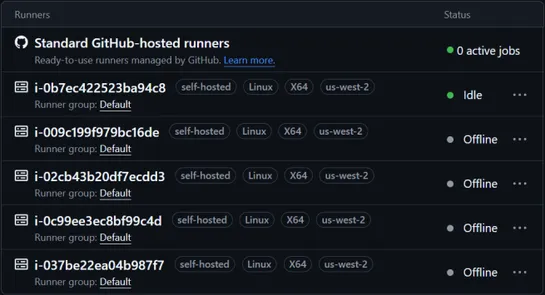
When an EC2 instance in an Auto Scaling Group shuts down, event-driven plumbing kicks in. Alifecycle hookcatches the scale-in, fires off an SNS notification, and triggers aLambda. That Lambda calls the GitHub API to yank the self-hosted runner before the instance dies. No dangling runners. No manual.. read more  

Automated GitHub Self-Hosted Runner Cleanup: Lambda Functions and Auto Scaling Lifecycle Hooks
Link
@faun shared a link, 5 months, 1 week ago
FAUN.dev()

How AWS S3 serves 1 petabyte per second on top of slow HDDs

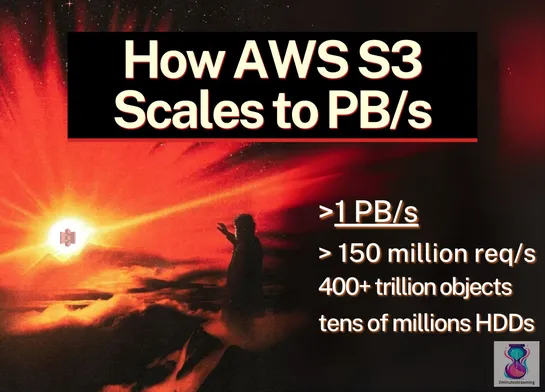
AWS S3 doesn’t need fancy hardware. It wrings performance out ofcheap HDDs,log-structured merge trees, anderasure coding. The trick? Shard everything. Hit it in parallel. Randomized placementdodges hotspots.Hedged requestsrace the slowest links. And when things get lopsided, S3 rebalances - constant.. read more  

How AWS S3 serves 1 petabyte per second on top of slow HDDs
Link
@faun shared a link, 5 months, 1 week ago
FAUN.dev()

Ansible Service Module: Start, Stop, & Manage Services

The Ansibleservicemodulehandles LinuxandWindows without choking on init system quirks. One playbook can start, stop, enable, or restart anything - no matter the OS. Idempotent, so you don’t have to babysit state. Clean and repeatable. Bonus: it’s great for wrangling fleets. Think: coordinating servi.. read more  

The Open Source Security Foundation (OpenSSF) is an industry-backed foundation focused on strengthening the security of the global open source software ecosystem. It brings together major technology companies, cloud providers, open source communities, and security experts to address systemic security challenges that affect how software is built, distributed, and consumed.

OpenSSF was launched in 2021 and operates under the Linux Foundation, combining efforts from earlier initiatives such as the Core Infrastructure Initiative (CII) and industry-led supply chain security programs. Its mission is to make open source software more trustworthy, resilient, and secure by default, without placing unrealistic burdens on maintainers.

The foundation works across several key areas:

- Supply chain security: Developing frameworks, best practices, and tools to secure the software lifecycle from source to deployment. This includes stewardship of projects like sigstore and leadership on SLSA (Supply-chain Levels for Software Artifacts).

- Security tooling: Supporting and incubating open source tools that help developers detect, prevent, and remediate vulnerabilities at scale.

- Vulnerability management: Improving how vulnerabilities are discovered, disclosed, scored, and fixed across open source projects.

- Education and best practices: Publishing guidance, training, and maturity models such as the OpenSSF Best Practices Badge Program, which helps projects assess and improve their security posture.

- Metrics and research: Advancing data-driven approaches to understanding open source security risks and ecosystem health.

OpenSSF operates through working groups and special interest groups (SIGs) that focus on specific problem areas like securing builds, improving dependency management, or automating provenance generation. This structure allows practitioners to collaborate on concrete, actionable solutions rather than high-level policy alone.

By aligning maintainers, enterprises, and security teams, OpenSSF plays a central role in reducing large-scale risks such as dependency confusion, compromised build systems, and malicious package injection. Its work underpins many modern DevSecOps and cloud-native security practices and is increasingly referenced by governments and enterprises as a baseline for secure software development.