Join us

ContentUpdates and recent posts about Argo CD..
Link
@faun shared a link, 9 months, 3 weeks ago
FAUN.dev()

Everything I know about good API design

This guide lays out the playbook for running tough, user-first APIs: no breaking changes, stick to familiar patterns, honor long-lived API keys, and make every write idempotent. It pushes cursor-based pagination for heavy data, rate limits that come with context, and optional fields to keep things .. read more  
Link
@faun shared a link, 9 months, 3 weeks ago
FAUN.dev()

Open Source is one person

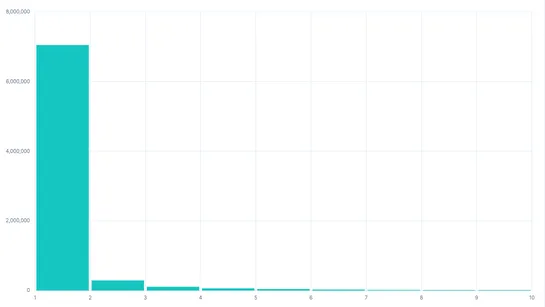
New data from ecosyste.ms drops a hard truth:almost 60% of 11.8M open source projects are solo acts. Even among NPM packages topping 1M monthly downloads, about half still rest on one pair of hands. The world runs on open source. But the scaffolding seems shakier than anyone wants to admit—millions.. read more  

Open Source is one person
Link
@faun shared a link, 9 months, 3 weeks ago
FAUN.dev()

From Python to Go: Why We Rewrote Our Ingest Pipeline at Telemetry Harbor

Telemetry Harbor tossed out Python FastAPI and rebuilt its ingest pipeline inGo. The payoff?10x faster, no more CPU freakouts, and strongerdata integritythanks to strict typing. PostgreSQL is now the slowest link in the chain—not the app—which is the kind of bottleneck you actuallywant. Means the s.. read more  

From Python to Go: Why We Rewrote Our Ingest Pipeline at Telemetry Harbor
Link
@faun shared a link, 9 months, 3 weeks ago
FAUN.dev()

Bash Explained: How the Most Popular Linux Shell Works

Bash isn't going anywhere. It's still the glue for CI/CD, cron jobs, and whatever janky monitoring stack someone duct-taped together at 2am. If automation runs the show, Bash is probably in the pit orchestra. It keeps things moving on Linux, old-school macOS (think pre-Catalina), and even WSL. Stil.. read more  

Link
@faun shared a link, 9 months, 3 weeks ago
FAUN.dev()

Go is still not good

Go’s been catching flak for years, and the hits keep coming: stiff variable scoping, no destructor patterns, clunky error handling, and brittle build directives. Critics point out how Go’s design often blocks best practices like RAII and makes devs contort logic just to clean up resources or manage .. read more  

Link
@faun shared a link, 9 months, 3 weeks ago
FAUN.dev()

Lessons learned from building a sync-engine and reactivity system with SQLite

A dev ditched Electric + PGlite for a lean, browser-native sync setup built aroundWASM SQLite,JSON polling, andBroadcastChannel reactivity. It’s running inside a local-first notes app. Changes get logged with DB triggers. Sync state? Tracked by hand. Svelte stores update via lightweight polling, wi.. read more  

Lessons learned from building a sync-engine and reactivity system with SQLite
Link
@faun shared a link, 9 months, 3 weeks ago
FAUN.dev()

Developer's block

Overdoing “best practices” can kill momentum. Think endless tests, wall-to-wall docs, airtight CI, and coding rules rigid enough to snap. Sounds responsible—until it slows dev to a crawl. The piece argues for flipping that script. Start scrappy. Build fast. Save the polish for later. It’s how you d.. read more  

Link
@faun shared a link, 9 months, 3 weeks ago
FAUN.dev()

From GPT-2 to gpt-oss: Analyzing the Architectural Advances

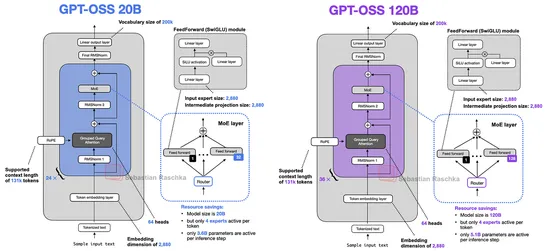
OpenAI Returns to Openness. The company droppedgpt-oss-20Bandgpt-oss-120B—its first open-weight LLMs since GPT-2. The models pack a modern stack:Mixture-of-Experts,Grouped Query Attention,Sliding Window Attention, andSwiGLU. They're also lean. Thanks toMXFP4 quantization, 20B runs on a 16GB consume.. read more  

From GPT-2 to gpt-oss: Analyzing the Architectural Advances
Link
@faun shared a link, 9 months, 3 weeks ago
FAUN.dev()

I set up an email triage system using Home Assistant and a local LLM, here's how you can too

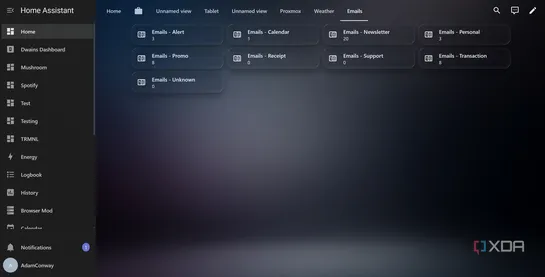
A DIY email triage rig usingHome Assistant, IMAP, andOllamawires up local LLM smarts with YAML-fueled automation. At the core: an8B dolphin-llamamodel running on GPU, chewing through messy HTML emails, tagging them, and firing off priority-sorted summaries via notifications. Why it matters:A signal.. read more  

I set up an email triage system using Home Assistant and a local LLM, here's how you can too
Link
@faun shared a link, 9 months, 3 weeks ago
FAUN.dev()

The Most Important Machine Learning Equations: A Comprehensive Guide

A new reference rounds up the core ML equations—Bayes’ Theorem, cross-entropy, eigen decomposition, attention—and shows how they plug into real Python code using NumPy, TensorFlow, and scikit-learn. It hits the big four: probability, linear algebra, optimization, and generative modeling. Stuff that.. read more  

At its core, Argo CD treats Git as the single source of truth for application definitions. You declare the desired state of your Kubernetes applications in Git (manifests, Helm charts, Kustomize overlays), and Argo CD continuously compares that desired state with what is actually running in the cluster. When drift is detected, it can alert you or automatically reconcile the cluster back to the Git-defined state.

Argo CD runs inside Kubernetes and provides:

- Declarative application management
- Automated or manual sync from Git to cluster
- Continuous drift detection and health assessment
- Rollbacks by reverting Git commits
- Fine-grained RBAC and multi-cluster support

It integrates natively with common Kubernetes configuration formats:

- Plain YAML
- Helm
- Kustomize
- Jsonnet

Operationally, Argo CD exposes both a web UI and CLI, making it easy to visualize application state, deployment history, diffs, and sync status. It is commonly used in platform engineering and SRE teams to standardize deployments, reduce configuration drift, and enforce auditability.

Argo CD is part of the Argo Project, which is hosted by the Cloud Native Computing Foundation (CNCF), and is widely adopted in production Kubernetes environments ranging from startups to large enterprises.