Join us

ContentUpdates and recent posts about Arti..
Story
@laura_garcia shared a post, 7 months, 3 weeks ago
Software Developer, RELIANOID

Asia Hits 50% IPv6 Capability — A Global Milestone

- Asia has reached a major internet milestone: 50% of its systems are now IPv6 capable, positioning the region as a global leader in IPv6 user adoption. - Why this matters: - India (78.1%) and China (810M users) are driving this growth. - Historical IPv4 scarcity in Asia helped fuel early IPv6 inves..

Blog Asia reaches 50 percent IPv6 capability
Story
@laura_garcia shared a post, 7 months, 3 weeks ago
Software Developer, RELIANOID

🚀 RELIANOID is heading to it-sa Expo&Congress 2025!

📍 Nuremberg, Germany | October 7–9, 2025 🔒 Europe’s largest IT security event with 900+ exhibitors, expert talks & global networking. We’ll be there to showcase how RELIANOID helps businesses stay ahead of evolving cyber threats. 👉 See you in Nuremberg! Send us a DM to make an appointment. #itSa2025..

itsa nuremberg
Link
@faun shared a link, 7 months, 3 weeks ago
FAUN.dev()

Uncommon Uses of Common Python Standard Library Functions

A fresh guide gives old Python friends a second look—turns out, tools like **itertools.groupby**, **zip**, **bisect**, and **heapq** aren’t just standard; they’re slick solutions to real problems. Think run-length encoding, matrix transposes, or fast, sorted inserts without bringing in another depen.. read more  

Link
@faun shared a link, 7 months, 3 weeks ago
FAUN.dev()

Organize your Slack channels by “How Often”, not “What” - Aggressively Paraphrasing Me

One dev rewired their Slack setup by **engagement frequency**—not subject. Channels got sorted into tiers like “Read Now” and “Read Hourly,” cutting through noise and saving brainpower. It riffs off the **Eisenhower Matrix**, letting priorities shift with projects, not burn people out... read more  

Link
@faun shared a link, 7 months, 3 weeks ago
FAUN.dev()

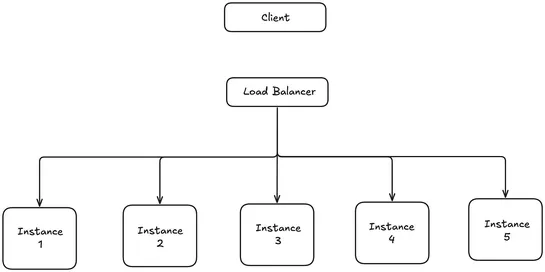
Writing Load Balancer From Scratch In 250 Line of Code

A developer rolled out a fully working **Go load balancer** with a clean **Round Robin** setup—and hooks for dropping in smarter strategies like **Least Connection** or **IP Hash**. Backend servers live in a custom server pool. Swapping balancing logic? Just plug into the interface... read more  

Writing Load Balancer From Scratch In 250 Line of Code
Link
@faun shared a link, 7 months, 3 weeks ago
FAUN.dev()

Building a Resilient Data Platform with Write-Ahead Log at Netflix

Netflix faced challenges like data loss, system entropy, updates across partitions, and reliable retries. To address these, they built a generic Write-Ahead Log (WAL) system serving a variety of use cases like delayed queues, generic cross-region replication, and multi-partition mutations. WAL abstr.. read more  

Link
@faun shared a link, 7 months, 3 weeks ago
FAUN.dev()

Users Only Care About 20% of Your Application

Modern apps burst with features most people never touch. Users stick to their favorite 20%. The rest? Frustration, bloat, ignored edge cases. Tools like **VS Code**, **Slack**, and **Notion** nail it by staying lean at the core and letting users stack what they need. Extensions, plug-ins, integrati.. read more  

Link
@faun shared a link, 7 months, 3 weeks ago
FAUN.dev()

Authentication Explained: When to Use Basic, Bearer, OAuth2, JWT & SSO

Modern apps don’t just check passwords—they rely on **API tokens**, **OAuth**, and **Single Sign-On (SSO)** to know who’s knocking before they open the door... read more  

Link
@faun shared a link, 7 months, 3 weeks ago
FAUN.dev()

Privacy for subdomains: the solution

A two-container setup using **acme.sh** gets Let's Encrypt certs running on a Synology NAS—thanks, Docker. No built-in Certbot support? No problem. Cloudflare DNS API token handles auth. Scheduled tasks handle renewal... read more  

Privacy for subdomains: the solution
Link
@faun shared a link, 7 months, 3 weeks ago
FAUN.dev()

Implementing Vector Search from Scratch: A Step-by-Step Tutorial

Search is a fundamental problem in computing, and vector search aims to match meanings rather than exact words. By converting queries and documents into numerical vectors and calculating similarity, vector search retrieves contextually relevant results. In this tutorial, a vector search system is bu.. read more  

Arti is an official Tor Project initiative to rewrite the Tor client stack in Rust. Its primary goal is to address long-standing safety, reliability, and maintainability challenges inherent in the legacy C-based Tor implementation. By leveraging Rust’s strong compile-time guarantees for memory safety and concurrency, Arti eliminates entire classes of bugs that have historically affected Tor, including many security vulnerabilities.

Arti is architected as a modular, embeddable library rather than a monolithic application. This makes it easier for developers to integrate Tor networking capabilities directly into other applications, services, and platforms. From its earliest versions, Arti has supported multi-core cryptography, cleaner APIs, and a more maintainable internal design.

While early releases focused on client functionality such as bootstrapping, running as a SOCKS proxy, and routing traffic over the Tor network, the long-term roadmap includes full feature parity with the existing Tor client, support for onion services, anti-censorship mechanisms, and eventually Tor relay functionality. Arti represents the future foundation of the Tor ecosystem, prioritizing long-term security, developer velocity, and adaptability.