Join us

ContentUpdates and recent posts about Arti..
 Activity
@ravikyada started using tool Grafana , 2 days, 4 hours ago.
 Activity
@ravikyada started using tool Docker , 2 days, 4 hours ago.
 Activity
@ravikyada started using tool Amazon Web Services , 2 days, 4 hours ago.
Link
@varbear shared a link, 3 days, 18 hours ago
FAUN.dev()

Why are top university websites serving p0rn? It comes down to shoddy housekeeping.

Researcher Alex Shakhov found scammers commandeering staleCNAMErecords. They hijack university subdomains (eg.berkeley.edu,columbia.edu,washu.edu) and serve p0rn and scam pages. Shakhov found hundreds of abused subdomains across at least34universities. He counted thousands of hijacked pages indexed .. read more  
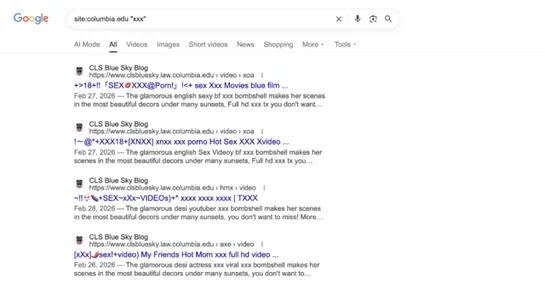
Why are top university websites serving p0rn? It comes down to shoddy housekeeping.
Link
@varbear shared a link, 3 days, 18 hours ago
FAUN.dev()

I Decompiled the White House's New App

A React Native app built withExpo SDK 54runsHermes. It talks to a WordPress REST backend and bundles a 5.5MB Hermes bytecode.Its WebView injects JavaScript to strip cookies, GDPR prompts, and paywall dialogs. The build includes OneSignal's fused-location pipeline, polling at 4.5 and 9.5 minutes and.. read more  

I Decompiled the White House's New App
Link
@varbear shared a link, 3 days, 18 hours ago
FAUN.dev()

The AWS Lambda 'Kiss of Death'

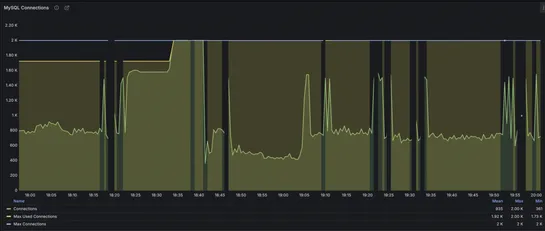
A Galera writer node froze afterInnoDBundo history ballooned. PooledAWS Lambdaconnections left transactions open and pinned MVCC read views. The team killed stalled sessions, enabledinnodb_undo_log_truncate, and cappedinnodb_max_undo_log_size. They also set sessiontransaction_isolation=READ-COMMITTE.. read more  

The AWS Lambda 'Kiss of Death'
Link
@varbear shared a link, 3 days, 18 hours ago
FAUN.dev()

PostgreSQL MVCC, Byte by Byte

PostgreSQL's MVCC stores two 32-bit XIDs per tuple -xminandxmax. The transaction snapshot decides visibility per tuple. Updates append new tuples and mark the old withxmax.VACUUMreclaims versions only when no active snapshot can see them. Long-runningREPEATABLE READsnapshots pin versions and cause b.. read more  

PostgreSQL MVCC, Byte by Byte
Link
@varbear shared a link, 3 days, 18 hours ago
FAUN.dev()

How The Heck Does Shazam Work? (An Interactive Exploration)

A phone captures audio and runs aFast Fourier Transform (FFT)on short windows. It builds aspectrogramand extractspeaks. Nearby peak pairs form compacthashes(two frequencies + time delta). Aninverted indexmaps those hashes to songs, and timing validates matches. Most services run lookups onserversaga.. read more  

How The Heck Does Shazam Work? (An Interactive Exploration)
Link
@kaptain shared a link, 3 days, 18 hours ago
FAUN.dev()

From public static void main to Golden Kubestronaut: The Art of unlearning

The author left JVM monolith ops forKubernetes. They stacked certs:CKA,CKAD,CKS,KCNA,KCSA,CNCF Golden Kubestronaut. They treatPodsas the atomic deployable. They pick fights:IngressvsNodePort. They warn aboutConfigMapdrift. They spotlight runtime primitives:Horizontal Pod Autoscalerandservice meshfor.. read more  

From public static void main to Golden Kubestronaut: The Art of unlearning
Link
@kaptain shared a link, 3 days, 18 hours ago
FAUN.dev()

Building a fault-tolerant metrics storage system at Airbnb

Airbnb built a metrics system that ingests50M samples/s, stores2.5PBof logical time series, and hosts1.3B active series. They use tenant-per-service grouping andshuffle sharding. They enforce per-tenant guardrails and a consolidatedcontrol plane. They shard queries and compaction. They run zone-awar.. read more  

Building a fault-tolerant metrics storage system at Airbnb
Arti is an official Tor Project initiative to rewrite the Tor client stack in Rust. Its primary goal is to address long-standing safety, reliability, and maintainability challenges inherent in the legacy C-based Tor implementation. By leveraging Rust’s strong compile-time guarantees for memory safety and concurrency, Arti eliminates entire classes of bugs that have historically affected Tor, including many security vulnerabilities.

Arti is architected as a modular, embeddable library rather than a monolithic application. This makes it easier for developers to integrate Tor networking capabilities directly into other applications, services, and platforms. From its earliest versions, Arti has supported multi-core cryptography, cleaner APIs, and a more maintainable internal design.

While early releases focused on client functionality such as bootstrapping, running as a SOCKS proxy, and routing traffic over the Tor network, the long-term roadmap includes full feature parity with the existing Tor client, support for onion services, anti-censorship mechanisms, and eventually Tor relay functionality. Arti represents the future foundation of the Tor ecosystem, prioritizing long-term security, developer velocity, and adaptability.