Join us

ContentUpdates and recent posts about BigQuery..
Link
@faun shared a link, 7 months, 3 weeks ago
FAUN.dev()

Pinterest Uncovers Rare Search Failure During Migration to Kubernetes

Pinterest hit a weird one-in-a-million query mismatch during its search infra move to Kubernetes. The culprit? A slippery timing bug. To catch it, engineers pulled out every trick—live traffic replays, their own diff tools, hybrid rollouts layered on both the legacy and K8s stacks. Painful, but it .. read more  

Pinterest Uncovers Rare Search Failure During Migration to Kubernetes
Link
@faun shared a link, 7 months, 3 weeks ago
FAUN.dev()

Who does the unsexy but essential work for open source?

Oracle led the line-count race in the Linux 6.1 kernel release—beating out flashier open source names. Most of its work isn’t headline material. It’s deep-core stuff: memory management tweaks, block device updates, the quiet machinery real systems run on... read more  

Who does the unsexy but essential work for open source?
Link
@faun shared a link, 7 months, 3 weeks ago
FAUN.dev()

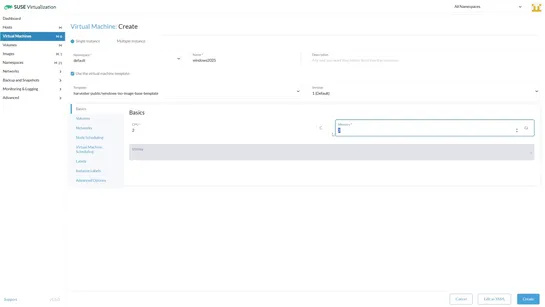
SUSE Adds Arm Support to HCI Platform for Running Monolithic Apps on Kubernetes

SUSE Virtualization 1.5 lands with64-bit Arm and Intelsupport,CSIstorage compatibility, and a tighter4-month release loopsynced with Kubernetes. Built on Harvester and KubeVirt, the update pushes harder on a clear trend: legacy VMs and cloud-native apps sharing the same Kubernetes real estate. Sys.. read more  

SUSE Adds Arm Support to HCI Platform for Running Monolithic Apps on Kubernetes
Link
@faun shared a link, 7 months, 3 weeks ago
FAUN.dev()

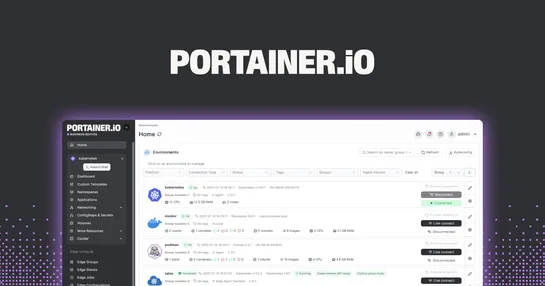
Estimate Your K8s Deployment Costs (Portainer Calculator)

A new TCO calculator breaks down what it really costs to run Kubernetes—DIY CNCF stacks, COSS platforms, and Portainer Business Edition. It crunches infra, labor, and software spend, then maps out staffing needs. It shows exactly where Portainer cuts Kubernetes bloat: itmaybe biased but it's worth t.. read more  

Estimate Your K8s Deployment Costs (Portainer Calculator)
Link
@faun shared a link, 7 months, 3 weeks ago
FAUN.dev()

How I Cut AWS Compute Costs by 70% with a Multi-Arch EKS Cluster and Karpenter

Swapping out Kubernetes Cluster Autoscaler forKarpentercut node launch times to under 20 seconds and dropped compute bills by 70%. The secret sauce? Smarter, faster spot instance scaling. Bonus perks: architecture-aware scheduling formulti-CPU (ARM64/x86)workloads—more performance, better utilizati.. read more  

How I Cut AWS Compute Costs by 70% with a Multi-Arch EKS Cluster and Karpenter
Link
@faun shared a link, 7 months, 3 weeks ago
FAUN.dev()

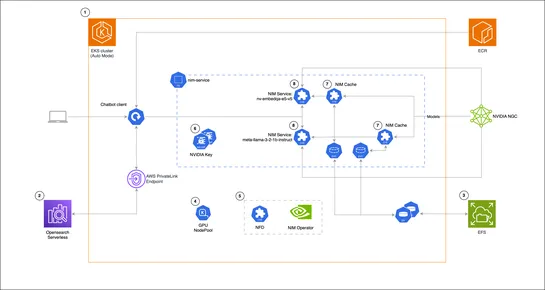
Building a RAG chat-based assistant on Amazon EKS Auto Mode and NVIDIA NIMs

AWS and NVIDIA just dropped a full-stack recipe for running Retrieval-Augmented Generation (RAG) onAmazon EKS Auto Mode—built on top ofNVIDIA NIM microservices. It's LLMs on Kubernetes, but without the hair-pulling. Inference? GPU-accelerated. Embeddings? Covered. Vector search? Handled byAmazon Op.. read more  

Building a RAG chat-based assistant on Amazon EKS Auto Mode and NVIDIA NIMs
Link
@faun shared a link, 7 months, 3 weeks ago
FAUN.dev()

Kubernetes 1.34 Debuts KYAML to Resolve YAML Challenges

Kubernetes 1.34 drops on August 27, 2025, and it’s bringingKYAML—a smarter, stricter take on YAML. No more surprise type coercion or “why is this indented wrong?” bugs. Think of it as YAML that behaves. kubectlgets a new trick too:-o kyaml. Use it to spit out manifests in KYAML format—easier to deb.. read more  

Kubernetes 1.34 Debuts KYAML to Resolve YAML Challenges
Link
@faun shared a link, 7 months, 3 weeks ago
FAUN.dev()

Scale AI/ML Workloads with Amazon EKS: Up to 100K Nodes

Amazon EKS just leveled up—clusters can now run withup to 100,000 nodeswith support ofKubernetes 1.30and up. That's not just big—it’s AI-and-ML-scale big. Cluster setup got a lot less manual, too. The AWS Console’s"auto mode"auto-builds your VPC and IAM configs.eksctlplugs right into the flow... read more  

Scale AI/ML Workloads with Amazon EKS: Up to 100K Nodes
Link
@faun shared a link, 7 months, 3 weeks ago
FAUN.dev()

AI is changing Kubernetes faster than most teams can keep up

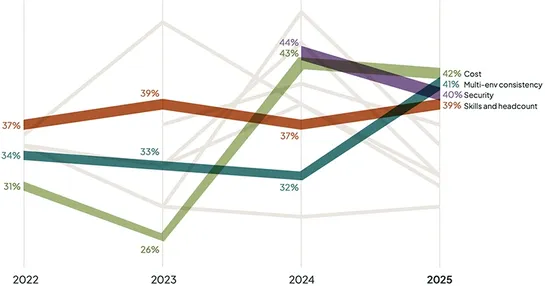
AI workloads are taking over Kubernetes. Fastest-growing use case on the block. 90% of orgs expect that growth to keep climbing. 92% are betting on AI-driven ops tools to keep up. Edge Kubernetes? Up from 38% to 50% in a year. Real-time inference is pushing workloads closer to the source.System shif.. read more  

AI is changing Kubernetes faster than most teams can keep up
Link
@faun shared a link, 7 months, 3 weeks ago
FAUN.dev()

Kubernetes: Web UI Headlamp gets an AI assistant

Headlamp 0.34 drops an alphaAI Assistantplugin—natural language for your cluster, powered by OpenAI, Anthropic, or Mistral. Ask it to explain logs, troubleshoot issues, manage resources. It speaks Kubernetes, with tooling and model config baked in.System shift:Cluster UIs are getting chatty. Less cl.. read more  

Kubernetes: Web UI Headlamp gets an AI assistant
BigQuery is a cloud-native, serverless analytics platform designed to store, query, and analyze massive volumes of structured and semi-structured data using standard SQL. It separates storage from compute, automatically scales resources, and eliminates the need for infrastructure management, indexing, or capacity planning.

BigQuery is optimized for analytical workloads such as business intelligence, log analysis, data science, and machine learning. It supports real-time data ingestion via streaming, batch loading from cloud storage, and federated queries across external data sources like Cloud Storage, Bigtable, and Google Drive.

Query execution is distributed and highly parallel, enabling interactive performance even on petabyte-scale datasets. The platform integrates deeply with the Google Cloud ecosystem, including Looker for BI, Vertex AI for ML workflows, Dataflow for streaming pipelines, and BigQuery ML, which allows users to train and run machine learning models directly using SQL.

Built-in security features include fine-grained IAM controls, column- and row-level security, encryption by default, and audit logging. BigQuery follows a consumption-based pricing model, charging for storage and queries (on-demand or reserved capacity).