Join us

ContentUpdates and recent posts about Botkube..
Link
@faun shared a link, 10 months ago
FAUN.dev()

When Did AI Take Over Hacker News?

A fresh dive into 24,910 top Hacker News posts since 2019 shows that AI chatter didn’t blow up with ChatGPT—it took off afterGPT-4 landed in early 2023. The study used OpenAI’s Batch API and a lean GPT-5-mini to crunch the numbers. Turns out,52% of the AI talk was positive, and the busiest stretch?.. read more  

When Did AI Take Over Hacker News?
Link
@faun shared a link, 10 months ago
FAUN.dev()

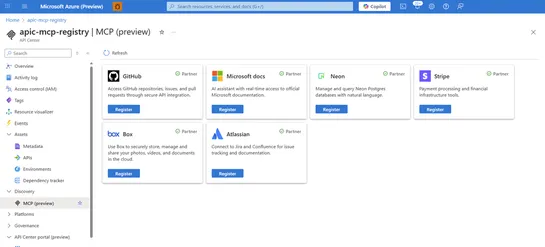
MCP Registry with Azure API Center

Azure just droppedMCP Center, showing off howAzure API Centercan double as a private registry forModel-Centric Protocol (MCP) servers. It’s built for internal use—think secure discovery, tight OAuth 2 auth, centralized control, and AI Gateway rules baked in. Handy when teams need to corral AI tools.. read more  

MCP Registry with Azure API Center
Link
@faun shared a link, 10 months ago
FAUN.dev()

Who does your assistant serve?

OpenAI’s release of GPT-5 backfired: instead of excitement, users felt betrayed by a forced upgrade that stripped away the warmth and reliability they had come to rely on in GPT-4o. Many treated the model as more than a tool — a companion, therapist, or emotional support — so when its personality sh.. read more  

Who does your assistant serve?
Link
@faun shared a link, 10 months ago
FAUN.dev()

Implementing MCP Servers in Python: An AI Shopping Assistant with Gradio

Gradio just leveled up. It now auto-converts plain Python functions intoMCP-compliant LLM tools, grabbing input schemas and metadata straight from docstrings. New tricks:real-time progress streaming,auto file uploads, plus tight integration withVS Code’s AI Chatfor wiring up agent workflows... read more  

Link
@faun shared a link, 10 months ago
FAUN.dev()

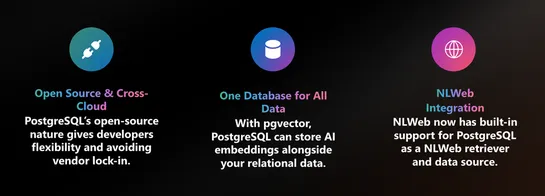
Fueling the Agentic Web Revolution with NLWeb and PostgreSQL

Microsoft just leveled upNLWeb. The open-source project now plays nice withPostgreSQLandpgvector, bringing scalable vector similarity search straight into your database. No need for a separate vector DB—run natural language interfaces right on your existing Postgres stack. System shift:This is more.. read more  

Fueling the Agentic Web Revolution with NLWeb and PostgreSQL
Link
@faun shared a link, 10 months ago
FAUN.dev()

Google releases AI agent Jules for programming

Google’s AI agentJulesjust leveled up—out of beta and into full-on dev mode. It now handlesasynchronous tasks, pushesreal-time code updates, and can spin up pull requests with deeperGitHub integration. Under the hood: it runs on the beefierGemini 2.5 Promodel. AddsEnvironment Snapshotsfor state cap.. read more  

Link
@faun shared a link, 10 months ago
FAUN.dev()

AWS deleted my 10-year account and all data without warning

AWS permanently nuked a 10-year customer account—data, backups, everything—after a payment verification failed. That alone broke their own 90-day retention policy. It gets messier. Looks like an internal script meant to run as a “dry run” went full send in production. Blame a Java CLI parsing edge .. read more  

AWS deleted my 10-year account and all data without warning
Link
@faun shared a link, 10 months ago
FAUN.dev()

AWS Lambda now supports GitHub Actions to simplify function deployment

AWS Lambda just got a smoother ride to prod. There’s now a nativeGitHub Actions integration—no more DIY scripts to ship your serverless. On commit, the new action packages your code, wires up IAM viaOIDC, and deploys using either.zip bundles or containers. All from a tidy, declarative GitHub workfl.. read more  

Link
@faun shared a link, 10 months ago
FAUN.dev()

A practical guide on how to use the GitHub MCP server

GitHub offers a managed MCP endpoint to simplify infrastructure management and streamline AI workflows, enhancing collaboration and code review processes... read more  

Link
@faun shared a link, 10 months ago
FAUN.dev()

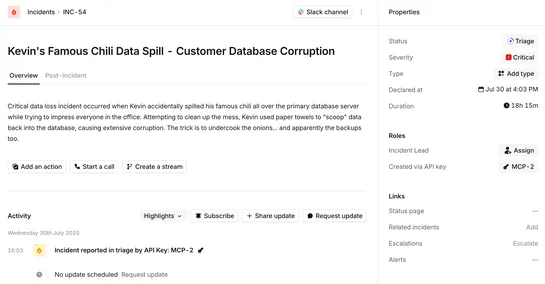
We built an MCP server so Claude can access your incidents

Incident.io dropped an open sourceMCP server in Gothat plugs Claude into their API using theModel Context Protocol. That means Claude can now ask questions, spin up incidents, and dig into timelines—just by talking. The server translates Claude’s prompts into REST calls, turning AI babble into real.. read more  

We built an MCP server so Claude can access your incidents
Botkube is a Kubernetes-centric chatbot that aids in Kubernetes troubleshooting and provides valuable insights for various aspects of Kubernetes operations. This open-source tool integrates with popular messaging platforms like Slack and helps streamline Kubernetes management and problem-solving processes.

Key functionalities of Botkube include:

Alert Notifications: Botkube can be configured to receive and relay alerts from various monitoring tools (e.g., Prometheus, Grafana) directly to your team's communication platform, ensuring prompt incident awareness.

Kubernetes Event Monitoring: It continuously monitors Kubernetes cluster events, offering real-time information on changes and issues within your cluster, such as pod crashes or node failures.

Troubleshooting Assistance: Botkube can provide context-sensitive guidance and suggestions for debugging and resolving common Kubernetes problems, making it a valuable resource for both beginners and experienced Kubernetes users.

Resource Management: It can assist in resource optimization by providing recommendations for scaling deployments, managing resource quotas, and handling updates to your applications.

Security Insights: Botkube can help maintain Kubernetes security by alerting you to security breaches, unauthorized access, and vulnerabilities, allowing you to take immediate action.

Customization: Botkube is highly customizable, allowing you to tailor it to your specific needs and integrate it with other tools and scripts in your Kubernetes ecosystem.

In summary, Botkube serves as a Kubernetes assistant that enhances communication and awareness within your team while providing automated support for troubleshooting, monitoring, and managing your Kubernetes clusters, ultimately contributing to a more efficient and reliable Kubernetes operation.