Join us

ContentUpdates and recent posts about Gemini 3..
Link
@faun shared a link, 1 year ago
FAUN.dev()

v1.33: Updates to Container Lifecycle

Kubernetesv1.33just got a little smarter. Now you can use azero-duration Sleepaction in container lifecycle hooks. That means no more juggling extra binaries—nice and tidy. With alpha support, you get to tweak stop signals within containers. Forget those pesky image-level defaults. The catch? Your c.. read more  
Link
@faun shared a link, 1 year ago
FAUN.dev()

v1.33: Image Pull Policy the way you always thought it worked!

Kubernetes v1.33finally crushesIssue 18787. Now, every pod must authenticate before playing with already pulled private images. Security toughens without missing a beat. A fresh credential verification system zaps a decade-old loophole, slamming the door on unauthorized access... read more  

Link
@faun shared a link, 1 year ago
FAUN.dev()

v1.33: Job's Backoff Limit Per Index Goes GA

Kubernetes v1.33just got a shiny new toy:Backoff Limit Per Index GA. Now, you can wrangle retries per job index like a pro. Say goodbye to those impatient failure-hungry beasts! 🎉.. read more  

Link
@faun shared a link, 1 year ago
FAUN.dev()

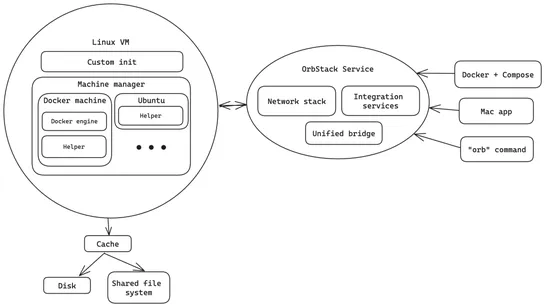
OrbStack: A Deep Dive for Container and Kubernetes Development

OrbStackrockets ahead with 2-5× faster I/O and harnesses Rosetta for blinding x86 speeds on Apple Silicon. For Mac users, it's a zippy Docker alternative. Unified Kubernetes, Linux machines, and effortless file sharing turbocharge development workflows. Meanwhile,Docker Desktopsulks in the corner, w.. read more  

OrbStack: A Deep Dive for Container and Kubernetes Development
Link
@faun shared a link, 1 year ago
FAUN.dev()

kuberc is Here! Customizing kubectl with Kubernetes 1.33

Kuberc, introduced inKubernetes 1.33as an alpha feature, allows users to personalize their kubectl command-line experience with aliases and default flags. This configuration file separates personal preferences from the kubeconfig file, simplifying complex commands and reducing errors. Teams can pote.. read more  

Link
@faun shared a link, 1 year ago
FAUN.dev()

How Kubernetes is Built

Kubernetessprang from Google'sBorglike a tech prodigy. It's a lesson in open-source wizardry, orchestrated by 150-200 zealous maintainers who roll out fresh updates every 14-16 weeks like clockwork. But here’s the magic trick: the "lead" and "shadow" setup. It’s a clever mentorship dance that lets r.. read more  

How Kubernetes is Built
Link
@anjali shared a link, 1 year ago
Customer Marketing Manager, Last9

How to Handle Logging in Microservices Architectures

Learn how to manage logging in microservices—from common challenges to tools and practices that actually help in real-world systems.

log consolidation
Story
@readdive shared a post, 1 year ago
Founder, Read Dive

The Future of Social App Development with Snapchat's Developer Ecosystem

Explore the future of social app development through Snapchat’s developer ecosystem and how Snap Planets influence innovation and engagement.

Social App Development
Story
@readdive shared a post, 1 year ago
Founder, Read Dive

How DevOps Is Transforming Application Testing in 2025

Discover how DevOps is revolutionizing application testing in 2025 and why partnering with an application testing company is essential today.

Application Testing
Story
@laura_garcia shared a post, 1 year ago
Software Developer, RELIANOID

🌐 World Telecommunication and Information Society Day May 17 | #WTISD2025

At RELIANOID, we believe in a connected world wheredigital access is not a privilege, but a right. On this day, we join the global call to recognize howtelecommunications and IT bridge dividesand create opportunities for all — from telemedicine in rural clinics to remote learning across continents. ..

World Telecommunication and Information Society Day RELIANOID
Gemini 3 is Google’s third-generation large language model family, designed to power advanced reasoning, multimodal understanding, and long-running agent workflows across consumer and enterprise products. It represents a major step forward in factual reliability, long-context comprehension, and tool-driven autonomy.

At its core, Gemini 3 emphasizes low hallucination rates, deep synthesis across large information spaces, and multi-step reasoning. Models in the Gemini 3 family are trained with scaled reinforcement learning for search and planning, enabling them to autonomously formulate queries, evaluate results, identify gaps, and iterate toward higher-quality outputs.

Gemini 3 powers advanced agents such as Gemini Deep Research, where it excels at producing well-structured, citation-rich reports by combining web data, uploaded documents, and proprietary sources. The model supports very large context windows, multimodal inputs (text, images, documents), and structured outputs like JSON, making it suitable for research, finance, science, and enterprise knowledge work.

Gemini 3 is available through Google’s AI platforms and APIs, including the Interactions API, and is being integrated across products such as Google Search, NotebookLM, Google Finance, and the Gemini app. It is positioned as Google’s most factual and research-capable model generation to date.