Join us

ContentUpdates and recent posts about Gemini 3..
Link
@faun shared a link, 1 year ago
FAUN.dev()

v1.33: From Secrets to Service Accounts: Image Pulls Evolved

Kubernetes drops ephemeral KSA tokens into the mix for image pulls, putting long-lived credentials in the rearview mirror. Granular access? Absolutely rocks. Compliance? Consider it handled... read more  
Link
@faun shared a link, 1 year ago
FAUN.dev()

How to build small and secure Docker images for Rust (FROM scratch)

This Dockerfile allows for the creation of minimal and secure Docker images for Rust projects. It utilizes multi-stage builds to avoid unnecessary dependencies and reduces the size of the final image... read more  

Link
@faun shared a link, 1 year ago
FAUN.dev()

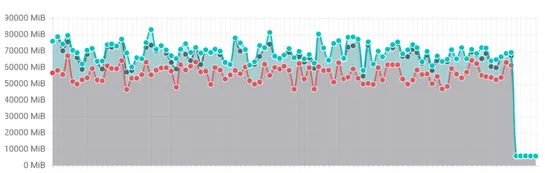
v1.33: Streaming List responses

Kubernetesunleashed a game-changer:streaming encoding for List responses. What used to hog70-80GBnow zips by on a sleek3GB. That's a20x improvementin memory conservation. Say goodbye to those aggravating Out-of-Memory errors. This upgrade tackles mammoth datasets while babysitting your cluster's sta.. read more  

v1.33: Streaming List responses
Link
@faun shared a link, 1 year ago
FAUN.dev()

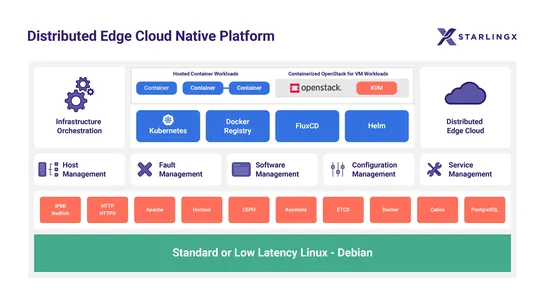
From Edge to Enterprise: The StarlingX Advantage

StarlingXtackles low-latency like a boss, perfect for edge and enterprise clouds. It weaves together real-time Linux and OVS DPDK, all while juggling up to5,000 nodes. It scales effortlessly, sprinting from humblesingle-nodesetups to sprawlingtens-of-thousandsin multi-region clouds. Timing precision.. read more  

From Edge to Enterprise: The StarlingX Advantage
Link
@faun shared a link, 1 year ago
FAUN.dev()

v1.33: Fine-grained SupplementalGroups Control Graduates to Beta

Kubernetes v1.33 rolls in a snazzy beta feature: control over supplemental group merging in containers. It sharpenssecurityby exposing those sneaky implicit GIDs. But don't get too cozy—this power comes with strings. You’ll need CRI runtimes that play nice, or your pods will get the boot on unsuppor.. read more  

Link
@faun shared a link, 1 year ago
FAUN.dev()

Major Updates to VS Code Docker: Introducing Container Tools

Dockertransforms intoContainer Tools, handing developers the keys to tool customization and runtime selection. A pivotal shift for those who dwell in the land of containers... read more  

Major Updates to VS Code Docker: Introducing Container Tools
Link
@faun shared a link, 1 year ago
FAUN.dev()

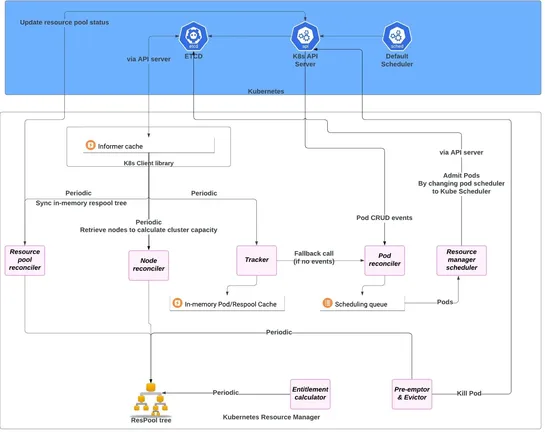
Uber’s Journey to Ray on Kubernetes

Uber tossed manual ML resource wrangling for a slick Kubernetes-Ray duo, amping up scalability and slashing inefficiencies.With dynamic resource pools, elastic sharing, and smart scheduling, they rev up utilization and demolish GPU waste—no micromanaging required... read more  

Uber’s Journey to Ray on Kubernetes
Link
@faun shared a link, 1 year ago
FAUN.dev()

Microservices Are a Tax Your Startup Probably Can’t Afford

Premature microservicesare like planting seeds in concrete. They'll stall your startup's momentum. A monolith is your friend here—simple, reliable, with the vast realm of open-source at your disposal. A crispmonorepotightens team synergy and sidesteps the quagmire of complexity, unlike those headach.. read more  

Microservices Are a Tax Your Startup Probably Can’t Afford
Link
@faun shared a link, 1 year ago
FAUN.dev()

Cutting Kubernetes Costs with kube-downscaler

kube-downscaleris your go-to for scheduling time-based scaling inKubernetes. It dodges HPA’s hiccups for pre-planned workloads. Imagine cron jobs but for replicas. Straightforward, effective, and perfect for trimming costs on snoozing dev environments... read more  

Cutting Kubernetes Costs with kube-downscaler
Link
@faun shared a link, 1 year ago
FAUN.dev()

The Kubernetes Gateway API through beginner’s eyes

Gateway API, the sassy heir to Ingress, jugglesL4 & L7 protocolslike it was born for it. Tosses out those annoying, vendor-specific annotations to clean up Kubernetes networking. On a whim, I swapped an external cronjob for aKubernetes CronJob—because tinkering is a blast, and, let's face it, automa.. read more  

The Kubernetes Gateway API through beginner’s eyes
Gemini 3 is Google’s third-generation large language model family, designed to power advanced reasoning, multimodal understanding, and long-running agent workflows across consumer and enterprise products. It represents a major step forward in factual reliability, long-context comprehension, and tool-driven autonomy.

At its core, Gemini 3 emphasizes low hallucination rates, deep synthesis across large information spaces, and multi-step reasoning. Models in the Gemini 3 family are trained with scaled reinforcement learning for search and planning, enabling them to autonomously formulate queries, evaluate results, identify gaps, and iterate toward higher-quality outputs.

Gemini 3 powers advanced agents such as Gemini Deep Research, where it excels at producing well-structured, citation-rich reports by combining web data, uploaded documents, and proprietary sources. The model supports very large context windows, multimodal inputs (text, images, documents), and structured outputs like JSON, making it suitable for research, finance, science, and enterprise knowledge work.

Gemini 3 is available through Google’s AI platforms and APIs, including the Interactions API, and is being integrated across products such as Google Search, NotebookLM, Google Finance, and the Gemini app. It is positioned as Google’s most factual and research-capable model generation to date.