Join us

ContentUpdates and recent posts about GPT-5.3-Codex..
Story Trending
@laura_garcia shared a post, 3 weeks, 5 days ago
Software Developer, RELIANOID

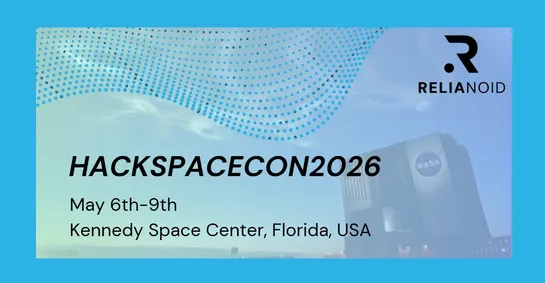
𝗛𝗮𝗰𝗸 𝗦𝗽𝗮𝗰𝗲 𝗖𝗼𝗻 𝟮𝟬𝟮𝟲

🚀 𝗛𝗮𝗰𝗸 𝗦𝗽𝗮𝗰𝗲 𝗖𝗼𝗻 𝟮𝟬𝟮𝟲 📍 Kennedy Space Center 📅 May 6–9, 2026 𝙒𝙝𝙚𝙧𝙚 𝙘𝙮𝙗𝙚𝙧𝙨𝙚𝙘𝙪𝙧𝙞𝙩𝙮 𝙢𝙚𝙚𝙩𝙨 𝙨𝙥𝙖𝙘𝙚 𝙞𝙣𝙣𝙤𝙫𝙖𝙩𝙞𝙤𝙣. Hack Space Con is not your typical event — it’s where cybersecurity, aerospace, and advanced technologies converge to shape the future of security beyond Earth. 🔍 𝗪𝗵𝗮𝘁 𝘁𝗼 𝗲𝘅𝗽𝗲𝗰𝘁: - Hands-on techn..
HACKSPACECON2026_florida_RELIANOID
Link
@varbear shared a link, 3 weeks, 5 days ago
FAUN.dev()

How To Make a Fast Dynamic Language Interpreter

Zef's AST-walking interpreter posts a 16.6× speed-up. The gains come from surgical changes:64-bit tagged values,AST node & RMW specialization,symbol hash-consing,inline caches, and a shapedobject model. Developers built it onFil-C++and later ported it toYolo-C++. The Yolo build adds ~4x speed, at th.. read more  

Link
@varbear shared a link, 3 weeks, 5 days ago
FAUN.dev()

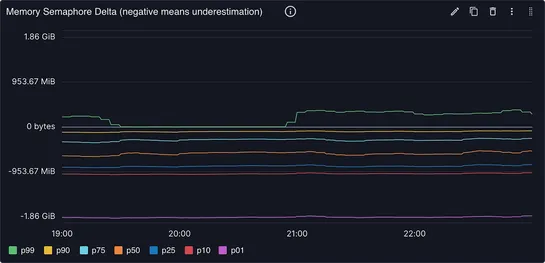
How We Reduced Median Memory Estimation Error by 99%, With the Help of AI

The compaction pipeline at Mixpanel ran into memory estimation issues causing OOMKills. By implementing AI-assisted analysis, they were able to reduce median estimation errorby 99%, leading to a significant improvement in memory estimation accuracy. Through thorough analysis and exploration of alter.. read more  

How We Reduced Median Memory Estimation Error by 99%, With the Help of AI
Link
@varbear shared a link, 3 weeks, 5 days ago
FAUN.dev()

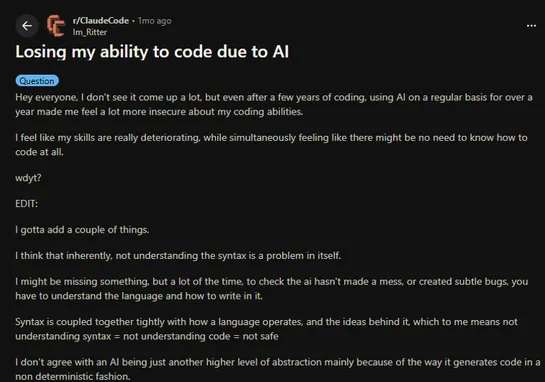
Agentic Coding is a Trap

AI-driven coding agents are the hot new trend, but beware of the trade-offs: increased complexity, skills atrophy, vendor lock-in, and fluctuating costs. Only skilled developers can spot issues in the vast lines of generated code, but paradoxically, AI tools are impacting critical thinking skills ne.. read more  

Agentic Coding is a Trap
Link
@varbear shared a link, 3 weeks, 5 days ago
FAUN.dev()

A Couple Million Lines of Haskell: Production Engineering at Mercury

Mercury runs ~2M lines ofHaskellin production. They choseTemporalto replace cron and DB-backed state machines. Durable workflows replace brittle coordination. They open-sourced aHaskellSDK forTemporal, wired inOpenTelemetryhooks, and pushed records-of-functions plus domain-error types... read more  

A Couple Million Lines of Haskell: Production Engineering at Mercury
Link
@varbear shared a link, 3 weeks, 5 days ago
FAUN.dev()

When upserts don't update but still write: Debugging Postgres performance at scale

The Datadog team introduced a new upsert query to track inactive hosts, but it unexpectedly increased disk writes and WAL syncs due to row locking. By digging into Postgres's Write-Ahead Logging (WAL) and rewriting the query using a Common Table Expression (CTE), they avoided unnecessary overhead an.. read more  

Link
@kaptain shared a link, 3 weeks, 5 days ago
FAUN.dev()

v1.36: Tiered Memory Protection with Memory QoS

Kubernetes v1.36 rolls out Memory QoS (alpha). Opt-inmemory reservation. Tiered protection by QoS class. Kubelet observability metrics. Kernel-version warnings. It separatesthrottlingfromreservation. A feature gate enables throttling. A kubelet config field controls tieredcgroup v2protection:Guarant.. read more  

Link
@kaptain shared a link, 3 weeks, 5 days ago
FAUN.dev()

v1.36: In-Place Vertical Scaling for Pod-Level Resources Graduates to Beta

Kubernetes v1.36 moves In-Place Pod-Level Resources Vertical Scaling to Beta and flips the feature gate on by default. Operators can patch a Pod's aggregate resource to resize running Pods. Often no container restart is needed. Kubelet breaks the Pod-level change into per-container resize events. It.. read more  

Link
@kaptain shared a link, 3 weeks, 5 days ago
FAUN.dev()

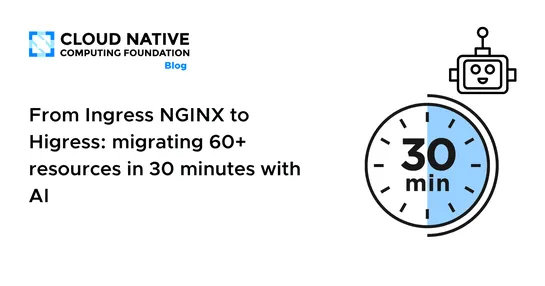
From Ingress NGINX to Higress: migrating 60+ resources in 30 minutes with AI

With the March 2026 retirement ofIngress NGINX, teams face an urgent compliance mandate. They must replace unpatched controllers. EnterHigress. Built onEnvoyandIstio. It unifies LLM protocols, enforces token rate limits, caches prompts, hostsMCP, and usesxDSfor zero-downtime. AnAI agentpaired withhi.. read more  

From Ingress NGINX to Higress: migrating 60+ resources in 30 minutes with AI
GPT-5.3-Codex is OpenAI’s advanced agentic coding model, designed to go beyond writing code and operate as a general-purpose collaborator on a computer. It builds on GPT-5.2-Codex by combining stronger coding performance with improved reasoning and professional knowledge, while running about 25% faster. The model is optimized for long-running tasks that involve research, tool use, and complex execution, and it performs at the top of industry benchmarks such as SWE-Bench Pro and Terminal-Bench.

Unlike earlier Codex models that focused primarily on code generation and review, GPT-5.3-Codex can reason, plan, and act across the full software lifecycle. It supports activities such as debugging, deploying, monitoring, writing product requirement documents, creating tests, and analyzing metrics. It can also autonomously build and iterate on complex applications and better interpret underspecified prompts, producing more complete and production-ready results by default.

A defining feature of GPT-5.3-Codex is its interactive, agentic workflow. Users can steer the model while it is working, receive progress updates, and adjust direction without losing context, making it feel more like a teammate than a batch automation tool. The model was even used internally to help debug its own training and deployment processes. GPT-5.3-Codex is available through paid ChatGPT plans in the Codex app, CLI, IDE extension, and web, with API access planned for the future.