Join us

ContentUpdates and recent posts about GPT-5.3-Codex..
Link
@devopslinks shared a link, 1 week, 4 days ago
FAUN.dev()

Terraform is dead

Graham Gilbert argues Terraform is effectively dead, kept alive only by inertia: HCL forced engineers to translate intent (the diagrams, paragraphs, and constraints that actually describe systems) into a DSL that nobody naturally thinks in, while fragmenting infrastructure, application logic, polici.. read more  
Link
@devopslinks shared a link, 1 week, 4 days ago
FAUN.dev()

The invisible engineering behind Lambda’s network

AWS engineers explain how the Lambda team rebuilt VPC networking so they can keep per-invocation setup off the hot path and run dense microVM workers at scale... read more  

The invisible engineering behind Lambda’s network
Link
@devopslinks shared a link, 1 week, 4 days ago
FAUN.dev()

Finding zombies in our systems: A real-world story of CPU bottlenecks

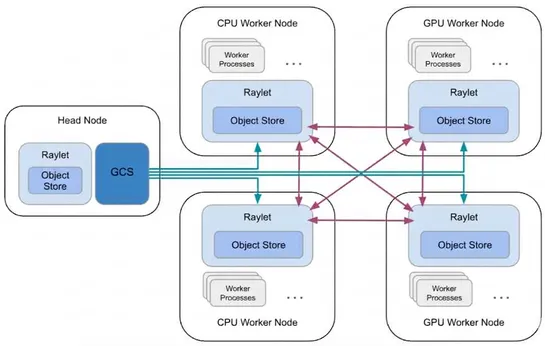
After a network outage crisis, Pinterest's ML Platform team discovered high Kubernetes agent CPU usage was causing critical Ray training job failures. The team's deep profiling strategy revealed a rarely seen flaw in how Kubelet was handling memory cgroup iterations... read more  

Finding zombies in our systems: A real-world story of CPU bottlenecks
Link
@devopslinks shared a link, 1 week, 4 days ago
FAUN.dev()

AI in SRE: What's Actually Coming in 2026

AI in SRE is evolving, with true value in Root Cause Analysis and Pre-Change Impact Analysis, not autonomous remediation or AI replacing SREs - it's about collaboration and focus evolution... read more  

Story Trending
@laura_garcia shared a post, 1 week, 4 days ago
Software Developer, RELIANOID

𝗟𝗶𝗻𝘂𝘅 𝗸𝗲𝗿𝗻𝗲𝗹 𝘃𝘂𝗹𝗻𝗲𝗿𝗮𝗯𝗶𝗹𝗶𝘁𝗶𝗲𝘀

🔐 𝗟𝗶𝗻𝘂𝘅 𝗸𝗲𝗿𝗻𝗲𝗹 𝘃𝘂𝗹𝗻𝗲𝗿𝗮𝗯𝗶𝗹𝗶𝘁𝗶𝗲𝘀 are once again forcing enterprises to rethink 𝙞𝙣𝙛𝙧𝙖𝙨𝙩𝙧𝙪𝙘𝙩𝙪𝙧𝙚 𝙨𝙚𝙘𝙪𝙧𝙞𝙩𝙮 𝙥𝙧𝙞𝙤𝙧𝙞𝙩𝙞𝙚𝙨. The recent disclosure of “𝗖𝗼𝗽𝘆 𝗙𝗮𝗶𝗹” and “𝗗𝗶𝗿𝘁𝘆 𝗙𝗿𝗮𝗴” highlights how kernel-level flaws can rapidly evolve into major risks for cloud environments, containers, Kubernetes clusters, and cr..

 Activity
@cristiandeluxe started using tool WordPress , 1 week, 5 days ago.
 Activity
@cristiandeluxe started using tool Vue.js , 1 week, 5 days ago.
 Activity
@cristiandeluxe started using tool TypeScript , 1 week, 5 days ago.
 Activity
@cristiandeluxe started using tool Shopify , 1 week, 5 days ago.
 Activity
@cristiandeluxe started using tool Rust , 1 week, 5 days ago.
GPT-5.3-Codex is OpenAI’s advanced agentic coding model, designed to go beyond writing code and operate as a general-purpose collaborator on a computer. It builds on GPT-5.2-Codex by combining stronger coding performance with improved reasoning and professional knowledge, while running about 25% faster. The model is optimized for long-running tasks that involve research, tool use, and complex execution, and it performs at the top of industry benchmarks such as SWE-Bench Pro and Terminal-Bench.

Unlike earlier Codex models that focused primarily on code generation and review, GPT-5.3-Codex can reason, plan, and act across the full software lifecycle. It supports activities such as debugging, deploying, monitoring, writing product requirement documents, creating tests, and analyzing metrics. It can also autonomously build and iterate on complex applications and better interpret underspecified prompts, producing more complete and production-ready results by default.

A defining feature of GPT-5.3-Codex is its interactive, agentic workflow. Users can steer the model while it is working, receive progress updates, and adjust direction without losing context, making it feel more like a teammate than a batch automation tool. The model was even used internally to help debug its own training and deployment processes. GPT-5.3-Codex is available through paid ChatGPT plans in the Codex app, CLI, IDE extension, and web, with API access planned for the future.