Join us

ContentUpdates and recent posts about GPT-5.4..
Link
@varbear shared a link, 4 months ago
FAUN.dev()

Building a Blockchain in Go: From 'Hello, Block' to 10,000 TPS

A new Go tutorial shows how to build a lean, fast blockchain - clocking ~10,000 TPS - without the usual bloat. It covers the full stack:P2P networking,custom consensus, and properstate management. No unbounded mempools. No missing snapshots. Just a chain that actually runs, benchmarked on real machi.. read more  

Link
@varbear shared a link, 4 months ago
FAUN.dev()

Inside the GitHub Infrastructure Powering North Korea’s Contagious Interview npm Attacks

The Socket Threat Research Team has been following North Korea’s Contagious Interview operation as it targets blockchain and Web3 developers through fake job interviews. The campaign has added at least197 malicious npm packagesand over31,000 downloadssince last report, showcasing the adaptability of.. read more  

Link
@varbear shared a link, 4 months ago
FAUN.dev()

Partitions, Sharding, and Split-for-Heat in DynamoDB

DynamoDB starts to grumble when a single partition gets hit with more than 1,000WCU. To dodge throttling, writes need to fan out across shards. Recommended move: start with10 logical shards. WatchCloudWatch metrics. DialNup or down. Letburstandadaptive capacitybuy you breathing room - untilSplit-for.. read more  

Partitions, Sharding, and Split-for-Heat in DynamoDB
Link
@varbear shared a link, 4 months ago
FAUN.dev()

Before You Push: Implementing Quality Gates in Your Software Project

This post discusses best practices for automated testing in software engineering, including unit tests and integration tests for databases, APIs, and emulators. It also covers end-to-end tests using tools like Cypress, Appium, Postman, and more. Additionally, it highlights the importance of environm.. read more  

Link
@varbear shared a link, 4 months ago
FAUN.dev()

How to Get Developers in Your Team to Contribute to Your Test Automation

A fresh blog post dives into how to get devs pulling their weight ontest automation- not as extra credit, but as part of shipping code. The playbook: tie automation work straight to thedefinition of done, clear up who owns what, and stop pretending delivery pressure is a mystery. The big idea? Most .. read more  

How to Get Developers in Your Team to Contribute to Your Test Automation
Link
@varbear shared a link, 4 months ago
FAUN.dev()

Building Mac Farm: Running 2000+ iOS Pipelines Daily

At Trendyol, they runover 2,000 iOSpipelines daily across130 Mac machines, executing50,000+ unit testsand10,000+ UI testsfor their iOS apps. The team initiated a mobile CI transformation to address the challenges of scale and performance as their team grew and AI usage increased. They built a macOS .. read more  

Link
@kaptain shared a link, 4 months ago
FAUN.dev()

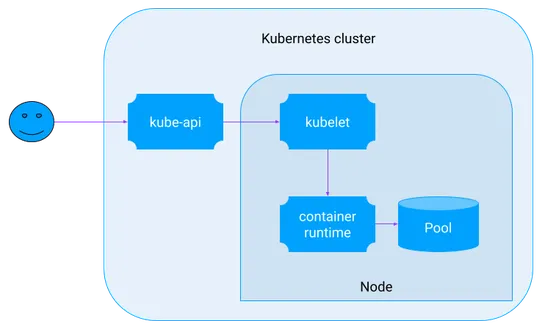
In-place Pod resizing in Kubernetes: How it works and how to use it

Kubernetes 1.33 and 1.34 takein-place Pod resource updatesfrom beta to battle-ready. You can now tweak CPU and memory on the fly - no Pod restarts needed. It's on by default. What’s new: memory downsizing with guardrails, kubelet metrics that actually tell you what’s going on, and smarter retries th.. read more  

In-place Pod resizing in Kubernetes: How it works and how to use it
Link
@kaptain shared a link, 4 months ago
FAUN.dev()

KubeCon North America 2025 Recap: Federation and

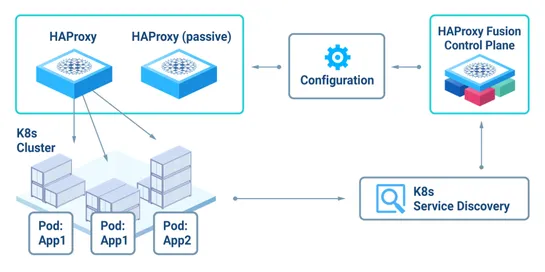
HAProxy just droppedUniversal Mesh, a fresh spin on service mesh design. Forget the per-service sidecars - this model plants high-speed gateways at the network edges instead. Result? Lighter by 30–50% on resources, easier to upgrade, and way less hassle routing traffic across Kubernetes, VMs, and cl.. read more  

KubeCon North America 2025 Recap: Federation and
Link
@kaptain shared a link, 4 months ago
FAUN.dev()

Ingress NGINX Is Retiring. Here’s Your Path Forward with HAProxy

TheIngress NGINX projectis riding off into the sunset by March 2026. Time to pick a new horse. One strong contender: theHAProxy Kubernetes Ingress Controller. It matches feature-for-feature, comes with deeper observability, and reloads configs without taking your cluster offline. HAProxy’s not stopp.. read more  

Ingress NGINX Is Retiring. Here’s Your Path Forward with HAProxy
Link
@kaptain shared a link, 4 months ago
FAUN.dev()

Developers don’t care about Kubernetes clusters

Most cloud-native tools obsess over clusters. Not developers. That means poor support for things like promoting code between environments or deploying by feature - not just by repo. The author pushes for a better way: platforms that hide the Kubernetes mess and tame CI/CD. Think feature-driven deplo.. read more  

Developers don’t care about Kubernetes clusters
GPT-5.4 is OpenAI’s latest frontier AI model designed to perform complex professional and technical work more reliably. It combines advances in reasoning, coding, tool use, and long-context understanding into a single system capable of handling multi-step workflows across software environments. The model builds on earlier GPT-5 releases while integrating the strong coding capabilities previously introduced with GPT-5.3-Codex.

One of the defining features of GPT-5.4 is its ability to operate as part of agent-style workflows. The model can interact with tools, APIs, and external systems to complete tasks that extend beyond simple text generation. It also introduces native computer-use capabilities, allowing AI agents to operate applications using keyboard and mouse commands, screenshots, and browser automation frameworks such as Playwright.

GPT-5.4 supports context windows of up to one million tokens, enabling it to process and reason over very large documents, long conversations, or complex project contexts. This makes it suitable for tasks such as analyzing codebases, generating technical documentation, working with large spreadsheets, or coordinating long-running workflows. The model also introduces a feature called tool search, which allows it to dynamically retrieve tool definitions only when needed. This reduces token usage and makes it more efficient to work with large ecosystems of tools, including environments with dozens of APIs or MCP servers.

In addition to improved reasoning and automation capabilities, GPT-5.4 focuses on real-world productivity tasks. It performs better at generating and editing spreadsheets, presentations, and documents, and it is designed to maintain stronger context across longer reasoning processes. The model also improves factual accuracy and reduces hallucinations compared with previous versions.

GPT-5.4 is available across OpenAI’s ecosystem, including ChatGPT, the OpenAI API, and Codex. A higher-performance variant, GPT-5.4 Pro, is also available for users and developers who require maximum performance for complex tasks such as advanced research, large-scale automation, and demanding engineering workflows. Together, these capabilities position GPT-5.4 as a model aimed not just at conversation, but at executing real work across software systems.