Join us

ContentUpdates and recent posts about GPT..
 Activity
@aleonrangel gave 🐾 to Difference between Agile and Scrum , 5 months, 1 week ago.
Story
@laura_garcia shared a post, 5 months, 1 week ago
Software Developer, RELIANOID

🔐 Reminder: Azure MFA Enforcement Is Now in Place

Some time ago, Microsoft announced and enforced mandatory multifactor authentication (MFA) for all Azure tenants performing resource management actions. 👉 This marked a clear turning point: MFA is no longer optional — it’s a requirement. At RELIANOID, we shared how this change reinforces the need to..

Link
@varbear shared a link, 5 months, 1 week ago
FAUN.dev()

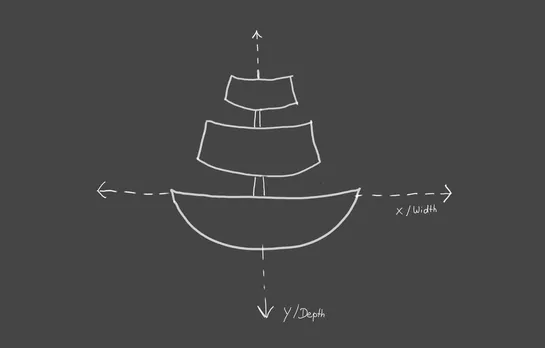
How to build internal developer tools with a small team

A fresh way to think about internal dev tooling: three axes,width(new features),depth(polish and stability), andpreparation(future-ready architecture). Instead of treating tradeoffs as binary, the model maps them as vectors in a shared space. Less tug-of-war. More informed roadmap moves... read more  

How to build internal developer tools with a small team
Link
@varbear shared a link, 5 months, 1 week ago
FAUN.dev()

The Mac Malware of 2025 👾

The 2025 macOS malware scene leveled up hard. Thinkmodular infostealers, built for stealth, slipping in with staged loaders, encrypted configs, and slick social engineering - fake updates, bogus job interviews, even sketchy terminal promos like “ClickFix.” Attackers leaned onAppleScript,JXA, andGo-b.. read more  

The Mac Malware of 2025 👾
Link
@varbear shared a link, 5 months, 1 week ago
FAUN.dev()

Web development is fun again

A seasoned dev takes a hard look at today’s messy full-stack reality: scattered tools, niche deep-dives, and burnout baked into the job. ButAI coding assistantsflipped the script. They help offload overhead, mimic pro-level workflows, and sanity-check the code. Now this dev moves across frontend and.. read more  

Web development is fun again
Link
@varbear shared a link, 5 months, 1 week ago
FAUN.dev()

How Browsers Work

An interactive open-source guide breaks down browser internals with slick, step-through models coveringDNS resolution,TCP handshakes, andHTML parsing. It walks through the browser'ssequential pipeline- from URL to DOM - blending protocol deep-dives with hands-on visuals you can poke at... read more  

Link
@kaptain shared a link, 5 months, 1 week ago
FAUN.dev()

v1.35: Introducing Workload Aware Scheduling

Kubernetes v1.35 is shifting gears. The newWorkload APIand earlygang schedulingsupport bring group-first thinking, schedule Pods as a unit, or not at all. They’ve thrown inopportunistic batchingtoo. It’s in Beta. It speeds up clusters juggling loads of identical Pods by skipping repeat feasibility c.. read more  

Link
@kaptain shared a link, 5 months, 1 week ago
FAUN.dev()

From Cluster UI to Operational Plane: Lessons from the Kubernetes Dashboard Deprecation

The official Kubernetes Dashboard has been deprecated. This reflects the shift in Kubernetes operations towards multi-cluster environments, GitOps workflows, and strict access controls. Modern Kubernetes environments require application-aware, RBAC-first operational tools that work across clusters a.. read more  

Link
@kaptain shared a link, 5 months, 1 week ago
FAUN.dev()

Kubernetes Was Overkill. We Moved to Docker Compose and Saved 60 Hours.

A small team rolled back their Kubernetes move after six months in the weeds. The setup tanked productivity, bloated infra costs, and turned simple deploys into a slog. They ditched it, brought back Docker Compose, and chopped deploy time from 45 minutes to 4. That one change freed up 60+ engineerin.. read more  

Link
@kaptain shared a link, 5 months, 1 week ago
FAUN.dev()

Bryan Cantrill: How Kubernetes Broke the AWS Cloud Monopoly

Bryan Cantrill says Kubernetes didn’t just organize containers, it cracked open the cloud market. By letting teams provision infrastructure without locking into provider APIs, it broke AWS’s first-mover grip. That shift putcloud neutralityon the table, and suddenly multi-cloud wasn’t just a buzzword.. read more  

Bryan Cantrill: How Kubernetes Broke the AWS Cloud Monopoly
GPT (Generative Pre-trained Transformer) is a deep learning model developed by OpenAI that has been pre-trained on massive amounts of text data using unsupervised learning techniques. GPT is designed to generate human-like text in response to prompts, and it is capable of performing a variety of natural language processing tasks, including language translation, summarization, and question-answering. The model is based on the transformer architecture, which allows it to handle long-range dependencies and generate coherent, fluent text. GPT has been used in a wide range of applications, including chatbots, language translation, and content generation.

GPT is a family of language models that have been trained on large amounts of text data using a technique called unsupervised learning. The model is pre-trained on a diverse range of text sources, including books, articles, and web pages, which allows it to capture a broad range of language patterns and styles. Once trained, GPT can be fine-tuned on specific tasks, such as language translation or question-answering, by providing it with task-specific data.

One of the key features of GPT is its ability to generate coherent and fluent text that is indistinguishable from human-generated text. This is achieved by training the model to predict the next word in a sentence given the previous words. GPT also uses a technique called attention, which allows it to focus on relevant parts of the input text when generating a response.

GPT has become increasingly popular in recent years, particularly in the field of natural language processing. The model has been used in a wide range of applications, including chatbots, content generation, and language translation. GPT has also been used to create AI-generated stories, poetry, and even music.