Join us

ContentUpdates and recent posts about Grafana Tempo..
Link
@faun shared a link, 8 months, 4 weeks ago
FAUN.dev()

The Quiet Revolution in Kubernetes Security

Nigel Douglas discusses the challenges of security in Kubernetes, particularly with traditional base operating systems. Talos Linux offers a different approach with a secure-by-default, API-driven model specifically for Kubernetes. CISOs play a critical role in guiding organizations through the shif.. read more  
Link
@faun shared a link, 8 months, 4 weeks ago
FAUN.dev()

Kubernetes DNS Exploit Enables Git Credential Theft from ArgoCD

A new attack chain messes withKubernetes DNS resolutionandArgoCD’s certificate injectionto swipe GitHub credentials. With the right permissions, a user inside the cluster can reroute GitOps traffic to a fake internal service, sniff auth headers, and quietly walk off with tokens. What’s broken:GitOp.. read more  

Kubernetes DNS Exploit Enables Git Credential Theft from ArgoCD
Link
@faun shared a link, 8 months, 4 weeks ago
FAUN.dev()

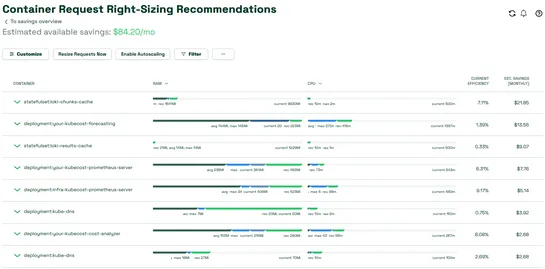
Dynamic Kubernetes request right sizing with Kubecost

Kubecost’s Amazon EKS add-on now handlesautomated container request right-sizing. That means teams can tweak CPU and memory requests based on actual usage—once or on a recurring schedule. Optimization profiles are customizable, and resizing can be baked into cluster setup using Helm. Yes, that mean.. read more  

Dynamic Kubernetes request right sizing with Kubecost
Link
@faun shared a link, 8 months, 4 weeks ago
FAUN.dev()

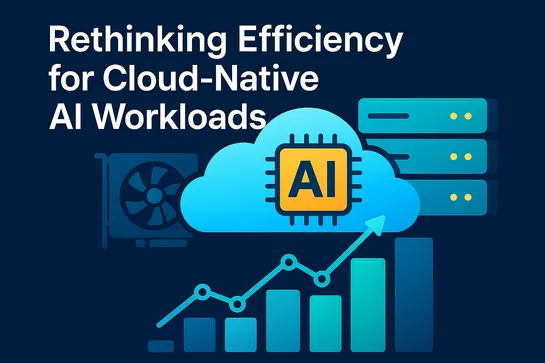
Rethinking Efficiency for Cloud-Native AI Workloads

AI isn’t just burning compute—it's torching old-school FinOps. Reserved Instances? Idle detection? Cute, but not built for GPU bottlenecks and model-heavy pipelines. What’s actually happening:Infra teams are ditching cost-first playbooks for something smarter—business-aligned orchestrationthat chas.. read more  

Rethinking Efficiency for Cloud-Native AI Workloads
Story
@laura_garcia shared a post, 9 months ago
Software Developer, RELIANOID

🌐 NIS2 is reshaping cybersecurity compliance across Europe.

At RELIANOID, we are fully aligned and compliant with NIS2 requirements, helping organizations strengthen their security posture. 👉 Explore more: https://www.relianoid.com/security-compliances/relianoid-nis2-compliance/ #NIS2#CyberSecurity#Compliance#Regulation#EUCompliance#InfoSec#DataProtection#Go..

nis2 compliance RELIANOID
Story
@ketbostoganashvili shared a post, 9 months ago
Technical Content Writer

Send emails with Vercel and Mailtrap

Next.js Vercel Mailtrap.io

Learn how to integrate Mailtrap with your Vercel-hosted applications to send transactional emails with reliable delivery and comprehensive analytics.

Story
@ketbostoganashvili shared a post, 9 months ago
Technical Content Writer

Send emails with Bolt.new and Mailtrap

Bolt Mailtrap.io

Learn how to integrate Mailtrap with your Bolt.new application to send transactional emails and manage contacts without writing complex code.

Link
@anjali shared a link, 9 months ago
Customer Marketing Manager, Last9

APM for Kubernetes: Monitor Distributed Applications at Scale

Understand Kubernetes APM by linking request flows with pod, node, and cluster data to get complete visibility at scale.

k8
Story
@laura_garcia shared a post, 9 months ago
Software Developer, RELIANOID

🌊 Load Balancing Smart Wave with RELIANOID — Built for Marine Telemetry

The Smart Wave platform is key for real-time telemetry from offshore buoys, vessels, and coastal stations. But how do you ensure it performs reliably — even over satellite links? We've published a new technical guide showing how to load balance Smart Wave using RELIANOID: ✅ MQTT & TCP ingestion for ..

Knowledge base_how to load balance SMART WAVE_blue economy
Link
@faun shared a link, 9 months ago
FAUN.dev()

Vibe Coding Will Break Your Enterprise

Tools likeReplitandLovableare fine for quick hacks. Not for enterprise. They can’t handle service integration, durable state, or transactions that don’t fall apart. What enterprises need: realagentic systems. These aren’t glorified code editors—they’re stateful, resilient operators. They juggle work.. read more  

Vibe Coding Will Break Your Enterprise
Grafana Tempo is a distributed tracing backend built for massive scale and low operational overhead. Unlike traditional tracing systems that depend on complex databases, Tempo uses object storage—such as S3, GCS, or Azure Blob Storage—to store trace data, making it highly cost-effective and resilient. Tempo is part of the Grafana observability stack and integrates natively with Grafana, Prometheus, and Loki, enabling unified visualization and correlation across metrics, logs, and traces.

Technically, Tempo supports ingestion from major tracing protocols including Jaeger, Zipkin, OpenCensus, and OpenTelemetry, ensuring easy interoperability. It features TraceQL, a domain-specific query language for traces inspired by PromQL and LogQL, allowing developers to perform targeted searches and complex trace-based analytics. The newer TraceQL Metrics capability even lets users derive metrics directly from trace data, bridging the gap between tracing and performance analysis.

Tempo’s Traces Drilldown UI further enhances usability by providing intuitive, queryless analysis of latency, errors, and performance bottlenecks. Combined with the tempo-cli and tempo-vulture tools, it delivers a full suite for trace collection, verification, and debugging.

Built in Go and following OpenTelemetry standards, Grafana Tempo is ideal for organizations seeking scalable, vendor-neutral distributed tracing to power observability at cloud scale.