Join us

ContentUpdates and recent posts about Grafana Tempo..
Link
@faun shared a link, 10 months, 2 weeks ago
FAUN.dev()

2025 Stack Overflow Developer Survey

Visual Studio and VS Code continue to reign supreme, fending off AI IDEs in the Stack Overflow 2025 Developer Survey. AI-generated devs noted as time-consuming and lacking trust, while Microsoft tools still dominate in agentic AI with GitHub and ChatGPT. More to discover, as always, Stack Overflow D.. read more  

Link
@faun shared a link, 10 months, 2 weeks ago
FAUN.dev()

GenAI vs. Agentic AI: What Developers Need to Know

Docker’s getting serious about agent-based AI. It just rolled out tools tailor-made for building modular, goal-chasing LLM systems. Model Runnerlets devs spin up LLMs locally—zero cloud, zero wait.Offloadtaps cloud GPUs when local ones tap out. And theMCP Gatewaypipes in external tools without duct.. read more  

Link
@faun shared a link, 10 months, 2 weeks ago
FAUN.dev()

Building a Redis Clone from Scratch – In-Memory KV Store with TCP

A solo dev just spun up a public build of aRedis-style key-value store in Java—lean, thread-safe, and backed by a custom TCP server. Right now it handlesGET,SET, andDELETEover a socket-level protocol. No HTTP. No bloat. At its core: aConcurrentHashMapdoing the heavy lifting. Fast, in-memory, and de.. read more  

Link
@faun shared a link, 10 months, 2 weeks ago
FAUN.dev()

I used NotebookLM to learn a new programming language, and it actually worked

A CS student taught themselvesSwiftusingNotebookLM, Google’s AI that sticks to sources you feed it. They pulled in handpicked docs, YouTube transcripts, and visual mind maps—all dropped into a custom notebook. No generic guesses. No hallucinated trivia. Just clean, source-grounded answers on syntax .. read more  

Link
@faun shared a link, 10 months, 2 weeks ago
FAUN.dev()

How we discovered, and recovered from, Postgres corruption on the homeserver

PostgreSQL index corruption silently broke the matrix.org homeserver. State groups were corrupted, active data was deleted, and restoring consistency took a week of forensic debugging and reindexing. The root cause? Unclear. Hardware, maybe. But not Postgres or Synapse. The team’s fix involved disab.. read more  

Story
@laura_garcia shared a post, 10 months, 2 weeks ago
Software Developer, RELIANOID

📌 New: netstat Command Cheatsheet

Need to check active connections, monitor listening ports, or debug network issues? The Linux netstat command remains a go-to tool for quick and effective diagnostics. We’ve created a clear, quick-reference cheatsheet with: 🔍 Essential command flags 📊 Real-world use cases ⚙️ Integration tips for REL..

The_Linux_netstat_command_Cheatsheet
Link
@faun shared a link, 10 months, 2 weeks ago
FAUN.dev()

Building Reproducible ML Systems with Apache Iceberg and SparkSQL

Apache Iceberg +SparkSQLbringsACID transactions,schema evolution, andtime travelto data lakes. That means ML pipelines finally get reproducibility and consistency without the hacks. Iceberg’s snapshot-based guts track every version, handle parallel writes without stepping on toes, and keep training .. read more  

Building Reproducible ML Systems with Apache Iceberg and SparkSQL
Link
@faun shared a link, 10 months, 2 weeks ago
FAUN.dev()

AWS AgentCore: The Overlooked Privilege Escalation Path in Bedrock’s AI Tooling

AWS Bedrock AgentCore just got a new trick: agents (and anyone IAM-blessed) can now runCode Interpreters. Think arbitrary code execution—with custom or predefined IAM roles. But here’s the kicker: these interpreters skipresource policies, lean on control plane APIs, and don’t log squat—unlessyou fl.. read more  

Link
@faun shared a link, 10 months, 2 weeks ago
FAUN.dev()

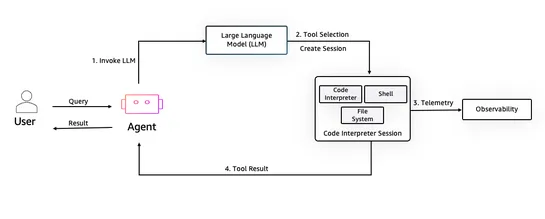
Introducing the Amazon Bedrock AgentCore Code Interpreter

AWS just droppedAgentCore Code Interpreter—a managed box where AI agents can run Python, JavaScript, and TypeScript in isolation. Think of it as a secure playground with autoscaling, controlled file access, and deep hooks into frameworks likeLangChain,LangGraph,Strands, andCrewAI. Big picture: This.. read more  

Introducing the Amazon Bedrock AgentCore Code Interpreter
Link
@faun shared a link, 10 months, 2 weeks ago
FAUN.dev()

Using generative AI for building AWS networks

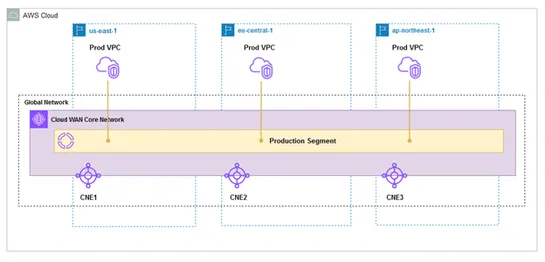
Amazon Q Developer CLI and Bedrock just leveled up. You can now spin up AWS Cloud WANs and VPCs using plain English. Type what you need—get full deployments, phased migrations, and IaC for both CloudFormation and Terraform. Agents handle the whole stack: network discovery, rollout, and config. No m.. read more  

Using generative AI for building AWS networks
Grafana Tempo is a distributed tracing backend built for massive scale and low operational overhead. Unlike traditional tracing systems that depend on complex databases, Tempo uses object storage—such as S3, GCS, or Azure Blob Storage—to store trace data, making it highly cost-effective and resilient. Tempo is part of the Grafana observability stack and integrates natively with Grafana, Prometheus, and Loki, enabling unified visualization and correlation across metrics, logs, and traces.

Technically, Tempo supports ingestion from major tracing protocols including Jaeger, Zipkin, OpenCensus, and OpenTelemetry, ensuring easy interoperability. It features TraceQL, a domain-specific query language for traces inspired by PromQL and LogQL, allowing developers to perform targeted searches and complex trace-based analytics. The newer TraceQL Metrics capability even lets users derive metrics directly from trace data, bridging the gap between tracing and performance analysis.

Tempo’s Traces Drilldown UI further enhances usability by providing intuitive, queryless analysis of latency, errors, and performance bottlenecks. Combined with the tempo-cli and tempo-vulture tools, it delivers a full suite for trace collection, verification, and debugging.

Built in Go and following OpenTelemetry standards, Grafana Tempo is ideal for organizations seeking scalable, vendor-neutral distributed tracing to power observability at cloud scale.