Join us

ContentUpdates and recent posts about Grafana Tempo..
Link
@kaptain shared a link, 2 months, 1 week ago
FAUN.dev()

I Built a Production-Grade Kubernetes Platform in 48 Hours.

A dev built a production-grade Kubernetes platform in 48 hours, encountering challenges and solutions along the way. The setup included multiple layers such as infrastructure, cluster, platform, delivery, and observability, each requiring troubleshooting and adjustments. The process involved deployi.. read more  
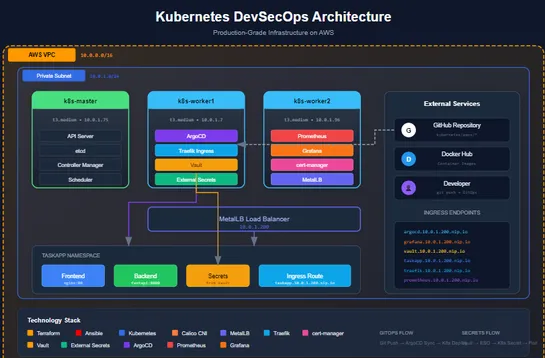
I Built a Production-Grade Kubernetes Platform in 48 Hours.
Link
@devopslinks shared a link, 2 months, 1 week ago
FAUN.dev()

LLMs Are Good at SQL. We Gave Ours Terabytes of CI Logs.

Mendral's agent runs ad‑hocSQLagainst compressedClickHouselogs. It traces flaky tests across months and scans up to 4.3B rows per investigation. They denormalize 48 metadata columns per log line. They compress 5.31 TiB down to ~154 GiB (~21 bytes/line) — a 35:1 ratio. That turns arbitrary filters in.. read more  

LLMs Are Good at SQL. We Gave Ours Terabytes of CI Logs.
Link
@devopslinks shared a link, 2 months, 1 week ago
FAUN.dev()

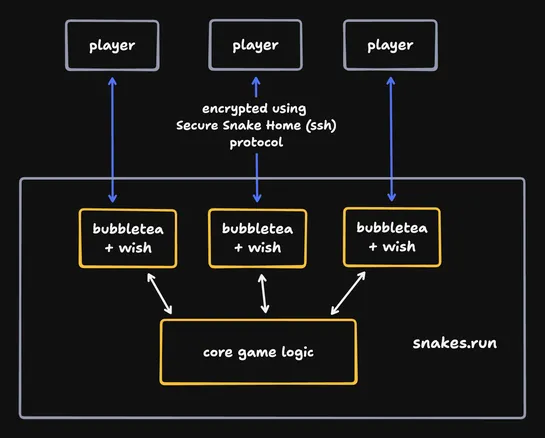
Rendering 100M pixels a second over ssh

A massively multiplayer snake game accessible over ssh, capable of handling thousands of concurrent players and rendering over a hundred million pixels a second. The game utilizes bubbletea for rendering frames and custom techniques to reduce bandwidth usage to around 2.5 KB/sec. Performance improve.. read more  

Rendering 100M pixels a second over ssh
Link
@devopslinks shared a link, 2 months, 1 week ago
FAUN.dev()

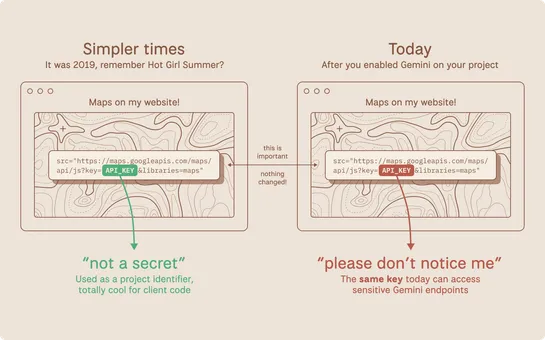
Google API Keys Weren't Secrets. But then Gemini Changed the Rules

A report reveals Google Cloud'sAPI keysuse the same format for public IDs and secret auth. That overlap lets public keys reach theGemini API. New keys default toUnrestricted. Existing keys can be retroactively granted Gemini access. Google will add scoped defaults, block leaked keys, and notify affe.. read more  

Google API Keys Weren't Secrets. But then Gemini Changed the Rules
Link
@devopslinks shared a link, 2 months, 1 week ago
FAUN.dev()

How to scale GitOps in the enterprise: From single cluster to fleet management

In GitOps, the "Argo Ceiling" is the point where tooling that worked at a small scale becomes unmanageable as you scale up to multiple clusters. To address this, you can consider using OCI registries and ConfigHub as alternative state store options. When it comes to secrets management, options like .. read more  

How to scale GitOps in the enterprise: From single cluster to fleet management
Link
@varbear shared a link, 2 months, 1 week ago
FAUN.dev()

How we reduced the size of our Agent Go binaries by up to 77%

The Datadog Agent cut its Go binaries size by up to 77% in six months, removing unnecessary dependencies and enabling linker optimizations to trim artifacts significantly... read more  

Link
@varbear shared a link, 2 months, 1 week ago
FAUN.dev()

I Taught My Dog to Vibe Code Games

DogKeyboardruns onRaspberry Pi. It filters Bluetooth keystrokes, proxies them toClaude Code, and triggers a feeder overZigbee. Builds useGodot 4.6andC#. Automated screenshot/replay testers, a scene linter, a shader linter, and an input mapper letClaude Codeauto-test, patch, and relaunch games... read more  

I Taught My Dog to Vibe Code Games
Link
@varbear shared a link, 2 months, 1 week ago
FAUN.dev()

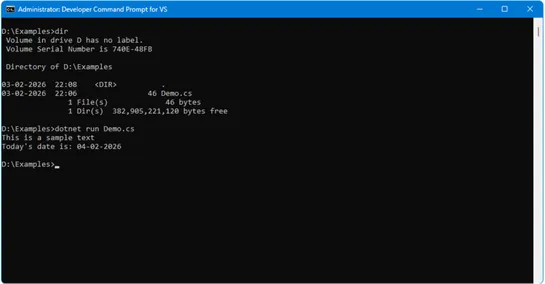
The best new features of C# 14

C# 14 ships with.NET 10. It addsfile-based apps. Run a single .cs file from the command line. No project or solution files. It also adds extension members and extension blocks. They bring extension properties, grouped receivers, and a cleaner extension syntax... read more  

The best new features of C# 14
Link
@varbear shared a link, 2 months, 1 week ago
FAUN.dev()

The Linux Foundation reveals the "ugly" secret of how open source is draining your budget

Linux Foundation report finds contributors get2x–5x ROI. It also finds45%of organizations runprivate forksthat cost ~5,000labor hours per release. The report introduces anROI modelthat values contributions bylabor cost, not lines‑of‑code. It simulates cross‑project tradeoffs... read more  

Link
@varbear shared a link, 2 months, 1 week ago
FAUN.dev()

Malicious Next.js Repos Target Developers Via Fake Job Interviews

Linked to North Korean fake job-recruitment campaigns, the poisoned repositories are aimed at establishing persistent access to infected machines... read more  

Grafana Tempo is a distributed tracing backend built for massive scale and low operational overhead. Unlike traditional tracing systems that depend on complex databases, Tempo uses object storage—such as S3, GCS, or Azure Blob Storage—to store trace data, making it highly cost-effective and resilient. Tempo is part of the Grafana observability stack and integrates natively with Grafana, Prometheus, and Loki, enabling unified visualization and correlation across metrics, logs, and traces.

Technically, Tempo supports ingestion from major tracing protocols including Jaeger, Zipkin, OpenCensus, and OpenTelemetry, ensuring easy interoperability. It features TraceQL, a domain-specific query language for traces inspired by PromQL and LogQL, allowing developers to perform targeted searches and complex trace-based analytics. The newer TraceQL Metrics capability even lets users derive metrics directly from trace data, bridging the gap between tracing and performance analysis.

Tempo’s Traces Drilldown UI further enhances usability by providing intuitive, queryless analysis of latency, errors, and performance bottlenecks. Combined with the tempo-cli and tempo-vulture tools, it delivers a full suite for trace collection, verification, and debugging.

Built in Go and following OpenTelemetry standards, Grafana Tempo is ideal for organizations seeking scalable, vendor-neutral distributed tracing to power observability at cloud scale.