Join us

ContentUpdates and recent posts about Grafana Tempo..
News FAUN.dev() Team
@devopslinks shared an update, 3 months, 2 weeks ago
FAUN.dev()

Pulumi Expands IaC Platform to Support Terraform, OpenTofu, and Native HCL

Terraform Pulumi

Pulumi added support for managing Terraform and OpenTofu state in Pulumi Cloud and introduced native HCL support in its infrastructure as code engine. These changes allow teams to use Terraform, OpenTofu, Pulumi languages, and HCL side by side, with shared state visibility, governance features, and AI-assisted operations available across tools.

Story
@laura_garcia shared a post, 3 months, 3 weeks ago
Software Developer, RELIANOID

🔐 RELIANOID Load Balancer – Security Contributions

At RELIANOID, we actively and selflessly contribute to improving global cybersecurity, staying true to our open-source spirit. 🤝 We maintain close collaborations with security platforms, forums, and threat-intelligence communities, sharing our expertise to help strengthen protection across the Inter..

abuseipdb contributor relianoid
Story
@laura_garcia shared a post, 3 months, 3 weeks ago
Software Developer, RELIANOID

📍 RELIANOID at Bett UK 2026

We’re excited to take part in Bett UK 2026, the world’s leading EdTech event, bringing together educators, innovators, and decision-makers shaping the future of education. 🗓 January 21–23, 2026 📍 London, United Kingdom Join us to discover how RELIANOID enables secure, scalable, and highly available ..

bett_uk_event_london_2026_relianoid
Story
@laura_garcia shared a post, 3 months, 3 weeks ago
Software Developer, RELIANOID

🚀 If you’re building AI systems, reliability is no longer optional

Many teams are rushing to adopt AI, but few are asking the most critical question: 👉 What happens when AI fails? Back in December, we published an article that remains more relevant than ever: AI is redefining Site Reliability Engineering (SRE). Why? Because AI inference workloads introduce new reli..

 Activity
@aleonrangel gave 🐾 to Difference between Agile and Scrum , 3 months, 3 weeks ago.
 Activity
@aleonrangel gave 🐾 to Difference between Agile and Scrum , 3 months, 3 weeks ago.
Story
@laura_garcia shared a post, 3 months, 3 weeks ago
Software Developer, RELIANOID

🔐 Reminder: Azure MFA Enforcement Is Now in Place

Some time ago, Microsoft announced and enforced mandatory multifactor authentication (MFA) for all Azure tenants performing resource management actions. 👉 This marked a clear turning point: MFA is no longer optional — it’s a requirement. At RELIANOID, we shared how this change reinforces the need to..

Link
@varbear shared a link, 3 months, 3 weeks ago
FAUN.dev()

How to build internal developer tools with a small team

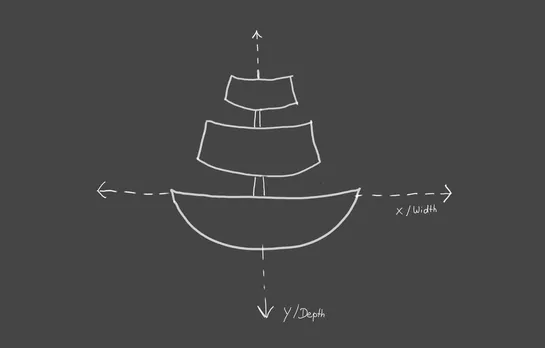
A fresh way to think about internal dev tooling: three axes,width(new features),depth(polish and stability), andpreparation(future-ready architecture). Instead of treating tradeoffs as binary, the model maps them as vectors in a shared space. Less tug-of-war. More informed roadmap moves... read more  

How to build internal developer tools with a small team
Link
@varbear shared a link, 3 months, 3 weeks ago
FAUN.dev()

The Mac Malware of 2025 👾

The 2025 macOS malware scene leveled up hard. Thinkmodular infostealers, built for stealth, slipping in with staged loaders, encrypted configs, and slick social engineering - fake updates, bogus job interviews, even sketchy terminal promos like “ClickFix.” Attackers leaned onAppleScript,JXA, andGo-b.. read more  

The Mac Malware of 2025 👾
Link
@varbear shared a link, 3 months, 3 weeks ago
FAUN.dev()

Web development is fun again

A seasoned dev takes a hard look at today’s messy full-stack reality: scattered tools, niche deep-dives, and burnout baked into the job. ButAI coding assistantsflipped the script. They help offload overhead, mimic pro-level workflows, and sanity-check the code. Now this dev moves across frontend and.. read more  

Web development is fun again
Grafana Tempo is a distributed tracing backend built for massive scale and low operational overhead. Unlike traditional tracing systems that depend on complex databases, Tempo uses object storage—such as S3, GCS, or Azure Blob Storage—to store trace data, making it highly cost-effective and resilient. Tempo is part of the Grafana observability stack and integrates natively with Grafana, Prometheus, and Loki, enabling unified visualization and correlation across metrics, logs, and traces.

Technically, Tempo supports ingestion from major tracing protocols including Jaeger, Zipkin, OpenCensus, and OpenTelemetry, ensuring easy interoperability. It features TraceQL, a domain-specific query language for traces inspired by PromQL and LogQL, allowing developers to perform targeted searches and complex trace-based analytics. The newer TraceQL Metrics capability even lets users derive metrics directly from trace data, bridging the gap between tracing and performance analysis.

Tempo’s Traces Drilldown UI further enhances usability by providing intuitive, queryless analysis of latency, errors, and performance bottlenecks. Combined with the tempo-cli and tempo-vulture tools, it delivers a full suite for trace collection, verification, and debugging.

Built in Go and following OpenTelemetry standards, Grafana Tempo is ideal for organizations seeking scalable, vendor-neutral distributed tracing to power observability at cloud scale.