Join us

ContentUpdates and recent posts about k3d..
Link
@devopslinks shared a link, 4 months, 2 weeks ago
FAUN.dev()

Perfetto: Swiss Army Knife for Linux Client Tracing

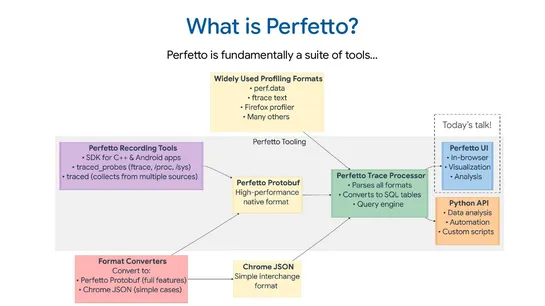
Perfetto now pulls in mixed trace data -perfsamples, scheduler events, app-level instrumentation - and lines it all up on a single timeline. One view, no silos. It readstrace-cmd’s text format now, with smoother flame graphs, sharper bottom-up views, and SQL-powered filtering baked right into the UI.. read more  
Perfetto: Swiss Army Knife for Linux Client Tracing
Link
@devopslinks shared a link, 4 months, 2 weeks ago
FAUN.dev()

VMware Cloud Foundation – what’s actually going on?

Broadcom underwent significant changes post-VMware acquisition, with emphasis on subscription-based pricing and portfolio simplification. Prashant Shenoy claims VCF lowered prices by 50%, challenging industry norms about AI workloads on bare metal versus virtualized environments. Integration pointed.. read more  

News FAUN.dev() Team
@kaptain shared an update, 4 months, 2 weeks ago
FAUN.dev()

Kubernetes Gateway API 1.4.0 Makes Network Routing More Declarative and Reliable

Istio Kubernetes

Kubernetes releases Gateway API 1.4.0, enhancing service networking with new features like secure TLS connections and improved configuration options.

Gateway API Logo
News FAUN.dev() Team
@kaptain shared an update, 4 months, 2 weeks ago
FAUN.dev()

Grafana Pushes the Limits of Metrics Performance with Mimir 3.0

Prometheus Grafana Mimir

Grafana Mimir 3.0 debuts with a new query engine and architecture, boosting performance, reliability, and cost efficiency.

Grafana Pushes the Limits of Metrics Performance with Mimir 3.0
Link
@anjali shared a link, 4 months, 2 weeks ago
Customer Marketing Manager, Last9

OpenTelemetry Metrics in Quarkus Explained

Understand how to enable, export, and extend OpenTelemetry metrics in your Quarkus application with practical examples.

otel_metrics_quarkus
News FAUN.dev() Team
@varbear shared an update, 4 months, 2 weeks ago
FAUN.dev()

Redis Fixes Critical Vulnerability - Update Your Instances Now

Redis

Redis addresses a critical remote code execution vulnerability, CVE-2025-49844, by releasing fixed versions and recommending best practices to protect instances.

Redis Fixes Critical Vulnerability - Update Your Instances Now
News FAUN.dev() Team
@devopslinks shared an update, 4 months, 2 weeks ago
FAUN.dev()

Pulumi’s Neo Now Fixes Infra Policy Violations - Not Just Flags Them

Pulumi

AI-powered remediation rolls out across Pulumi Cloud, bringing automated fixes, approval workflows, and cross-cloud compliance without requiring full migration to Pulumi IaC.

Pulumi’s Neo Now Fixes Infra Policy Violations - Not Just Flags Them
News FAUN.dev() Team
@devopslinks shared an update, 4 months, 2 weeks ago
FAUN.dev()

AWS Unveils Fastnet Cable to Boost Transatlantic Cloud Connectivity

Amazon Web Services

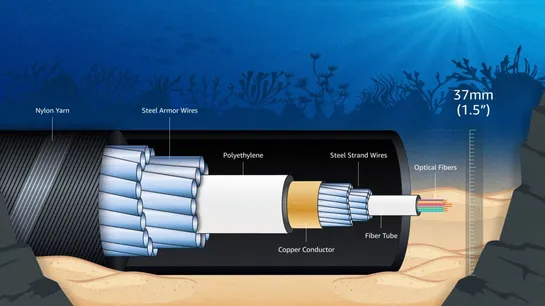
AWS introduces Fastnet, a high-capacity transatlantic subsea cable, to enhance network resilience and support growing cloud and AI demands, operational by 2028.

AWS Unveils Fastnet Cable to Boost Transatlantic Cloud Connectivity
News FAUN.dev() Team
@varbear shared an update, 4 months, 2 weeks ago
FAUN.dev()

GitHub Unveils Agent HQ: A Unified Platform for Managing AI Agents

GitHub Copilot

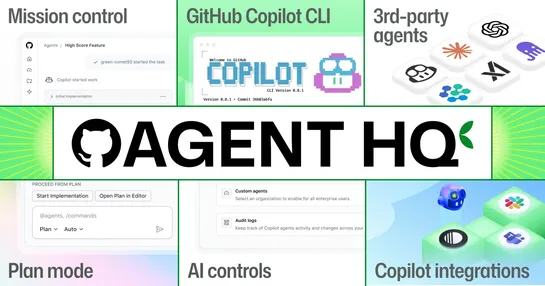
GitHub’s new Agent HQ unifies AI tools from OpenAI, Anthropic, and Google directly within GitHub. It offers centralized management for AI agents through mission control, custom agent setup, code quality tracking, and enterprise governance - all designed to streamline AI-driven development while keeping control and visibility in one place.

GitHub Unveils Agent HQ: A Unified Platform for Managing AI Agents
News FAUN.dev() Team
@devopslinks shared an update, 4 months, 2 weeks ago
FAUN.dev()

IncusOS Launches: A Secure, API-Driven Linux for Servers and VMs

IncusOS

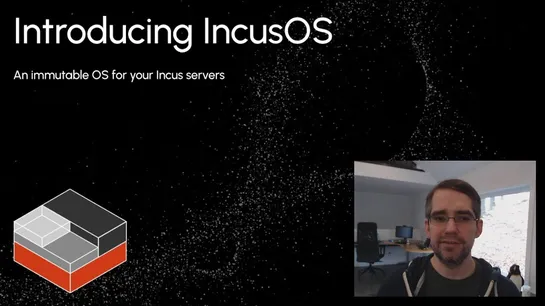
IncusOS, an immutable operating system for running Incus, debuts with atomic updates and boot security, based on a minimal Debian 13, managed via the Incus API.

IncusOS Launches: A Secure, API-Driven Linux for Servers and VMs
k3d is an open-source utility designed to simplify running Kubernetes locally by wrapping K3s (Rancher’s lightweight Kubernetes distribution) inside Docker containers. Instead of creating virtual machines, k3d uses Docker as the execution layer, allowing developers to spin up multi-node Kubernetes clusters in seconds using minimal system resources.

k3d is especially popular for local development, CI pipelines, demos, and testing Kubernetes-native applications. It supports advanced setups such as multi-node clusters, load balancers, custom container registries, port mappings, and volume mounts, while remaining easy to tear down and recreate.

Because it uses K3s, k3d inherits a simplified control plane, bundled components, and reduced memory footprint compared to full Kubernetes distributions. This makes it ideal for developers who want a realistic Kubernetes environment without the overhead of tools like Minikube or full VM-based clusters.

k3d integrates cleanly with common Kubernetes workflows and tools such as kubectl, Helm, Skaffold, and Argo CD. It is frequently used to validate manifests, test Helm charts, and simulate production-like environments locally before deploying to cloud or on-prem clusters.