Join us

ContentUpdates and recent posts about Kata Containers..
Link
@faun shared a link, 9 months, 3 weeks ago
FAUN.dev()

GitHub Copilot DevOps Excellence: Prompt Files vs Instructions vs Chat Modes

GitHub Copilot just leveled up:prompt files,custom instructions, andcustom chat modesare live. Now it's not just tagging along—it’s shaping how you work. Automate code reviews, security scans, or implementation plans. Reuse setups across teams. Control it all from VS Code... read more  
Link
@faun shared a link, 9 months, 3 weeks ago
FAUN.dev()

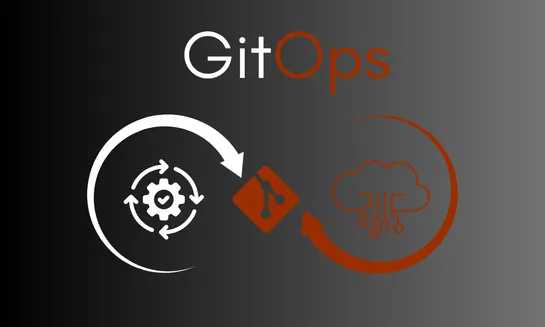
GitOps Done Right: 10 Best Practices That Make It Work

GitOps ditches hand-rolled deployment scripts for a cleaner, declarative model. Git becomes the truth. Agents likeArgo CDorFlux CDwatch for changes and sync your clusters on their own. It’s not just about pushing YAML. Good GitOps setups lean onKustomizefor modular config, wire inautomated image up.. read more  

GitOps Done Right: 10 Best Practices That Make It Work
Link
@faun shared a link, 9 months, 3 weeks ago
FAUN.dev()

You might not need tmux

A dev swapped outtmuxfor a slick combo:Zellij,SSH multiplexing, andsystemdsocket daemons. No more virtual splits. Just clean session persistence and tight remote control. This setup brings scrollback back where it belongs—your terminal’s native buffer. It plays nice with extras like theKitty graphi.. read more  

Link
@faun shared a link, 9 months, 3 weeks ago
FAUN.dev()

How I Scanned all of GitHub’s “Oops Commits” for Leaked Secrets

Truffle Security dropped a sharp new open-source tool that digs through GitHub’s public commit history looking forzero-commit force pushes—a tactic devs use to erase mistakes, usually secrets. Problem is, they don’t go quietly. By tapping into historical GitHub PushEvents via GH Archive, the tool h.. read more  

Link
@faun shared a link, 9 months, 3 weeks ago
FAUN.dev()

Writing a basic service for GNU Guix

A developer walks through building acustom GNU Guix system serviceforkmonad—yes, the keyboard remapper—by wiring up a newservice-typethat plugs intoShepherdandaccount-service-type. To get there, they lift patterns from services likewesnothd, usemake-forkexec-constructorto spin up the daemon, and de.. read more  

Link
@faun shared a link, 9 months, 3 weeks ago
FAUN.dev()

Automating infrastructure deployments in the Cloud with Terraform and Azure Pipelines

This Azure lab wires upTerraformwithAzure Pipelines CI/CDto spin up infrastructure and deploy a .NET Core app using IaC. It handles remote state with Azure Storage, automatesplanandapplyin pipelines, and swaps in config values via token replacement during deploy... read more  

Link
@faun shared a link, 9 months, 3 weeks ago
FAUN.dev()

Creating a GitHub App based Azure DevOps Pipelines Service Connection

Azure DevOps made it easier to link up with GitHub—no more re-installing the Azure Pipelines GitHub App to kick things off. Teams can spin up aGitHub App–based service connectiondirectly from a dummy pipeline setup. The service connection comes GitHub App–authenticated out of the gate. Super handy .. read more  

Creating a GitHub App based Azure DevOps Pipelines Service Connection
Link
@faun shared a link, 9 months, 3 weeks ago
FAUN.dev()

Supply chain attack compromises npm packages to spread backdoor malware

A fresh supply chain ambush—Scavenger—slipped into npm through the front door. Attackers phished maintainers of high-profile packages likeis,eslint-plugin-prettier, andsynckit, then dropped cross-platform JavaScript malware straight into the codebase. Real-time C2 channels included. They typosquatt.. read more  

Link
@faun shared a link, 9 months, 3 weeks ago
FAUN.dev()

Amazon DocumentDB Serverless is now available

Amazon DocumentDB Serverless is out of preview and ready to roll. It auto-scales compute and memory usingDCUsfor MongoDB-compatible clusters. No migration needed—just upgrade your existing instance and go. Available starting in version5.0, with per-second billing based on DCU burn. What’s new:Fixed.. read more  

Link
@faun shared a link, 9 months, 3 weeks ago
FAUN.dev()

Beyond IAM access keys: Modern authentication approaches for AWS

AWS wants long-term IAM access keys gone. In their place:temporary creds via IAM roles,IAM Identity Center,CloudShell, andOIDC integrations. The push covers everything—CLI tools, local dev, compute, CI/CD, even old-school on-prem. The message is clear: rotate automatically, grant minimally, and sto.. read more  

Kata Containers is a Cloud Native Computing Foundation (CNCF) project designed to close the security gap between traditional Linux containers and virtual machines. Instead of sharing a single host kernel like standard containers, Kata Containers launches each pod or container inside its own lightweight virtual machine using hardware virtualization.

This approach dramatically reduces the attack surface and prevents container escape vulnerabilities, making Kata ideal for multi-tenant, untrusted, or sensitive workloads. Despite using VMs under the hood, Kata is optimized for fast startup times and integrates seamlessly with Kubernetes through the Container Runtime Interface (CRI), allowing it to be used alongside runtimes like containerd and CRI-O.

Kata Containers is commonly used in scenarios such as multi-tenant Kubernetes clusters, confidential computing, sandboxed AI workloads, serverless platforms, and agent execution environments where strong isolation is mandatory. It supports multiple hypervisors, including QEMU, Firecracker, and Cloud Hypervisor, and continues to evolve toward faster boot times, lower memory overhead, and better hardware acceleration support.