Join us

ContentUpdates and recent posts about Kata Containers..
Link
@faun shared a link, 10 months ago
FAUN.dev()

Implementing High-Performance LLM Serving on GKE: An Inference Gateway Walkthrough

GKE Inference Gatewayflips LLM serving on its head. It’s all about that GPU-aware smart routing. By juggling the KV Cache in real time, it amps up throughput and slices latency like a hot knife through butter... read more  

Implementing High-Performance LLM Serving on GKE: An Inference Gateway Walkthrough
Link
@faun shared a link, 10 months ago
FAUN.dev()

Unlocking High-Performance AI/ML in Kubernetes with DRANet and RDMA

DraNetslaps networking woes straight out the door. It natively handles RDMA in Kubernetes, so you can toss those convoluted scripts. Now in beta and weighing only 50MB, it offers deployments that are lean, speedy, and unyieldingly secure... read more  

Unlocking High-Performance AI/ML in Kubernetes with DRANet and RDMA
Link
@faun shared a link, 10 months ago
FAUN.dev()

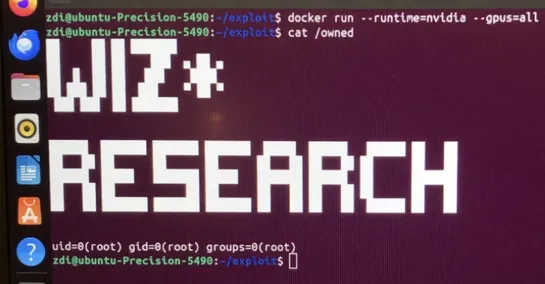
Critical NVIDIA Container Toolkit Flaw Allows Privilege Escalation on AI Cloud Services

A critical container escape vulnerability (CVE-2025-23266) in NVIDIA Container Toolkit poses a severe threat to managed AI cloud services, earning a CVSS score of 9.0 out of 10.0. This flaw allows37%of cloud environments to potentially be accessed by attackers using a three-line exploit, enabling co.. read more  

Critical NVIDIA Container Toolkit Flaw Allows Privilege Escalation on AI Cloud Services
Link
@faun shared a link, 10 months ago
FAUN.dev()

Automated Kubernetes Threat Detection with Tetragon and Azure Sentinel

Kubernetes security tools usually drop the ball. Enter the dynamic duo:Tetragonwielding eBPF magic for deep observability, and smart notifications for sniper-precise alerts.Fluent Bitpairs withAzure Logic Appsin an automated setup so you can hunt down threats in real-time. Not a drop of sweat needed.. read more  

Automated Kubernetes Threat Detection with Tetragon and Azure Sentinel
Link
@faun shared a link, 10 months ago
FAUN.dev()

Securing Kubernetes 1.33 Pods: The Impact of User Namespace Isolation

Kubernetes 1.33rolls out with a security upgrade. It flips the switch onuser namespacesby default, shoving pods into the safety zone as unprivileged users. Potential breaches? Curbed. But don't get too comfy—idmap-capable file systems and up-to-date runtimes are now your new best friends if you want.. read more  

Securing Kubernetes 1.33 Pods: The Impact of User Namespace Isolation
Link
@faun shared a link, 10 months ago
FAUN.dev()

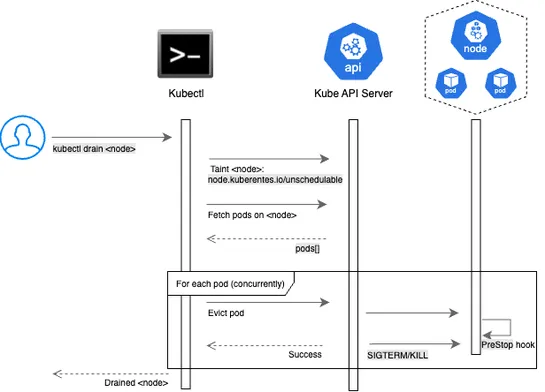
Rethinking Node Drains: A Webhook Based Approach to Graceful Pod Removal

Eviction Reschedule Hooksticks its nose in Kubernetes eviction requests, letting operator-managed stateful apps wriggle their way through node drains without breaking a sweat. 🎯.. read more  

Rethinking Node Drains: A Webhook Based Approach to Graceful Pod Removal
Link
@faun shared a link, 10 months ago
FAUN.dev()

Setting up Prometheus Stack on Kubernetes

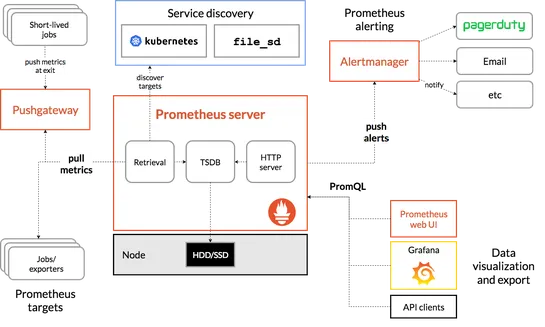
Devtronis Kubernetes monitoring on overdrive. It ropes inPrometheusandGrafana, automates the pesky setup, and shoots real-time insights straight into a slick UI. Effort? Minimal. Results? Maximal... read more  

Setting up Prometheus Stack on Kubernetes
Link
@faun shared a link, 10 months ago
FAUN.dev()

Upcoming changes to the Bitnami catalog

Bitnamiclears out the virtual cobwebs by tucking its oldDebian-based imagesinto a digital time capsule, also known as theLegacy repository. It throws a friendly nudge to devs: get with the times and swap to the "latest" images. In production-ville, serious users should hitch a ride on theBitnami Sec.. read more  

Link
@faun shared a link, 10 months ago
FAUN.dev()

OpenShift LACP bonding performance expectations

Red Hat OpenShift and NIC bonding for high availability is getting popular in data centers. Consider layer2/layer2+3 configurations for balanced traffic distribution across bonded links. Layer3+4 hashing offers highest throughput but may lead to out-of-order packets due to 802.3ad non-compliance. It.. read more  

Link
@faun shared a link, 10 months ago
FAUN.dev()

Kubernetes Observability with OpenTelemetry | A Complete Setup Guide

OpenTelemetrydelivers a full observability package for Kubernetes—traces, metrics, logs—all without handcuffs to a single vendor. Deployyour own OTEL Collectorson Minikube usingHelm charts. Dive into node and pod-level metrics and grab those can't-miss Kubernetes cluster events... read more  

Kubernetes Observability with OpenTelemetry | A Complete Setup Guide
Kata Containers is a Cloud Native Computing Foundation (CNCF) project designed to close the security gap between traditional Linux containers and virtual machines. Instead of sharing a single host kernel like standard containers, Kata Containers launches each pod or container inside its own lightweight virtual machine using hardware virtualization.

This approach dramatically reduces the attack surface and prevents container escape vulnerabilities, making Kata ideal for multi-tenant, untrusted, or sensitive workloads. Despite using VMs under the hood, Kata is optimized for fast startup times and integrates seamlessly with Kubernetes through the Container Runtime Interface (CRI), allowing it to be used alongside runtimes like containerd and CRI-O.

Kata Containers is commonly used in scenarios such as multi-tenant Kubernetes clusters, confidential computing, sandboxed AI workloads, serverless platforms, and agent execution environments where strong isolation is mandatory. It supports multiple hypervisors, including QEMU, Firecracker, and Cloud Hypervisor, and continues to evolve toward faster boot times, lower memory overhead, and better hardware acceleration support.