Join us

ContentUpdates and recent posts about Kata Containers..
Story
@laura_garcia shared a post, 3 months, 3 weeks ago
Software Developer, RELIANOID

🔐 RELIANOID Load Balancer – Security Contributions

At RELIANOID, we actively and selflessly contribute to improving global cybersecurity, staying true to our open-source spirit. 🤝 We maintain close collaborations with security platforms, forums, and threat-intelligence communities, sharing our expertise to help strengthen protection across the Inter..

abuseipdb contributor relianoid
Story
@laura_garcia shared a post, 3 months, 3 weeks ago
Software Developer, RELIANOID

📍 RELIANOID at Bett UK 2026

We’re excited to take part in Bett UK 2026, the world’s leading EdTech event, bringing together educators, innovators, and decision-makers shaping the future of education. 🗓 January 21–23, 2026 📍 London, United Kingdom Join us to discover how RELIANOID enables secure, scalable, and highly available ..

bett_uk_event_london_2026_relianoid
Story
@laura_garcia shared a post, 3 months, 3 weeks ago
Software Developer, RELIANOID

🚀 If you’re building AI systems, reliability is no longer optional

Many teams are rushing to adopt AI, but few are asking the most critical question: 👉 What happens when AI fails? Back in December, we published an article that remains more relevant than ever: AI is redefining Site Reliability Engineering (SRE). Why? Because AI inference workloads introduce new reli..

 Activity
@aleonrangel gave 🐾 to Difference between Agile and Scrum , 3 months, 3 weeks ago.
 Activity
@aleonrangel gave 🐾 to Difference between Agile and Scrum , 3 months, 3 weeks ago.
Story
@laura_garcia shared a post, 3 months, 3 weeks ago
Software Developer, RELIANOID

🔐 Reminder: Azure MFA Enforcement Is Now in Place

Some time ago, Microsoft announced and enforced mandatory multifactor authentication (MFA) for all Azure tenants performing resource management actions. 👉 This marked a clear turning point: MFA is no longer optional — it’s a requirement. At RELIANOID, we shared how this change reinforces the need to..

Link
@varbear shared a link, 3 months, 3 weeks ago
FAUN.dev()

How to build internal developer tools with a small team

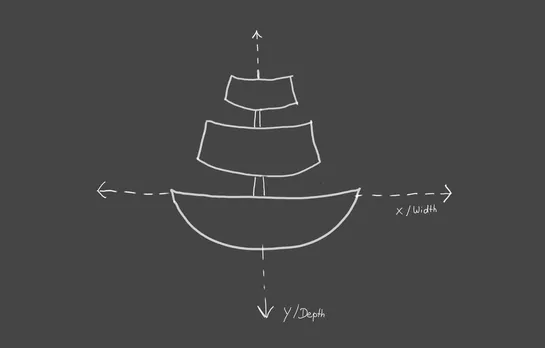
A fresh way to think about internal dev tooling: three axes,width(new features),depth(polish and stability), andpreparation(future-ready architecture). Instead of treating tradeoffs as binary, the model maps them as vectors in a shared space. Less tug-of-war. More informed roadmap moves... read more  

How to build internal developer tools with a small team
Link
@varbear shared a link, 3 months, 3 weeks ago
FAUN.dev()

The Mac Malware of 2025 👾

The 2025 macOS malware scene leveled up hard. Thinkmodular infostealers, built for stealth, slipping in with staged loaders, encrypted configs, and slick social engineering - fake updates, bogus job interviews, even sketchy terminal promos like “ClickFix.” Attackers leaned onAppleScript,JXA, andGo-b.. read more  

The Mac Malware of 2025 👾
Link
@varbear shared a link, 3 months, 3 weeks ago
FAUN.dev()

Web development is fun again

A seasoned dev takes a hard look at today’s messy full-stack reality: scattered tools, niche deep-dives, and burnout baked into the job. ButAI coding assistantsflipped the script. They help offload overhead, mimic pro-level workflows, and sanity-check the code. Now this dev moves across frontend and.. read more  

Web development is fun again
Link
@varbear shared a link, 3 months, 3 weeks ago
FAUN.dev()

How Browsers Work

An interactive open-source guide breaks down browser internals with slick, step-through models coveringDNS resolution,TCP handshakes, andHTML parsing. It walks through the browser'ssequential pipeline- from URL to DOM - blending protocol deep-dives with hands-on visuals you can poke at... read more  

Kata Containers is a Cloud Native Computing Foundation (CNCF) project designed to close the security gap between traditional Linux containers and virtual machines. Instead of sharing a single host kernel like standard containers, Kata Containers launches each pod or container inside its own lightweight virtual machine using hardware virtualization.

This approach dramatically reduces the attack surface and prevents container escape vulnerabilities, making Kata ideal for multi-tenant, untrusted, or sensitive workloads. Despite using VMs under the hood, Kata is optimized for fast startup times and integrates seamlessly with Kubernetes through the Container Runtime Interface (CRI), allowing it to be used alongside runtimes like containerd and CRI-O.

Kata Containers is commonly used in scenarios such as multi-tenant Kubernetes clusters, confidential computing, sandboxed AI workloads, serverless platforms, and agent execution environments where strong isolation is mandatory. It supports multiple hypervisors, including QEMU, Firecracker, and Cloud Hypervisor, and continues to evolve toward faster boot times, lower memory overhead, and better hardware acceleration support.