Supply Chain Attack on Axios Pulls Malicious Dependency from npm
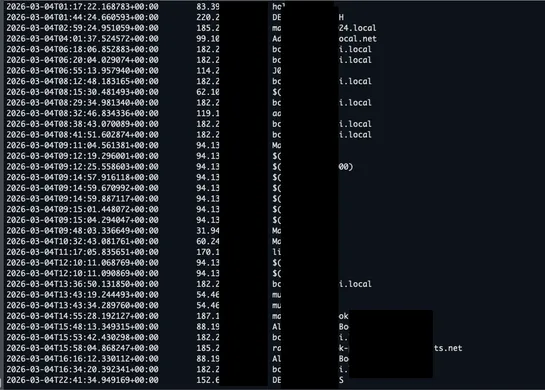
A supply chain attack on Axios introduced a malicious dependency, plain-crypto-js@4.2.1, published minutes earlier and absent from the project’s GitHub releases... read more
Join us
A supply chain attack on Axios introduced a malicious dependency, plain-crypto-js@4.2.1, published minutes earlier and absent from the project’s GitHub releases... read more
Hey, sign up or sign in to add a reaction to my post.
Cloudways scaled from a bootstrapped startup to a leading managed PHP hosting service, encountering challenges with growing support load. Early on, Cloudways recognized the opportunity to implement an AI-based SRE agent to reduce the burden on support teams and provide faster diagnosis and resolutio.. read more

Hey, sign up or sign in to add a reaction to my post.
🚀 𝘗𝘰𝘴𝘵-𝘘𝘶𝘢𝘯𝘵𝘶𝘮 𝘊𝘳𝘺𝘱𝘵𝘰𝘨𝘳𝘢𝘱𝘩𝘺: Preparing for 𝘁𝗵𝗲 𝗡𝗲𝘅𝘁 𝗖𝘆𝗯𝗲𝗿𝘀𝗲𝗰𝘂𝗿𝗶𝘁𝘆 𝗘𝗿𝗮 Quantum computers are approaching, and with them comes a threat to traditional encryption like RSA and ECC. At 𝗥𝗘𝗟𝗜𝗔𝗡𝗢𝗜𝗗, we’re taking action now to ensure your infrastructure stays secure in a post-quantum world. How we’re prepar..
Hey, sign up or sign in to add a reaction to my post.
Earlier today (March 31, 2026), Anthropic accidentally shipped the full source code of Claude Code inside an npm package. The 512,000 lines of TypeScript have since been picked apart by the developer community, and what's inside is more revealing than anyone expected.

Hey, sign up or sign in to add a reaction to my post.
Anthropic shipped a source map file inside the latest npm release of Claude Code - and with it, the full source code of its flagship AI coding CLI. The leak exposed 512,000 lines of TypeScript across 1,900 files, 43 built-in tools, 44 feature flags, 26 hidden slash commands, and over 120 secret environment variables. It is one of the most detailed accidental exposures of a commercial AI product's internals to date.

Hey, sign up or sign in to add a reaction to my post.
Struggling with hidden bugs? Learn how application programming interface testing ensures accurate data flow, security, and performance.

Hey, sign up or sign in to add a reaction to my post.
1. OpenTelemetry reduces backend coupling by standardizing how telemetry is generated, described, transported, and processed before it reaches any observability platform.
2. The biggest migration advantage comes from using OpenTelemetry APIs and SDKs, OTLP, and the Collector, which make telemetry pipelines more portable across backends.
3. The Collector is the operational pivot point because it can receive, process, and export telemetry to one or more destinations from a centralized control layer.
4. OpenTelemetry does not eliminate backend migration work, since teams still need to validate dashboards, alerts, queries, retention rules, and other backend-specific workflows.
5. The safest migration approach is incremental: standardize telemetry first, validate both old and new backends, then cut over gradually.

Hey, sign up or sign in to add a reaction to my post.
🚀 𝗛𝗲𝗮𝗱𝗶𝗻𝗴 𝘁𝗼 𝗧𝗼𝗸𝘆𝗼 𝗳𝗼𝗿 𝗝𝗮𝗽𝗮𝗻 𝗜𝗧 & 𝗗𝗫 𝗪𝗲𝗲𝗸! 𝗥𝗘𝗟𝗜𝗔𝗡𝗢𝗜𝗗 will be at the 23rd Information Security Expo Spring 2026 from April 8–10 at Tokyo Big Sight – 𝗝𝗮𝗽𝗮𝗻’𝘀 𝗹𝗮𝗿𝗴𝗲𝘀𝘁 𝘀𝗵𝗼𝘄𝗰𝗮𝘀𝗲 𝗳𝗼𝗿 𝗰𝘆𝗯𝗲𝗿𝘀𝗲𝗰𝘂𝗿𝗶𝘁𝘆 𝘀𝗼𝗹𝘂𝘁𝗶𝗼𝗻𝘀. Come see how our advanced ADC and secure application delivery solutions help protect critical infr..

Hey, sign up or sign in to add a reaction to my post.
🚢 Maritime Cybersecurity Is Still Too Weak – And the Risks Are Growing As ships become smarter, greener, and more connected, their cyber defenses remain worryingly outdated. 📉 Over 80% of shipowners have faced cyberattacks in the past 3 years 💸 Average cost per attack: $3.1 million 🎣 Phishing causes..
Hey, sign up or sign in to add a reaction to my post.
Java 26 (March 2026) is out, and while it’s not a headline-heavy release, it brings meaningful improvements where it counts — performance, networking, and concurrency.
Some notable updates:
🌐 HTTP/3 support (QUIC-based, lower latency, better reliability)
🧵 Structured Concurrency (Preview) for safer multithreading
⚡ JVM & GC optimizations improving startup and runtime performance
🧠 Continued evolution of pattern matching
🧪 Vector API (Incubator) for high-performance workloads
This release is less about flashy features and more about incremental improvements that impact real-world systems.

Hey, sign up or sign in to add a reaction to my post.
Hey there! 👋
I created FAUN.dev(), an effortless, straightforward way for busy developers to keep up with the technologies they love 🚀