Join us

ContentUpdates and recent posts about LangChain..
Story
@laura_garcia shared a post, 3 months, 3 weeks ago
Software Developer, RELIANOID

RELIANOID at CII Delhi International Technology Summit 2025

16–17 December 2025 - New Delhi, India Our team continues a packed December schedule, and we’re excited to add another key event: the CII Delhi International Technology Summit 2025. Focused on “Accelerating the Techade”, this summit brings together industry, government, and research leaders to shape..

CII Delhi International Technology Summit relianoid
Link
@anjali shared a link, 3 months, 3 weeks ago
Customer Marketing Manager, Last9

OTel Updates: OpenTelemetry Proposes Changes to Stability, Releases, and Semantic Conventions

OpenTelemetry proposes stability changes: stable-by-default distributions, decoupled instrumentation, and epoch releases for production deployments.

otel_stability_update
Story
@laura_garcia shared a post, 3 months, 3 weeks ago
Software Developer, RELIANOID

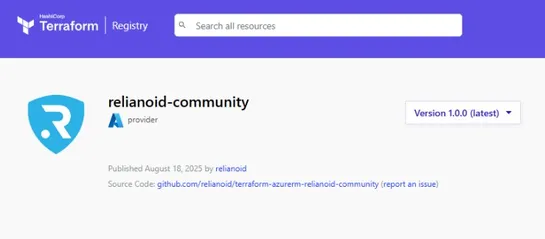
deploy the RELIANOID Load Balancer Community Edition v7 on Azure using Terraform

🚀 New Technical Guide Available! You can now deploy the RELIANOID Load Balancer Community Edition v7 on Azure using Terraform in just a few minutes: ✔️ Install prerequisites (Terraform, Azure CLI, SSH keys) ✔️ Use the official Terraform module from the Registry ✔️ Automatically provision all Azure r..

terraform_relianoid_community_azure_img2
 Activity
@tairascott gave 🐾 to Helm 4 or Nelm? What's the difference , 3 months, 3 weeks ago.
 Activity
@tairascott gave 🐾 to Hidden Correlations Traditional Monitoring Misses , 3 months, 3 weeks ago.
 Activity
Link
@anjali shared a link, 3 months, 3 weeks ago
Customer Marketing Manager, Last9

How to Track Down the Real Cause of Sudden Latency Spikes

Sudden latency spikes rarely have a single cause. This blog shows how to uncover the real source using traces, histograms, and modern debugging signals.

track_latency
Link
@anjali shared a link, 3 months, 3 weeks ago
Customer Marketing Manager, Last9

Hidden Correlations Traditional Monitoring Misses

Last9 is built to work with high-cardinality telemetry, and we’ve been covering it in detail through our series. This piece looks at a familiar pain: issues that only show up for a specific tenant or deployment. Why does that context disappear in most monitoring setups?

anamoly_detection
Story Trending
@shurup shared a post, 3 months, 4 weeks ago
@palark

Helm 4 or Nelm? What's the difference

Helm werf

Helm 4.0.0 brought several new features to its users, such as Server-Side Apply support and kstatus-based resource watching.Nelm, an alternative to Helm created in werf, a CNCF Sandbox project, has been offering these capabilities even before. Nelm has many more new features for Kubernetes deploymen..

Link
@anjali shared a link, 4 months ago
Customer Marketing Manager, Last9

Which Observability Tool Helps with Visibility Without Overspend

A detailed look at observability platforms so you can choose tools that keep visibility high and costs steady as your systems scale.

go
LangChain is a modular framework designed to help developers build complex, production-grade applications that leverage large language models. It abstracts the underlying complexity of prompt management, context retrieval, and model orchestration into reusable components. At its core, LangChain introduces primitives like Chains, Agents, and Tools, allowing developers to sequence model calls, make decisions dynamically, and integrate real-world data or APIs into LLM workflows.

LangChain supports retrieval-augmented generation (RAG) pipelines through integrations with vector databases, enabling models to access and reason over large external knowledge bases efficiently. It also provides utilities for handling long-term context via memory management and supports multiple backends like OpenAI, Anthropic, and local models.

Technically, LangChain simplifies building LLM-driven architectures such as chatbots, document Q&A systems, and autonomous agents. Its ecosystem includes components for caching, tracing, evaluation, and deployment, allowing seamless movement from prototype to production. It serves as a foundational layer for developers who need tight control over how language models interact with data and external systems.