Join us

ContentUpdates and recent posts about Lustre..
Link
@faun shared a link, 1 month, 3 weeks ago
FAUN.dev()

Internal HTTPS Routing in Istio.

Istio finally bringsinternal HTTPS routingwithSNI-based traffic rules. Services in the mesh can now talk over port 443—TLS fully intact. Just like in prod. TLS terminates at the ingress gateway. Routing pivots on SNI, not headers. Which makes this much closer to real-world mTLS flows. What’s the pla.. read more  
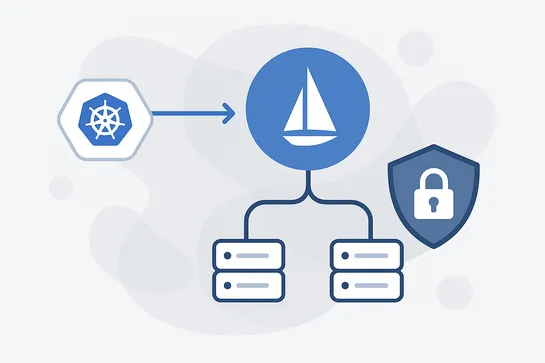
Internal HTTPS Routing in Istio.
Link
@faun shared a link, 1 month, 3 weeks ago
FAUN.dev()

How I Built My Kubernetes Command Toolkit: A Journey from kubectl Chaos to Command Mastery

A dev-built Kubernetes CLI framework reshapeskubectlfor how teams actually work. Commands get grouped by role - dev, SRE, sec, admin - instead of by resource. It bakes in defaults forKyvernopolicies, encourages muscle-memory workflows, and wires up real-time troubleshooting to shrink downtime in pro.. read more  

How I Built My Kubernetes Command Toolkit: A Journey from kubectl Chaos to Command Mastery
Link
@faun shared a link, 1 month, 3 weeks ago
FAUN.dev()

The Myths (and Costs) of Running Node.js on Kubernetes

Kubernetes struggles to scale Node.js efficiently due to a mismatch in resource usage patterns. Autoscaling can be sluggish with bursty traffic, leading to revenue risks and performance issues. Teams must rethink resource allocation and scaling strategies to optimize Node.js efficiency in Kubernetes.. read more  

Link
@faun shared a link, 1 month, 3 weeks ago
FAUN.dev()

Most Cloud-Native Roles are Software Engineers

Software Engineers still own the cloud-native job boards in 2025 - nearly47%of all Kubernetes-tagged listings. DevOps holds onto second. But Platform Engineers just leapfrogged SREs, which have slid 30% since 2023... read more  

Most Cloud-Native Roles are Software Engineers
Link
@faun shared a link, 1 month, 3 weeks ago
FAUN.dev()

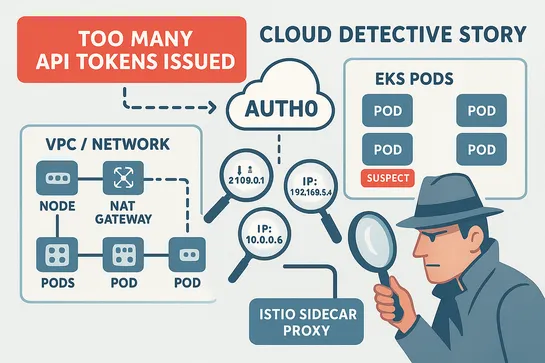
Who’s Calling That API? A Detective Story from the Depths of EKS Networking

A production network got hammered by too many Auth0 token requests. The source? EKS workloads tucked behind a shared NAT Gateway. No easy trail. Engineers stitched it together usingVPC Flow Logs,pod-to-node maps, and some sharpIstio ServiceEntry logs. Even with Kubernetes CNI doing its NAT-obscuring.. read more  

Who’s Calling That API? A Detective Story from the Depths of EKS Networking
News FAUN.dev() Team
@varbear shared an update, 1 month, 3 weeks ago
FAUN.dev()

Reo.Dev Secures $4M to Boost AI Platform for Developer Companies

HubSpot Salesforce Reo.Dev

Reo.Dev has raised $4 million in seed funding, led by Heavybit, to enhance its AI-powered go-to-market platform for developer-first companies and expand its U.S. presence.

Reo.Dev Secures $4M to Boost AI Platform for Developer Companies
 Activity
@varbear added a new tool Reo.Dev , 1 month, 3 weeks ago.
News FAUN.dev() Team
@kala shared an update, 1 month, 3 weeks ago
FAUN.dev()

Anthropic's Claude Sonnet 4.5 AI Model Shows Self-Awareness in Tests

Anthropic's AI model, Claude Sonnet 4.5, exhibits self-awareness by recognizing test scenarios, complicating safety evaluations and raising concerns about potential strategic behavior, similar to observations in OpenAI models.

Anthropic's Claude Sonnet 4.5 AI Model Shows Self-Awareness in Tests
News FAUN.dev() Team
@varbear shared an update, 1 month, 3 weeks ago
FAUN.dev()

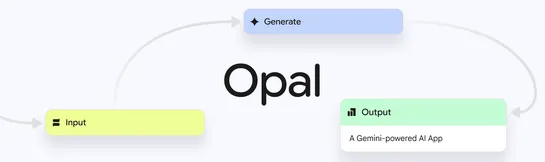
Google Expands AI Vibe-Coding App Opal to 15 More Countries

Opal

Google expands its AI vibe-coding app Opal to 15 more countries, enhancing global access to no-code web app creation with improved debugging and performance.

Google Expands AI Vibe-Coding App Opal to 15 More Countries
 Activity
@varbear added a new tool Opal , 1 month, 3 weeks ago.
Lustre is an open-source, parallel distributed file system built for high-performance computing environments that require extremely fast, large-scale data access. Designed to serve thousands of compute nodes concurrently, Lustre enables HPC clusters to read and write data at multi-terabyte-per-second speeds while maintaining low latency and fault tolerance.

A Lustre deployment separates metadata and file data into distinct services—Metadata Servers (MDS) handling namespace operations and Object Storage Servers (OSS) serving file contents stored across multiple Object Storage Targets (OSTs). This architecture allows clients to access data in parallel, achieving performance far beyond traditional network file systems.

Widely adopted in scientific computing, supercomputing centers, weather modeling, genomics, and large-scale AI training, Lustre remains a foundational component of modern HPC stacks. It integrates with resource managers like Slurm, supports POSIX semantics, and is designed to scale from small clusters to some of the world’s fastest supercomputers.

With strong community and enterprise support, Lustre provides a mature, battle-tested solution for workloads that demand extreme I/O performance, massive concurrency, and petabyte-scale distributed storage.