Join us

ContentUpdates and recent posts about Magento 2 Multi Vendor Indian GST Extension..
Link
@faun shared a link, 6 months, 1 week ago
FAUN.dev()

Lucidity turns spotlight onto Kubernetes storage costs

Lucidity has upgraded itsAutoScaler. It now handles persistent volumes on AWS-hosted Kubernetes, automatically scaling storage and reducing waste. The upgrade bringspod-level isolation,fault tolerance, andbulk Linux onboarding. Azure and GCP are next on the list... read more  

Lucidity turns spotlight onto Kubernetes storage costs
Link
@faun shared a link, 6 months, 1 week ago
FAUN.dev()

Dynamic Kubernetes request right sizing with Kubecost

Kubecost’s Amazon EKS add-on now handlesautomated container request right-sizing. That means teams can tweak CPU and memory requests based on actual usage—once or on a recurring schedule. Optimization profiles are customizable, and resizing can be baked into cluster setup using Helm. Yes, that mean.. read more  

Dynamic Kubernetes request right sizing with Kubecost
Link
@faun shared a link, 6 months, 1 week ago
FAUN.dev()

Kubernetes Primer: Dynamic Resource Allocation (DRA) for GPU Workloads

Kubernetes 1.34 brings serious heat for anyone juggling GPUs or accelerators. MeetDynamic Resource Allocation (DRA)—a new way to schedule hardware like you mean it. DRA addsResourceClaims,DeviceClasses, andResourceSlices, slicing device management away from pod specs. It replaces the old device plu.. read more  

Kubernetes Primer: Dynamic Resource Allocation (DRA) for GPU Workloads
Link
@faun shared a link, 6 months, 1 week ago
FAUN.dev()

Amazon EKS Enables Ultra-Scale AI/ML Workloads with Support for 100K Nodes per Cluster

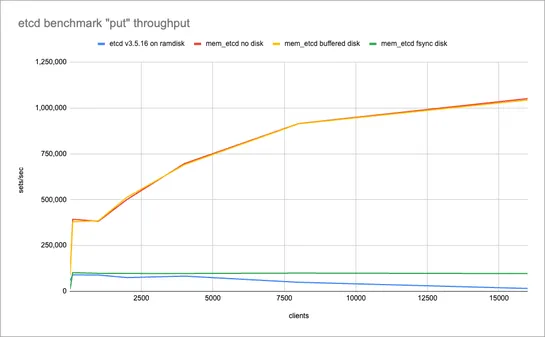
Amazon EKS just cranked its Kubernetes cluster limit to100,000 nodes—a 10x jump. The secret sauce? A reworkedetcdwith an internaljournalsystem andin-memorystorage. Toss in tightAPI server tuningand network tweaks, and the result is wild: 500 pods per second, 900K pods, 10M+ objects, no sweat—even un.. read more  

Amazon EKS Enables Ultra-Scale AI/ML Workloads with Support for 100K Nodes per Cluster
Link
@faun shared a link, 6 months, 1 week ago
FAUN.dev()

Why I Ditched Docker for Podman (And You Should Too)

Older container technologies like Docker have been prone to security vulnerabilities, such as CVE-2019-5736 and CVE-2022-0847, which allowed for potential host system compromise. Podman changes the game by eliminating the need for a persistent background service like the Docker daemon, enhancing sec.. read more  

Link
@faun shared a link, 6 months, 1 week ago
FAUN.dev()

Rethinking Efficiency for Cloud-Native AI Workloads

AI isn’t just burning compute—it's torching old-school FinOps. Reserved Instances? Idle detection? Cute, but not built for GPU bottlenecks and model-heavy pipelines. What’s actually happening:Infra teams are ditching cost-first playbooks for something smarter—business-aligned orchestrationthat chas.. read more  

Rethinking Efficiency for Cloud-Native AI Workloads
Story
@laura_garcia shared a post, 6 months, 1 week ago
Software Developer, RELIANOID

🌐 NIS2 is reshaping cybersecurity compliance across Europe.

At RELIANOID, we are fully aligned and compliant with NIS2 requirements, helping organizations strengthen their security posture. 👉 Explore more: https://www.relianoid.com/security-compliances/relianoid-nis2-compliance/ #NIS2#CyberSecurity#Compliance#Regulation#EUCompliance#InfoSec#DataProtection#Go..

nis2 compliance RELIANOID
Story
@ketbostoganashvili shared a post, 6 months, 1 week ago
Technical Content Writer

Send emails with Vercel and Mailtrap

Next.js Vercel Mailtrap.io

Learn how to integrate Mailtrap with your Vercel-hosted applications to send transactional emails with reliable delivery and comprehensive analytics.

Story
@ketbostoganashvili shared a post, 6 months, 1 week ago
Technical Content Writer

Send emails with Bolt.new and Mailtrap

Bolt Mailtrap.io

Learn how to integrate Mailtrap with your Bolt.new application to send transactional emails and manage contacts without writing complex code.

Link
@anjali shared a link, 6 months, 1 week ago
Customer Marketing Manager, Last9

APM for Kubernetes: Monitor Distributed Applications at Scale

Understand Kubernetes APM by linking request flows with pod, node, and cluster data to get complete visibility at scale.

k8
On the 1st of July 2017, the Indian government introduced the Goods and Services Tax (GST) to the general public. This tax replaced pre-existing taxes with a destination-based, multi-stage, indirect tax system. The GST applies to all eCommerce and Magento stores within India. The World Bank has stated that the GST is one of the most complex tax systems worldwide due to its intricate nature.

As the GST is bifurcated into multiple tax slabs, it has become more difficult to implement such a complex taxing system in Magento 2. Managing a multi-vendor marketplace entails dealing with numerous vendors who sell various products on your platform. 

This necessitates the computation of GST tax rates based on the product and its category, which can be intricate due to varying tax brackets. An automated system is needed to collect and accurately compute vendor tax rates.

The Magento 2 Multi-vendor Indian GST Extension, also called the Magento Multi-vendor GST Module by MageComp, confidently calculates GST for products sold through your Magento stores by vendors. The module fully complies with the Indian government's GST standards and prominently displays the vendor's GST number and summary in all Magento order documents.

Why choose MageComp’s Magento 2 Multi Vendor Indian GST Extension?

Allows admins to enable/disable the module for global, category, and product-specific configuration.
Orders that are placed with the GST module showcase a detailed bifurcation of tax rates in the order view, credit memos, invoices, new order emails and PDFs.
The GST module displays a detailed SGST and CGST tax bifurcation in the order details.
The module automatically calculates IGST, CGST and SGST based on the products added to the cart.

Benefits of Multi Vendor Indian GST for Admins

Allows admins to mention their GSTIN, CIN and PAN number in all order details.
Admins can import the product-specific GST via a CSV file.
Admins have the option to include or exclude GST tax rates from the product prices.
Admins can easily set their business origins and apply IGST (interstate Magento GST)
The module allows the admin to upload an image and a digital signature to display in invoice PDF.
Admins have the option to generate detailed GST reports based on orders and products.

Benefits for Vendors

Vendors are allowed to add their GST number to all invoices and other documents.
Vendors can set a GST rate from the backend grid while creating a product.
Vendors can also set a minimum order price to apply GST rates.

Benefits for Customers

Customers can enter the buyer’s GST number to signup.
Customers can update their buyer’s GST number any time they want from their account grid.