Join us

ContentUpdates and recent posts about Magento 2 Multi Vendor Indian GST Extension..
Link
@faun shared a link, 7 months ago
FAUN.dev()

Technical Tuesday: 10 best practices for building reliable AI agents in 2025

UiPath just droppedAgent Builder in Studio- a legit development environment for AI agents that can actually handle enterprise chaos. Think production-grade: modular builds, traceable steps, and failure handling that doesn’t flake under pressure. It’s wired forschema-driven prompts,tool versioning, a.. read more  

Link
@faun shared a link, 7 months ago
FAUN.dev()

Write Deep Learning Code Locally and Run on GPUs Instantly

Modal cuts the drama out of deep learning ops. Devs write Python like usual, then fire off training, eval, and serving scripts to serverless GPUs - zero cluster wrangling. It handles data blobs, image builds, and orchestration. You focus on tuning with libraries like Unsloth, or serving via vLLM... read more  

Write Deep Learning Code Locally and Run on GPUs Instantly
Link
@faun shared a link, 7 months ago
FAUN.dev()

Serverless RL: Faster, Cheaper and More Flexible RL Training

New product, Serverless RL, available through collaboration between CoreWeave, Weights & Biases, and OpenPipe. Offers fast training, lower costs, and simple model deployment. Saves time with no infra setup, faster feedback loops, and easier entry into RL training... read more  

Link
@faun shared a link, 7 months ago
FAUN.dev()

The RAG Obituary: Killed by Agents, Buried by Context Windows

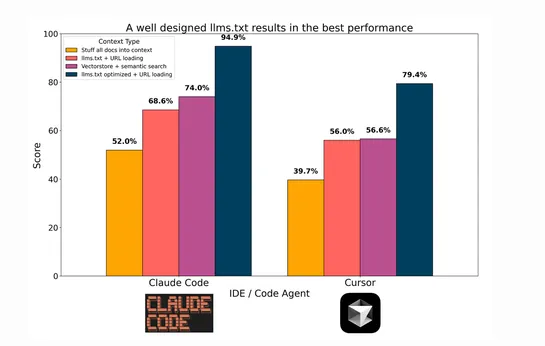
Agent-based setups are starting to edge out old-school RAG. As LLMs snag multi-million-token context windows and better task chops, the need for chunking, embeddings, and reranking starts to fade. Claude Code, for example, skips all that - with direct file access and smart navigation instead. Retrie.. read more  

The RAG Obituary: Killed by Agents, Buried by Context Windows
Link
@faun shared a link, 7 months ago
FAUN.dev()

How LogSeam Searches 500 Million Logs per second

LogSeam rips through500M log searches/secand pushes1.5+ TB/s throughputusing Tigris’ geo-distributed object storage. It slashes log volume by 100× with Parquet + Zstandard compression. Then it spins up compute on the fly, right where the data lives—no long-running infrastructure, no laggy reads... read more  

How LogSeam Searches 500 Million Logs per second
Link
@faun shared a link, 7 months ago
FAUN.dev()

How AWS S3 serves 1 petabyte per second on top of slow HDDs

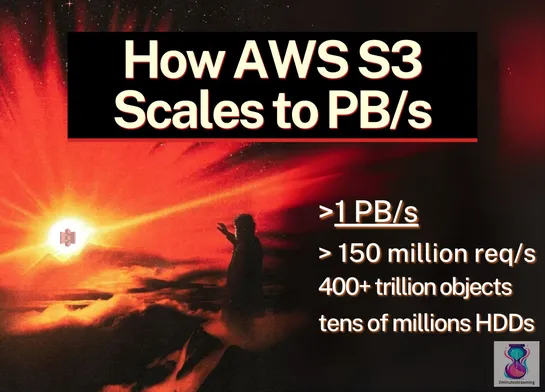
AWS S3 doesn’t need fancy hardware. It wrings performance out ofcheap HDDs,log-structured merge trees, anderasure coding. The trick? Shard everything. Hit it in parallel. Randomized placementdodges hotspots.Hedged requestsrace the slowest links. And when things get lopsided, S3 rebalances - constant.. read more  

How AWS S3 serves 1 petabyte per second on top of slow HDDs
Link
@faun shared a link, 7 months ago
FAUN.dev()

Seven Years of Firecracker

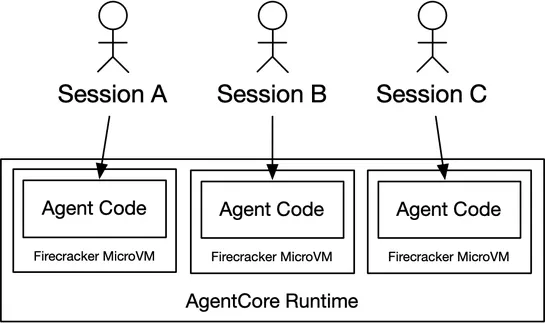
AWS is puttingFirecracker microVMsto work in two fresh stacks:AgentCore, the new base layer for AI agents, andAurora DSQL, a serverless, PostgreSQL-compatible database it just rolled out. AgentCore gives each agent session its own microVM. More isolation, less cross-talk - solid for multistep LLM wo.. read more  

Seven Years of Firecracker
Link
@faun shared a link, 7 months ago
FAUN.dev()

Automated GitHub Self-Hosted Runner Cleanup: Lambda Functions and Auto Scaling Lifecycle Hooks

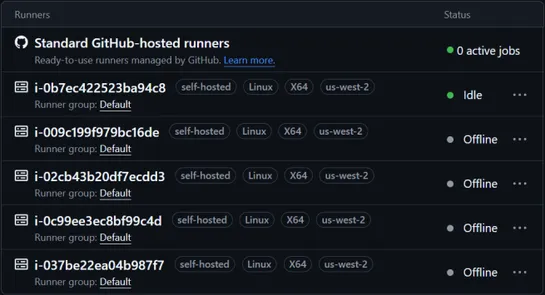
When an EC2 instance in an Auto Scaling Group shuts down, event-driven plumbing kicks in. Alifecycle hookcatches the scale-in, fires off an SNS notification, and triggers aLambda. That Lambda calls the GitHub API to yank the self-hosted runner before the instance dies. No dangling runners. No manual.. read more  

Automated GitHub Self-Hosted Runner Cleanup: Lambda Functions and Auto Scaling Lifecycle Hooks
Link
@faun shared a link, 7 months ago
FAUN.dev()

Ansible Service Module: Start, Stop, & Manage Services

The Ansibleservicemodulehandles LinuxandWindows without choking on init system quirks. One playbook can start, stop, enable, or restart anything - no matter the OS. Idempotent, so you don’t have to babysit state. Clean and repeatable. Bonus: it’s great for wrangling fleets. Think: coordinating servi.. read more  

Link
@faun shared a link, 7 months ago
FAUN.dev()

How I Built My Kubernetes Command Toolkit: A Journey from kubectl Chaos to Command Mastery

A dev-built Kubernetes CLI framework reshapeskubectlfor how teams actually work. Commands get grouped by role - dev, SRE, sec, admin - instead of by resource. It bakes in defaults forKyvernopolicies, encourages muscle-memory workflows, and wires up real-time troubleshooting to shrink downtime in pro.. read more  

How I Built My Kubernetes Command Toolkit: A Journey from kubectl Chaos to Command Mastery
On the 1st of July 2017, the Indian government introduced the Goods and Services Tax (GST) to the general public. This tax replaced pre-existing taxes with a destination-based, multi-stage, indirect tax system. The GST applies to all eCommerce and Magento stores within India. The World Bank has stated that the GST is one of the most complex tax systems worldwide due to its intricate nature.

As the GST is bifurcated into multiple tax slabs, it has become more difficult to implement such a complex taxing system in Magento 2. Managing a multi-vendor marketplace entails dealing with numerous vendors who sell various products on your platform. 

This necessitates the computation of GST tax rates based on the product and its category, which can be intricate due to varying tax brackets. An automated system is needed to collect and accurately compute vendor tax rates.

The Magento 2 Multi-vendor Indian GST Extension, also called the Magento Multi-vendor GST Module by MageComp, confidently calculates GST for products sold through your Magento stores by vendors. The module fully complies with the Indian government's GST standards and prominently displays the vendor's GST number and summary in all Magento order documents.

Why choose MageComp’s Magento 2 Multi Vendor Indian GST Extension?

Allows admins to enable/disable the module for global, category, and product-specific configuration.
Orders that are placed with the GST module showcase a detailed bifurcation of tax rates in the order view, credit memos, invoices, new order emails and PDFs.
The GST module displays a detailed SGST and CGST tax bifurcation in the order details.
The module automatically calculates IGST, CGST and SGST based on the products added to the cart.

Benefits of Multi Vendor Indian GST for Admins

Allows admins to mention their GSTIN, CIN and PAN number in all order details.
Admins can import the product-specific GST via a CSV file.
Admins have the option to include or exclude GST tax rates from the product prices.
Admins can easily set their business origins and apply IGST (interstate Magento GST)
The module allows the admin to upload an image and a digital signature to display in invoice PDF.
Admins have the option to generate detailed GST reports based on orders and products.

Benefits for Vendors

Vendors are allowed to add their GST number to all invoices and other documents.
Vendors can set a GST rate from the backend grid while creating a product.
Vendors can also set a minimum order price to apply GST rates.

Benefits for Customers

Customers can enter the buyer’s GST number to signup.
Customers can update their buyer’s GST number any time they want from their account grid.