Join us

ContentUpdates and recent posts about Magento 2 Multi Vendor Indian GST Extension..
Link
@faun shared a link, 6 months, 3 weeks ago
FAUN.dev()

Bash Explained: How the Most Popular Linux Shell Works

Bash isn't going anywhere. It's still the glue for CI/CD, cron jobs, and whatever janky monitoring stack someone duct-taped together at 2am. If automation runs the show, Bash is probably in the pit orchestra. It keeps things moving on Linux, old-school macOS (think pre-Catalina), and even WSL. Stil.. read more  
Link
@faun shared a link, 6 months, 3 weeks ago
FAUN.dev()

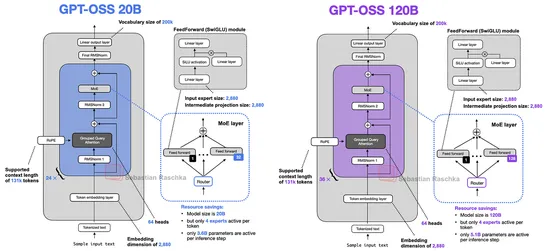
From GPT-2 to gpt-oss: Analyzing the Architectural Advances

OpenAI Returns to Openness. The company droppedgpt-oss-20Bandgpt-oss-120B—its first open-weight LLMs since GPT-2. The models pack a modern stack:Mixture-of-Experts,Grouped Query Attention,Sliding Window Attention, andSwiGLU. They're also lean. Thanks toMXFP4 quantization, 20B runs on a 16GB consume.. read more  

From GPT-2 to gpt-oss: Analyzing the Architectural Advances
Link
@faun shared a link, 6 months, 3 weeks ago
FAUN.dev()

Combining GenAI & Agentic AI to build scalable, autonomous systems

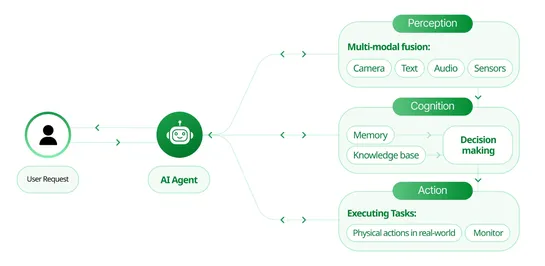
Agentic AI doesn’t just crank out content—it takes the wheel. Where GenAI reacts, Agentic AI plans, perceives, and acts. Think less autocomplete, more autonomous ops. Hook them together, and you get a full-stack brain: content creation, real-time decisions, adaptive workflows, all learning as they .. read more  

Combining GenAI & Agentic AI to build scalable, autonomous systems
Link
@faun shared a link, 6 months, 3 weeks ago
FAUN.dev()

37 Things I Learned About Information Retrieval in Two Years at a Vector Database Company

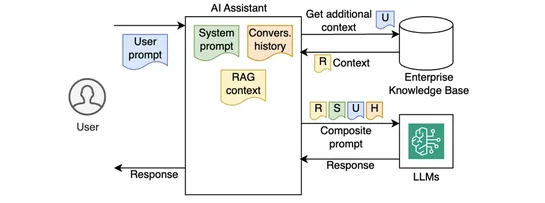
A Weaviate engineer pulls back the curtain on two years of hard-earned lessons in vector search—breaking downBM25,embedding models,ANN algorithms, andRAG pipelines. The real story? Retrieval workflows keep moving—from keyword-heavy (sparse) toward embedding-driven (dense). Across IR use cases, the .. read more  

Link
@faun shared a link, 6 months, 3 weeks ago
FAUN.dev()

I set up an email triage system using Home Assistant and a local LLM, here's how you can too

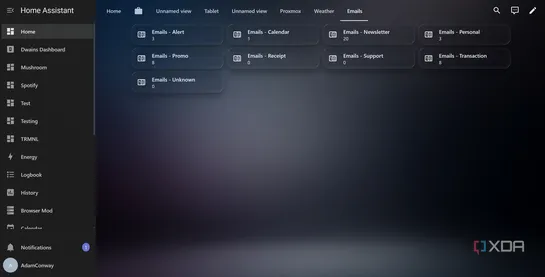
A DIY email triage rig usingHome Assistant, IMAP, andOllamawires up local LLM smarts with YAML-fueled automation. At the core: an8B dolphin-llamamodel running on GPU, chewing through messy HTML emails, tagging them, and firing off priority-sorted summaries via notifications. Why it matters:A signal.. read more  

I set up an email triage system using Home Assistant and a local LLM, here's how you can too
Link
@faun shared a link, 6 months, 3 weeks ago
FAUN.dev()

The Most Important Machine Learning Equations: A Comprehensive Guide

A new reference rounds up the core ML equations—Bayes’ Theorem, cross-entropy, eigen decomposition, attention—and shows how they plug into real Python code using NumPy, TensorFlow, and scikit-learn. It hits the big four: probability, linear algebra, optimization, and generative modeling. Stuff that.. read more  

Link
@faun shared a link, 6 months, 3 weeks ago
FAUN.dev()

Effectively building AI agents on AWS Serverless

AWS just dropped support for buildingserverless agentic AI systems. You’ll need the Strands Agents SDK, Bedrock AgentCore (preview), plus trusty tools like Lambda and ECS. What’s new? Agentic AI flips the script. Instead of dumb prompt-in, response-out bots, you getgoal-driven loopswith memory, too.. read more  

Effectively building AI agents on AWS Serverless
Link
@faun shared a link, 6 months, 3 weeks ago
FAUN.dev()

Introducing AWS Cloud Control API MCP Server: Natural Language Infrastructure Management on AWS

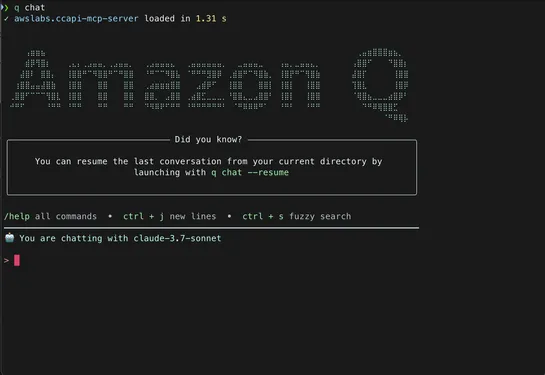
AWS dropped theCloud Control API MCP Server, a mouthful of a name for a tool that makes 1,200+ AWS resources manageable through a standard CRUDL API—using natural language. Think: describe what you want, and tools like Amazon Q Developer turn it into actual infra code. It doesn’t stop there. It val.. read more  

Introducing AWS Cloud Control API MCP Server: Natural Language Infrastructure Management on AWS
Link
@faun shared a link, 6 months, 3 weeks ago
FAUN.dev()

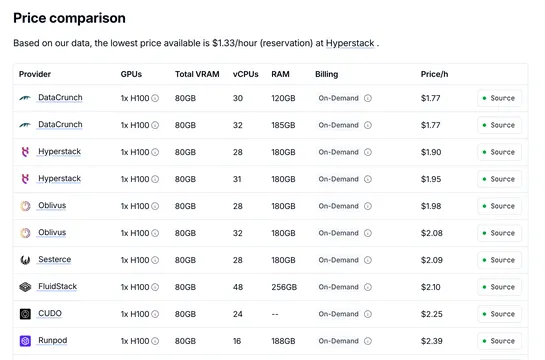
Are OpenAI and Anthropic Really Losing Money on Inference?

DeepSeek R1 running on H100s puts input-token costs near$0.003 per million—while output tokens still punch in north of$3. That’s a 1,000x spread. So if a job leans heavy on input—think code linting or parsing big docs—those margins stay fat, even with cautious compute. System shift:This lop-sided .. read more  

Are OpenAI and Anthropic Really Losing Money on Inference?
Link
@faun shared a link, 6 months, 3 weeks ago
FAUN.dev()

Some thoughts on LLMs and Software Development

Most LLMs still play autocomplete sidekick. But seasoned devs? They get better results when the model reads and rewrites actual source files. That gap—between how LLMs are designed to work and how prosactuallyuse them—messes with survey data and muddies the picture on real gains in code quality and.. read more  

On the 1st of July 2017, the Indian government introduced the Goods and Services Tax (GST) to the general public. This tax replaced pre-existing taxes with a destination-based, multi-stage, indirect tax system. The GST applies to all eCommerce and Magento stores within India. The World Bank has stated that the GST is one of the most complex tax systems worldwide due to its intricate nature.

As the GST is bifurcated into multiple tax slabs, it has become more difficult to implement such a complex taxing system in Magento 2. Managing a multi-vendor marketplace entails dealing with numerous vendors who sell various products on your platform. 

This necessitates the computation of GST tax rates based on the product and its category, which can be intricate due to varying tax brackets. An automated system is needed to collect and accurately compute vendor tax rates.

The Magento 2 Multi-vendor Indian GST Extension, also called the Magento Multi-vendor GST Module by MageComp, confidently calculates GST for products sold through your Magento stores by vendors. The module fully complies with the Indian government's GST standards and prominently displays the vendor's GST number and summary in all Magento order documents.

Why choose MageComp’s Magento 2 Multi Vendor Indian GST Extension?

Allows admins to enable/disable the module for global, category, and product-specific configuration.
Orders that are placed with the GST module showcase a detailed bifurcation of tax rates in the order view, credit memos, invoices, new order emails and PDFs.
The GST module displays a detailed SGST and CGST tax bifurcation in the order details.
The module automatically calculates IGST, CGST and SGST based on the products added to the cart.

Benefits of Multi Vendor Indian GST for Admins

Allows admins to mention their GSTIN, CIN and PAN number in all order details.
Admins can import the product-specific GST via a CSV file.
Admins have the option to include or exclude GST tax rates from the product prices.
Admins can easily set their business origins and apply IGST (interstate Magento GST)
The module allows the admin to upload an image and a digital signature to display in invoice PDF.
Admins have the option to generate detailed GST reports based on orders and products.

Benefits for Vendors

Vendors are allowed to add their GST number to all invoices and other documents.
Vendors can set a GST rate from the backend grid while creating a product.
Vendors can also set a minimum order price to apply GST rates.

Benefits for Customers

Customers can enter the buyer’s GST number to signup.
Customers can update their buyer’s GST number any time they want from their account grid.