Join us

ContentUpdates and recent posts about Magento 2 Multi Vendor Indian GST Extension..
Link
@faun shared a link, 7 months, 1 week ago
FAUN.dev()

Tiny Agents in Python: a MCP-powered agent in ~70 lines of code

A new demo walks through buildingTiny Agents in Python—just ~70 lines using theModel Context Protocol (MCP). No boilerplate. Just clean LLM-to-tool hookups with standardized agent configs. Agents plug into multiple MCP servers out of the box—from local filesystems to Playwright browsers—and handle .. read more  
Link
@faun shared a link, 7 months, 1 week ago
FAUN.dev()

Context Engineering for AI Agents: Lessons from Building Manus

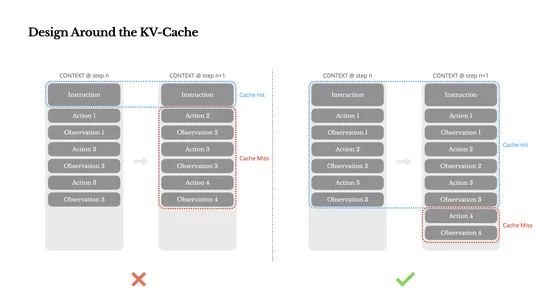
Failures make great teachers—especially for LLMs. Stuffing failed attempts right into the prompt helps agents recalibrate. It nudges their internal priors, cuts down on repeat mistakes, and sparks smarter behavior... read more  

Context Engineering for AI Agents: Lessons from Building Manus
Link
@faun shared a link, 7 months, 1 week ago
FAUN.dev()

Is GPT-5 really worse than GPT-4o? Ars puts them to the test.

OpenAI walked back its latest release after users flaggedGPT-5for sounding flat, hallucinating more, and losing creative spark. The fix? Rolling back to the friendlierGPT-4o. Head-to-head tests told a nuanced story:GPT-5nailed accuracy and structure across most prompts. But when the task called for.. read more  

Is GPT-5 really worse than GPT-4o? Ars puts them to the test.
Link
@faun shared a link, 7 months, 1 week ago
FAUN.dev()

Myth Or Reality: Will AI Replace Computer Programmers?

Generative AI tools likeGPT-4oandClaude Sonnetnow handle the grunt work—fixing bugs, cranking out code, writing docs—with scary accuracy. Amazon and Anthropic are already hinting at hiring fewer engineers. But the jobs aren’t vanishing; they’re mutating... read more  

Myth Or Reality: Will AI Replace Computer Programmers?
Link
@faun shared a link, 7 months, 1 week ago
FAUN.dev()

Building an AI-Powered E-commerce Chat Assistant with MongoDB

freeCodeCamp dropped a new course that walks devs through building an AI-powered shopping agent from scratch. It ties togetherLangGraphfor orchestration,Geminifor reasoning, andMongoDB Atlasas the vector memory layer. The build covers aNode.js backend, aReact frontend, and wires inmulti-step agent .. read more  

Building an AI-Powered E-commerce Chat Assistant with MongoDB
Link
@faun shared a link, 7 months, 1 week ago
FAUN.dev()

Evolving our real-time timeseries storage again: Built in Rust for performance at scale

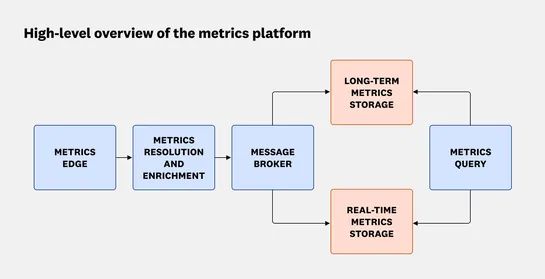
Datadog just dropped its 6th-gen real-time timeseries engine:RTDB. It's built inRust, sharded per core, and backed by LSM trees that don’t blink under pressure. The secret sauce? A custom storage engine calledMonocle—optimized for high-cardinality chaos and bursty workloads. It’s pulling60x faster .. read more  

Evolving our real-time timeseries storage again: Built in Rust for performance at scale
Link
@faun shared a link, 7 months, 1 week ago
FAUN.dev()

Dynamo, DynamoDB, and Aurora DSQL

Marc Brooker breaks down the jump fromAmazon DynamotoDynamoDBandAurora DSQL, tracing how the guts of cloud databases have changed. It’s a story about dropping old trade-offs and picking up stronger guarantees. DynamoDB ditches the old hash-ring replication for multi-AZ replica sets backed by Paxos... read more  

Link
@faun shared a link, 7 months, 1 week ago
FAUN.dev()

Can LLMs replace on call SREs today?

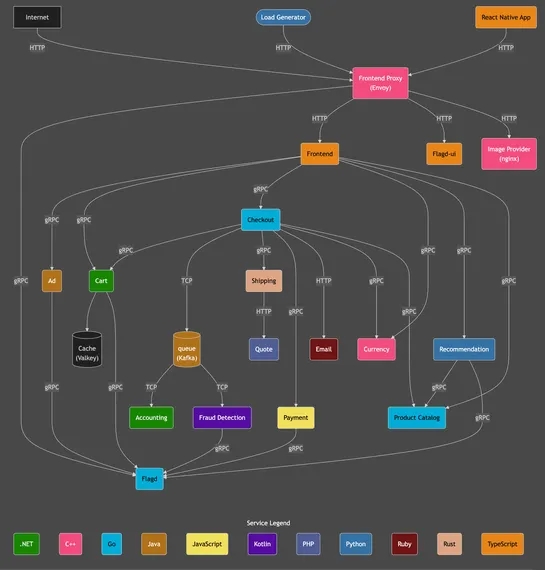
ClickHouse ran five LLMs through an autonomous root cause gauntlet using OpenTelemetry data. None nailed it solo. OpenAI’s o3 and Claude Sonnet 4 came closest. GPT-4.1 was the cheapest brain on the block. Things got weird under the hood. Token usage spiked unpredictably. Queries slammed observabili.. read more  

Can LLMs replace on call SREs today?
Link
@faun shared a link, 7 months, 1 week ago
FAUN.dev()

Migrating Airbnb’s JVM Monorepo to Bazel

Airbnb yanked tens of millions of lines of Java, Kotlin, and Scala out of Gradle and dropped them intoBazel. Why? Faster builds, reproducible results, and smoother dev workflows. They didn’t just swap tools—they rewired the whole thing. A customautomated build file generatornow slices up targets fi.. read more  

Migrating Airbnb’s JVM Monorepo to Bazel
Link
@faun shared a link, 7 months, 1 week ago
FAUN.dev()

Hunting Living Secrets: Secret Validity Checks Arrive in GitHub Advanced Security for Azure DevOps

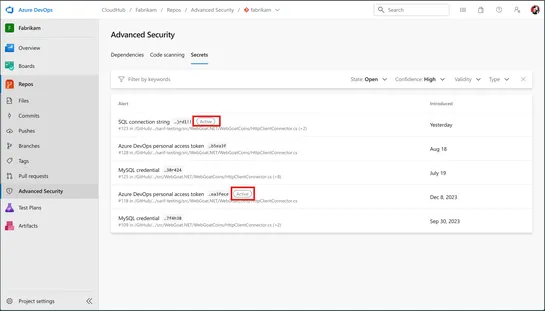
GitHub Advanced Security for Azure DevOps just got sharper: it now checks if leaked secrets are actuallyvalid. Secrets are flagged asActiveorUnknownby pinging providers in real time. No setup needed. It auto-kicks in for supported secret types. Why care?Because not every secret leak is an emergenc.. read more  

Hunting Living Secrets: Secret Validity Checks Arrive in GitHub Advanced Security for Azure DevOps
On the 1st of July 2017, the Indian government introduced the Goods and Services Tax (GST) to the general public. This tax replaced pre-existing taxes with a destination-based, multi-stage, indirect tax system. The GST applies to all eCommerce and Magento stores within India. The World Bank has stated that the GST is one of the most complex tax systems worldwide due to its intricate nature.

As the GST is bifurcated into multiple tax slabs, it has become more difficult to implement such a complex taxing system in Magento 2. Managing a multi-vendor marketplace entails dealing with numerous vendors who sell various products on your platform. 

This necessitates the computation of GST tax rates based on the product and its category, which can be intricate due to varying tax brackets. An automated system is needed to collect and accurately compute vendor tax rates.

The Magento 2 Multi-vendor Indian GST Extension, also called the Magento Multi-vendor GST Module by MageComp, confidently calculates GST for products sold through your Magento stores by vendors. The module fully complies with the Indian government's GST standards and prominently displays the vendor's GST number and summary in all Magento order documents.

Why choose MageComp’s Magento 2 Multi Vendor Indian GST Extension?

Allows admins to enable/disable the module for global, category, and product-specific configuration.
Orders that are placed with the GST module showcase a detailed bifurcation of tax rates in the order view, credit memos, invoices, new order emails and PDFs.
The GST module displays a detailed SGST and CGST tax bifurcation in the order details.
The module automatically calculates IGST, CGST and SGST based on the products added to the cart.

Benefits of Multi Vendor Indian GST for Admins

Allows admins to mention their GSTIN, CIN and PAN number in all order details.
Admins can import the product-specific GST via a CSV file.
Admins have the option to include or exclude GST tax rates from the product prices.
Admins can easily set their business origins and apply IGST (interstate Magento GST)
The module allows the admin to upload an image and a digital signature to display in invoice PDF.
Admins have the option to generate detailed GST reports based on orders and products.

Benefits for Vendors

Vendors are allowed to add their GST number to all invoices and other documents.
Vendors can set a GST rate from the backend grid while creating a product.
Vendors can also set a minimum order price to apply GST rates.

Benefits for Customers

Customers can enter the buyer’s GST number to signup.
Customers can update their buyer’s GST number any time they want from their account grid.