Join us

ContentUpdates and recent posts about Magento 2 Multi Vendor Indian GST Extension..
Link
@faun shared a link, 8 months ago
FAUN.dev()

How to automatically disable users in AWS Managed Microsoft AD based on GuardDuty findings

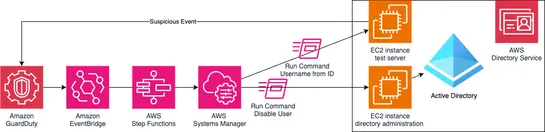
AWS just dropped a new threat-response setup that tiesGuardDuty,EventBridge,Step Functions, andSystems Manager Run Commandinto one clean pipeline. The goal? Hunt for EC2 threats and lock downActive Directoryaccounts—automatically. GuardDuty kicks off the flow when it spots trouble. From there, Even.. read more  
How to automatically disable users in AWS Managed Microsoft AD based on GuardDuty findings
Link
@faun shared a link, 8 months ago
FAUN.dev()

🚨 Azure Service Health Built-In Policy (Preview) – Now Available! 

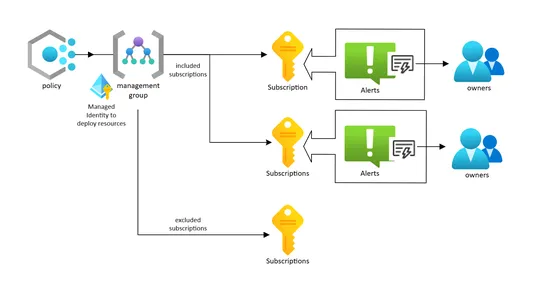
Microsoft just droppedAzure Service Health Built-In Policy(Preview). It lets teams push Service Health alerts across every Azure subscription—automatically—using Azure Policy. No more piecemeal setup. It folds in AMBA lessons, supports custom rules and action groups, and locks in alert coverage at .. read more  

🚨 Azure Service Health Built-In Policy (Preview) – Now Available! 
Link
@faun shared a link, 8 months ago
FAUN.dev()

From Manual Testing to AI-Generated Automation: Our Azure DevOps MCP + Playwright Success Story

A team wired up Azure DevOps’MCP serverwithGitHub Copilotto crank outPlaywrightend-to-end tests from manual test cases. They now run tests on demand from Azure Test Plans, convert entire test suites in bulk, and drop the results into CI pipelines—no hand-holding required. System shift:AI's not just.. read more  

From Manual Testing to AI-Generated Automation: Our Azure DevOps MCP + Playwright Success Story
Link
@faun shared a link, 8 months ago
FAUN.dev()

Building on the foundation of OpenTelemetry eBPF Instrumentation: what’s new in Grafana Beyla 2.5

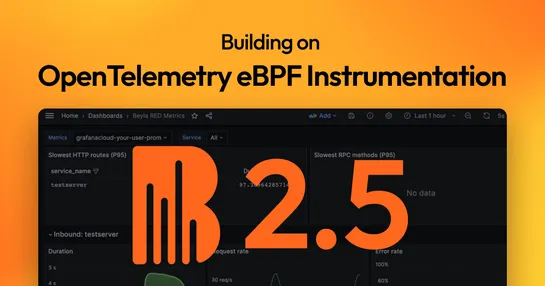
Grafana Beyla 2.5 goes all-in on upstreamOpenTelemetry eBPF Instrumentation, baking it right into the core. This release addsauto-instrumentation for MongoDB and JSON-RPC,manual spans in Go, and tightertrace correlation for NodeJS. New in town:survey mode. Think lightweight service discovery—no ful.. read more  

Building on the foundation of OpenTelemetry eBPF Instrumentation: what’s new in Grafana Beyla 2.5
Link
@faun shared a link, 8 months ago
FAUN.dev()

Kali Linux can now run in Apple containers on macOS systems

Cybersecurity professionals can now launch Kali Linux in a virtualized container on macOS Sequoia using Apple's new containerization framework. Apple announced a new framework at WWDC 2025, allowing Apple Silicon hardware to run isolated Linux distros in a virtualized environment. There are limitati.. read more  

Link
@faun shared a link, 8 months ago
FAUN.dev()

Cloud native is not just for hyperscalers

CNCF just dropped anAI workload conformance program, built like the Kubernetes one—so AI tools play nice across clusters. Portability, meet your referee. It’s tightening the loop betweenOpenTelemetry and OpenSearch, turning ad-hoc hacks into actual cross-project coordination. AndBackstage and GitOp.. read more  

Cloud native is not just for hyperscalers
Link
@faun shared a link, 8 months ago
FAUN.dev()

MariaDB Kubernetes Operator 25.08.0 Adds AI Vector Support and Disaster Recovery Enhancements

MariaDB Kubernetes Operator 25.08.0 drops some real upgrades. First up:physical backups. Now supported through native MariaDB tools and Kubernetes CSI snapshots—huge win if you're dealing with chunky datasets and tight recovery windows. It alsodefaults to MariaDB 11.8, which brings in anative vect.. read more  

MariaDB Kubernetes Operator 25.08.0 Adds AI Vector Support and Disaster Recovery Enhancements
Link
@faun shared a link, 8 months ago
FAUN.dev()

How I eliminated networking complexity

A fresh pattern’s gaining traction:Docker + Tailscale sidecarsreplacing old-school reverse proxies and clunky VPNs. Each service runs as its ownmesh-routed node, containerized and independent. The trick?Network namespace sharing.App containers hook into the Tailscale mesh with no exposed ports, no .. read more  

Link
@faun shared a link, 8 months ago
FAUN.dev()

AI inference supercharges on Google Kubernetes Engine

Google Cloud's pushingGKEbeyond container orchestration, framing it as an AI inference engine. Meet the new crew: theInference Gateway(smart load balancer, talks models and hardware),custom compute classes, and aDynamic Workload Schedulerthat tunes for both speed and spend. The setup handles GPU an.. read more  

Link
@faun shared a link, 8 months ago
FAUN.dev()

Kubernetes Will Solve YAML Headaches with KYAML

Kubernetes is eyeing a YAML remix. Version 1.34 may bring inKYAML—a stricter, YAML-compatible subset built to cut down on sloppy configs and sneaky formatting bugs. KYAML keeps the good parts: comments, trailing commas, unquoted keys. But it dumps YAML’s whitespace drama. Existing manifests and Hel.. read more  

Kubernetes Will Solve YAML Headaches with KYAML
On the 1st of July 2017, the Indian government introduced the Goods and Services Tax (GST) to the general public. This tax replaced pre-existing taxes with a destination-based, multi-stage, indirect tax system. The GST applies to all eCommerce and Magento stores within India. The World Bank has stated that the GST is one of the most complex tax systems worldwide due to its intricate nature.

As the GST is bifurcated into multiple tax slabs, it has become more difficult to implement such a complex taxing system in Magento 2. Managing a multi-vendor marketplace entails dealing with numerous vendors who sell various products on your platform. 

This necessitates the computation of GST tax rates based on the product and its category, which can be intricate due to varying tax brackets. An automated system is needed to collect and accurately compute vendor tax rates.

The Magento 2 Multi-vendor Indian GST Extension, also called the Magento Multi-vendor GST Module by MageComp, confidently calculates GST for products sold through your Magento stores by vendors. The module fully complies with the Indian government's GST standards and prominently displays the vendor's GST number and summary in all Magento order documents.

Why choose MageComp’s Magento 2 Multi Vendor Indian GST Extension?

Allows admins to enable/disable the module for global, category, and product-specific configuration.
Orders that are placed with the GST module showcase a detailed bifurcation of tax rates in the order view, credit memos, invoices, new order emails and PDFs.
The GST module displays a detailed SGST and CGST tax bifurcation in the order details.
The module automatically calculates IGST, CGST and SGST based on the products added to the cart.

Benefits of Multi Vendor Indian GST for Admins

Allows admins to mention their GSTIN, CIN and PAN number in all order details.
Admins can import the product-specific GST via a CSV file.
Admins have the option to include or exclude GST tax rates from the product prices.
Admins can easily set their business origins and apply IGST (interstate Magento GST)
The module allows the admin to upload an image and a digital signature to display in invoice PDF.
Admins have the option to generate detailed GST reports based on orders and products.

Benefits for Vendors

Vendors are allowed to add their GST number to all invoices and other documents.
Vendors can set a GST rate from the backend grid while creating a product.
Vendors can also set a minimum order price to apply GST rates.

Benefits for Customers

Customers can enter the buyer’s GST number to signup.
Customers can update their buyer’s GST number any time they want from their account grid.