Join us

ContentUpdates and recent posts about Magento 2 Multi Vendor Indian GST Extension..
Link
@faun shared a link, 8 months, 2 weeks ago
FAUN.dev()

How I eliminated networking complexity

A fresh pattern’s gaining traction:Docker + Tailscale sidecarsreplacing old-school reverse proxies and clunky VPNs. Each service runs as its ownmesh-routed node, containerized and independent. The trick?Network namespace sharing.App containers hook into the Tailscale mesh with no exposed ports, no .. read more  

Link
@faun shared a link, 8 months, 2 weeks ago
FAUN.dev()

MariaDB Kubernetes Operator 25.08.0 Adds AI Vector Support and Disaster Recovery Enhancements

MariaDB Kubernetes Operator 25.08.0 drops some real upgrades. First up:physical backups. Now supported through native MariaDB tools and Kubernetes CSI snapshots—huge win if you're dealing with chunky datasets and tight recovery windows. It alsodefaults to MariaDB 11.8, which brings in anative vect.. read more  

MariaDB Kubernetes Operator 25.08.0 Adds AI Vector Support and Disaster Recovery Enhancements
Link
@faun shared a link, 8 months, 2 weeks ago
FAUN.dev()

Introducing Kubernetes for Snowflake

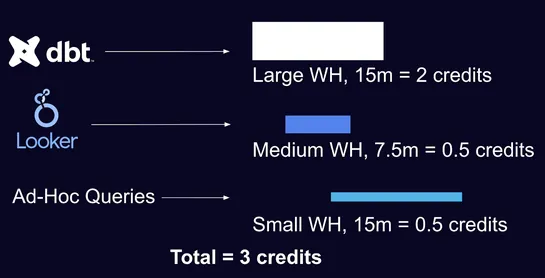
Snowflake just leveled up its workload scheduler—now driven by LLMs and reinforcement learning. Instead of locking jobs to static warehouses, it predicts where to send them in real-time. Smarter routing, tighter hardware use, over40%shaved off compute bills. Bigger picture:Another nod toward ML-bas.. read more  

Introducing Kubernetes for Snowflake
Link
@faun shared a link, 8 months, 2 weeks ago
FAUN.dev()

Kubernetes Will Solve YAML Headaches with KYAML

Kubernetes is eyeing a YAML remix. Version 1.34 may bring inKYAML—a stricter, YAML-compatible subset built to cut down on sloppy configs and sneaky formatting bugs. KYAML keeps the good parts: comments, trailing commas, unquoted keys. But it dumps YAML’s whitespace drama. Existing manifests and Hel.. read more  

Kubernetes Will Solve YAML Headaches with KYAML
Link
@faun shared a link, 8 months, 2 weeks ago
FAUN.dev()

Kubernetes Observability: Pillars, Tools & Best Practices

Kubernetes observability isn’t just about catching metrics or tailing logs. It’s about stitching togethermetrics, logs, and tracesto see what’s actually happening—across services, over time, and through the chaos. Thing is, Kubernetes doesn’t come with this built in. So teams hack together toolchai.. read more  

Link
@faun shared a link, 8 months, 2 weeks ago
FAUN.dev()

Introducing Headlamp AI Assistant

Headlamp just dropped an AI Assistant plugin that foldsLLM-driven actions and queriesstraight into the Kubernetes UI. It taps intocontext-aware promptsto spot issues, restart deployments, and hunt down flaky pods—without leaving the interface. System shift:This pushes Kubernetes toward intent-based.. read more  

Link
@faun shared a link, 8 months, 2 weeks ago
FAUN.dev()

Cloudera Acquires Taikun for Managing Kubernetes and Cloud

Cloudera acquired Taikun for seamless deployment of data and AI workloads in any environment. This move reinforces Cloudera's commitment to flexibility and innovation in managing complex IT infrastructures... read more  

Link
@faun shared a link, 8 months, 2 weeks ago
FAUN.dev()

How We Saved $1.22 Million Annually on GCP Costs in a Few Simple Steps

Arpeely chopped$140K/monthoff their cloud bill using a surgical mix of GCP tricks. Committed Use Discounts (CUDs) for high-availability services? Check. Smarter Kubernetes HPA configs? Definitely. Archiving old BigQuery data into GCS Archive? That one alone slashed storage costs 16x. The real kicker.. read more  

How We Saved $1.22 Million Annually on GCP Costs in a Few Simple Steps
Link
@faun shared a link, 8 months, 2 weeks ago
FAUN.dev()

Accessing the Kubernetes API from SQL Server 2025

SQL Server 2025 rolls outspinvokeexternalrestendpoint, a new way to hit REST APIs straight from T-SQL. That includes calling the Kubernetes API—thanks to a reverse proxy in front. The setup’s not exactly plug-and-play. You’ll need custom TLS certs, an nginx reverse proxy, and Kubernetes RBAC to kee.. read more  

Accessing the Kubernetes API from SQL Server 2025
On the 1st of July 2017, the Indian government introduced the Goods and Services Tax (GST) to the general public. This tax replaced pre-existing taxes with a destination-based, multi-stage, indirect tax system. The GST applies to all eCommerce and Magento stores within India. The World Bank has stated that the GST is one of the most complex tax systems worldwide due to its intricate nature.

As the GST is bifurcated into multiple tax slabs, it has become more difficult to implement such a complex taxing system in Magento 2. Managing a multi-vendor marketplace entails dealing with numerous vendors who sell various products on your platform. 

This necessitates the computation of GST tax rates based on the product and its category, which can be intricate due to varying tax brackets. An automated system is needed to collect and accurately compute vendor tax rates.

The Magento 2 Multi-vendor Indian GST Extension, also called the Magento Multi-vendor GST Module by MageComp, confidently calculates GST for products sold through your Magento stores by vendors. The module fully complies with the Indian government's GST standards and prominently displays the vendor's GST number and summary in all Magento order documents.

Why choose MageComp’s Magento 2 Multi Vendor Indian GST Extension?

Allows admins to enable/disable the module for global, category, and product-specific configuration.
Orders that are placed with the GST module showcase a detailed bifurcation of tax rates in the order view, credit memos, invoices, new order emails and PDFs.
The GST module displays a detailed SGST and CGST tax bifurcation in the order details.
The module automatically calculates IGST, CGST and SGST based on the products added to the cart.

Benefits of Multi Vendor Indian GST for Admins

Allows admins to mention their GSTIN, CIN and PAN number in all order details.
Admins can import the product-specific GST via a CSV file.
Admins have the option to include or exclude GST tax rates from the product prices.
Admins can easily set their business origins and apply IGST (interstate Magento GST)
The module allows the admin to upload an image and a digital signature to display in invoice PDF.
Admins have the option to generate detailed GST reports based on orders and products.

Benefits for Vendors

Vendors are allowed to add their GST number to all invoices and other documents.
Vendors can set a GST rate from the backend grid while creating a product.
Vendors can also set a minimum order price to apply GST rates.

Benefits for Customers

Customers can enter the buyer’s GST number to signup.
Customers can update their buyer’s GST number any time they want from their account grid.