Join us

ContentUpdates and recent posts about Magento 2 Multi Vendor Indian GST Extension..
Link
@faun shared a link, 8 months, 3 weeks ago
FAUN.dev()

From Borg to Broken: why Kubernetes 2.0 is an apology letter

Kubernetes 2.0 is kicking YAML to the curb.After years of living and breathing.yamlfiles, the project is eyeing a hard break. Maintainers haven’t said it outright, but the message is clear: YAML isn’t cutting it anymore. System shift:This could signal a real usability reboot—maybe even a less painf.. read more  

From Borg to Broken: why Kubernetes 2.0 is an apology letter
Link
@faun shared a link, 8 months, 3 weeks ago
FAUN.dev()

I've been using Talos Linux for Kubernetes, and I'll never look back

Talos Linux—an OS stripped down to the essentials and locked tighter than a production firewall—now boots cleanly as a VM onProxmox, playing nice with fullKVM/QEMUsupport. No shell, read-only filesystem, all wired forKubernetesviatalosctl. System shift:Devs are tossing old-school VM stacks for bare.. read more  

I've been using Talos Linux for Kubernetes, and I'll never look back
Link
@faun shared a link, 8 months, 3 weeks ago
FAUN.dev()

How to use cache mounts to speed up Docker builds

Depot just droppedNVMe-backed cache mounts—persistent, high-speed, and wired for true incremental Docker builds. Yes, even inephemeral CI. It hooks intonative BuildKit cache mounts, supporting bothsharedandexclusiveaccess. No more fragile registry caches. No more arcane CI cache duct tape... read more  

Link
@faun shared a link, 8 months, 3 weeks ago
FAUN.dev()

Docker Scout for Vulnerability management of Containers and remediation

Docker Scout now scans Azure Linux 3.0 containers for CVEs in real time—right in your pipeline. It spots vulns by layer, shows you how to fix them, and plays nice withDocker,Azure DevOps, andGitHub Actions. Security scanning isn't extra credit anymore. It's shipping with the build... read more  

Link
@faun shared a link, 8 months, 3 weeks ago
FAUN.dev()

Azure Kubernetes Cluster with Terraform

Spin up a production-gradeAKScluster withTerraform, but skip the hand-wavy theory. This new hands-on project gets into the weeds—RBAC, autoscaling, network policies, IP lockdowns, and yes,Azure Monitorwired up for observability out of the gate. Costs? Controlled. Infra? All code. It’s IaC for teams.. read more  

Link
@faun shared a link, 8 months, 3 weeks ago
FAUN.dev()

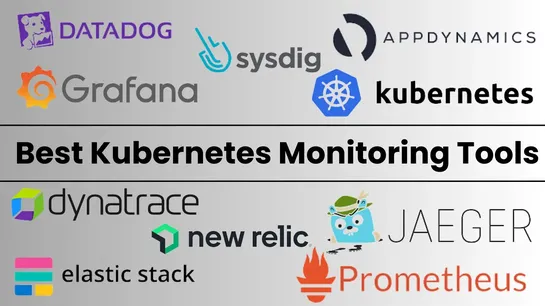
20 Best Kubernetes Monitoring Tools in 2025

Kubernetes monitoring isn't just about scraping metrics anymore. It's grown up into full-stack observability—metrics, logs, traces, plus flashy toys like AI-powered anomaly detection, real-time dashboards, and distributed tracing that actually works. The big players—Prometheus,Grafana,Datadog,Dynat.. read more  

20 Best Kubernetes Monitoring Tools in 2025
Link
@faun shared a link, 8 months, 3 weeks ago
FAUN.dev()

Retiring Docker Content Trust

Docker’s sunsettingDocker Content Trust (DCT)in 2025, starting withDocker Official Images. Not many used it, andNotary v1is toast. So they’re moving to modern signing tools likeSigstoreandNotation. Migration guides are on the way. What’s really happening:The container world’s ditching old trustboxe.. read more  

Link
@faun shared a link, 8 months, 3 weeks ago
FAUN.dev()

Choosing the Best Kubernetes API Gateway: comparing Kong, Envoy, and kgateway

TheKubernetes Gateway APIhit v1.0 and is officially stable. It's a clean break from the old Ingress model, bringing modular, role-aware, multi-protocol control. Core players:Gateway,GatewayClass, andHTTPRoute. On the flip side,Kong Gatewayis losing ground. The newer kids—Envoy Gatewayandkgateway—ar.. read more  

Link
@faun shared a link, 8 months, 3 weeks ago
FAUN.dev()

Kubernetes v1.34 Sneak Peek

Kubernetes v1.34 lands in August 2025. It bringsDynamic Resource Allocation (DRA)to stable—structured resource requests, CEL filtering, and support for GPUs and custom gear. Built on new API types. Finally. Kubelet and API Server tracinglevel up with OpenTelemetry. Stable's the goal. Per-HPA autos.. read more  

Link
@faun shared a link, 8 months, 3 weeks ago
FAUN.dev()

How Freshworks optimized server provisioning using Karpenter

Freshworks optimized AWS EKS with Karpenter to handle diverse instance types, reduce costs, and achieve seamless node provisioning, disruptions, and terminations with minimal impact to service availability and resource utilization... read more  

On the 1st of July 2017, the Indian government introduced the Goods and Services Tax (GST) to the general public. This tax replaced pre-existing taxes with a destination-based, multi-stage, indirect tax system. The GST applies to all eCommerce and Magento stores within India. The World Bank has stated that the GST is one of the most complex tax systems worldwide due to its intricate nature.

As the GST is bifurcated into multiple tax slabs, it has become more difficult to implement such a complex taxing system in Magento 2. Managing a multi-vendor marketplace entails dealing with numerous vendors who sell various products on your platform. 

This necessitates the computation of GST tax rates based on the product and its category, which can be intricate due to varying tax brackets. An automated system is needed to collect and accurately compute vendor tax rates.

The Magento 2 Multi-vendor Indian GST Extension, also called the Magento Multi-vendor GST Module by MageComp, confidently calculates GST for products sold through your Magento stores by vendors. The module fully complies with the Indian government's GST standards and prominently displays the vendor's GST number and summary in all Magento order documents.

Why choose MageComp’s Magento 2 Multi Vendor Indian GST Extension?

Allows admins to enable/disable the module for global, category, and product-specific configuration.
Orders that are placed with the GST module showcase a detailed bifurcation of tax rates in the order view, credit memos, invoices, new order emails and PDFs.
The GST module displays a detailed SGST and CGST tax bifurcation in the order details.
The module automatically calculates IGST, CGST and SGST based on the products added to the cart.

Benefits of Multi Vendor Indian GST for Admins

Allows admins to mention their GSTIN, CIN and PAN number in all order details.
Admins can import the product-specific GST via a CSV file.
Admins have the option to include or exclude GST tax rates from the product prices.
Admins can easily set their business origins and apply IGST (interstate Magento GST)
The module allows the admin to upload an image and a digital signature to display in invoice PDF.
Admins have the option to generate detailed GST reports based on orders and products.

Benefits for Vendors

Vendors are allowed to add their GST number to all invoices and other documents.
Vendors can set a GST rate from the backend grid while creating a product.
Vendors can also set a minimum order price to apply GST rates.

Benefits for Customers

Customers can enter the buyer’s GST number to signup.
Customers can update their buyer’s GST number any time they want from their account grid.