Join us

ContentUpdates and recent posts about Magento 2 Multi Vendor Indian GST Extension..
Link
@faun shared a link, 9 months ago
FAUN.dev()

The Cybersecurity Blind Spot in DevOps Pipelines

DevOps pipelines serve as superhighways for cybercriminals to target with credential leaks, supply chain infiltration, misconfigurations, and dependency vulnerabilities. Security must evolve with development to combat these sophisticated attacks... read more  

Link
@faun shared a link, 9 months ago
FAUN.dev()

How GitHub engineers tackle platform problems

Product engineersare like builders ofGundam models, construcing the final product, whileplatform engineerssupply the tools needed to build these kits. Understanding theGundam analogyhelps differentiate engineering roles at GitHub... read more  

Link
@faun shared a link, 9 months ago
FAUN.dev()

What Is IDOR? Finding and Preventing Insecure Direct Object References in AWS APIs

Attackers swap predictable IDs. They slip intoAWS APIs,Lambda functions, internal tools. Fuzzers likeffufflag sneaky HTTP 200s.Burp Intruderbubbles up 404 probes.CloudWatchlogs trace every call. Random UUIDs seal ID gaps... read more  

What Is IDOR? Finding and Preventing Insecure Direct Object References in AWS APIs
Link
@faun shared a link, 9 months ago
FAUN.dev()

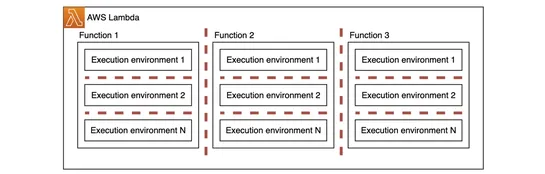
How Zapier runs isolated tasks on AWS Lambda and upgrades functions at scale

Zapier snaps each customer Zap into its ownAWS Lambda, cradled inside leanFirecracker microVMs. It wrangles 100k+ functions under anEKScontrol plane and inventory DB. When runtimes retire, Zapier swings into action: a set ofTerraform modulespaired with a customLambda canary tool. Traffic trickles in.. read more  

How Zapier runs isolated tasks on AWS Lambda and upgrades functions at scale
Link
@faun shared a link, 9 months ago
FAUN.dev()

kubriX: Your Out-of-the-Box Internal Developer Platform (IDP) for Kubernetes

Discover how kubriX seamlessly integrates leading open-source tools like Argo CD, Kargo, and Backstage to deliver a fully functional IDP out of the box. This blog post provides a deep dive into the technical aspects of kubriX, showcasing its capabilities and value proposition within the realm of Int.. read more  

Link
@faun shared a link, 9 months ago
FAUN.dev()

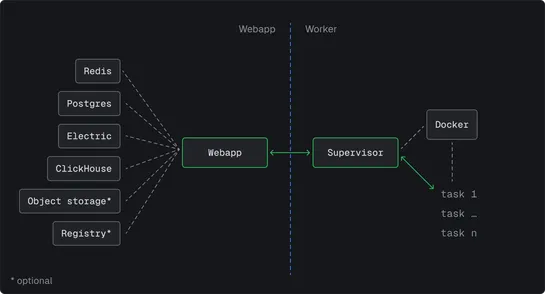
Self-hosting Trigger.dev v4 using Docker

Trigger.dev v4 sharpens self-hosting. It pins everything toDocker Compose. It bakesregistryandobject storagein. It chops YAML bloat. Env-var docs unify configs. Resource caps lock down security. Scaling? Spin up more worker containers... read more  

Self-hosting Trigger.dev v4 using Docker
Link
@faun shared a link, 9 months ago
FAUN.dev()

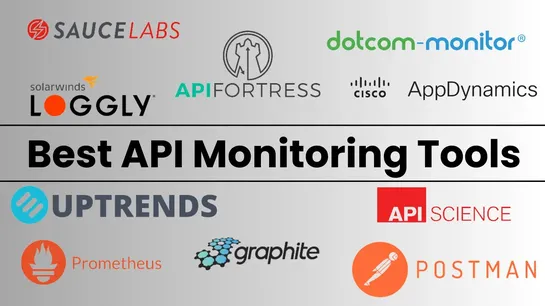
10 Best API Monitoring Tools in 2025

API monitoring tracks latency, errors and uptime. Tools tag real-time metrics. They fire alerts. They map traces. They automate tests. They crunch analytics. Examples span OSS starsPrometheus,Graphiteand SaaS champsAppDynamics,Postman. Each hooks into CI/CD pipelines and plants global synthetic prob.. read more  

10 Best API Monitoring Tools in 2025
Link
@faun shared a link, 9 months ago
FAUN.dev()

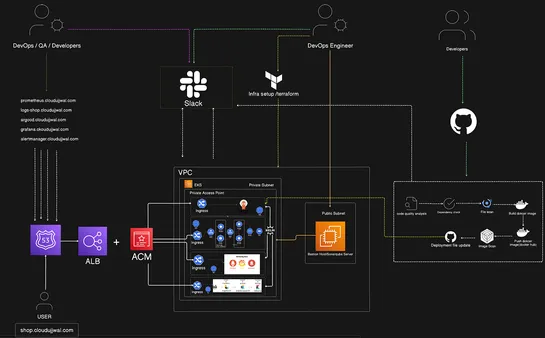
Building a Secure, Scalable, and Automated Cloud-Native Platform on AWS with EKS, GitOps, and…

The blueprint carves out production-grade AWS infra. Terraform orchestrates VPCs with public and private subnets, deploys a Bastion host, spins up private EKS clusters, and stands up an internet-facing ALB armed with SSL/TLS. Argo CD drives GitOps. The CI pipeline runs SAST, builds Docker images, hu.. read more  

Building a Secure, Scalable, and Automated Cloud-Native Platform on AWS with EKS, GitOps, and…
Link
@faun shared a link, 9 months ago
FAUN.dev()

Serverless: The Illusion of Choice

A LinkedIn thread exposes a hack around AWS EventBridge’s256KBlimit. Someone chains Lambdas tocompressthendecompressevents. Serverless traps lurk: blown-upIAMpermissions. Triggers with zero validation. Wide-openegress. Unscanned packages fueling supply chain bombs... read more  

Serverless: The Illusion of Choice
Link
@faun shared a link, 9 months ago
FAUN.dev()

Critical VMware Tools VGAuth Vulnerabilities Enable Full System Access for Attackers

Two CVE-2025 vulns in VMware Tools allow SYSTEM access via named pipe hijacking and path traversal. Upgrade to 12.5.1+ ASAP for fixes. Administrators must upgrade... read more  

Critical VMware Tools VGAuth Vulnerabilities Enable Full System Access for Attackers
On the 1st of July 2017, the Indian government introduced the Goods and Services Tax (GST) to the general public. This tax replaced pre-existing taxes with a destination-based, multi-stage, indirect tax system. The GST applies to all eCommerce and Magento stores within India. The World Bank has stated that the GST is one of the most complex tax systems worldwide due to its intricate nature.

As the GST is bifurcated into multiple tax slabs, it has become more difficult to implement such a complex taxing system in Magento 2. Managing a multi-vendor marketplace entails dealing with numerous vendors who sell various products on your platform. 

This necessitates the computation of GST tax rates based on the product and its category, which can be intricate due to varying tax brackets. An automated system is needed to collect and accurately compute vendor tax rates.

The Magento 2 Multi-vendor Indian GST Extension, also called the Magento Multi-vendor GST Module by MageComp, confidently calculates GST for products sold through your Magento stores by vendors. The module fully complies with the Indian government's GST standards and prominently displays the vendor's GST number and summary in all Magento order documents.

Why choose MageComp’s Magento 2 Multi Vendor Indian GST Extension?

Allows admins to enable/disable the module for global, category, and product-specific configuration.
Orders that are placed with the GST module showcase a detailed bifurcation of tax rates in the order view, credit memos, invoices, new order emails and PDFs.
The GST module displays a detailed SGST and CGST tax bifurcation in the order details.
The module automatically calculates IGST, CGST and SGST based on the products added to the cart.

Benefits of Multi Vendor Indian GST for Admins

Allows admins to mention their GSTIN, CIN and PAN number in all order details.
Admins can import the product-specific GST via a CSV file.
Admins have the option to include or exclude GST tax rates from the product prices.
Admins can easily set their business origins and apply IGST (interstate Magento GST)
The module allows the admin to upload an image and a digital signature to display in invoice PDF.
Admins have the option to generate detailed GST reports based on orders and products.

Benefits for Vendors

Vendors are allowed to add their GST number to all invoices and other documents.
Vendors can set a GST rate from the backend grid while creating a product.
Vendors can also set a minimum order price to apply GST rates.

Benefits for Customers

Customers can enter the buyer’s GST number to signup.
Customers can update their buyer’s GST number any time they want from their account grid.