Join us

ContentUpdates and recent posts about Magento 2 Multi Vendor Indian GST Extension..
Link
@faun shared a link, 9 months, 1 week ago
FAUN.dev()

Securing Kubernetes 1.33 Pods: The Impact of User Namespace Isolation

Kubernetes 1.33rolls out with a security upgrade. It flips the switch onuser namespacesby default, shoving pods into the safety zone as unprivileged users. Potential breaches? Curbed. But don't get too comfy—idmap-capable file systems and up-to-date runtimes are now your new best friends if you want.. read more  
Securing Kubernetes 1.33 Pods: The Impact of User Namespace Isolation
Link
@faun shared a link, 9 months, 1 week ago
FAUN.dev()

Zendesk Streamlines Infrastructure Provisioning with Foundation Interface Platform

Zendeskhas tossed out the old playbook with itsFoundation Interface. Forget the guessing games of infrastructure provisioning; engineers now scribble their demands in YAML, and voilà—magic happens. Kubernetes operators step in, spinning these requests into Custom Resources. It’s self-service nirvana.. read more  

Zendesk Streamlines Infrastructure Provisioning with Foundation Interface Platform
Link
@faun shared a link, 9 months, 1 week ago
FAUN.dev()

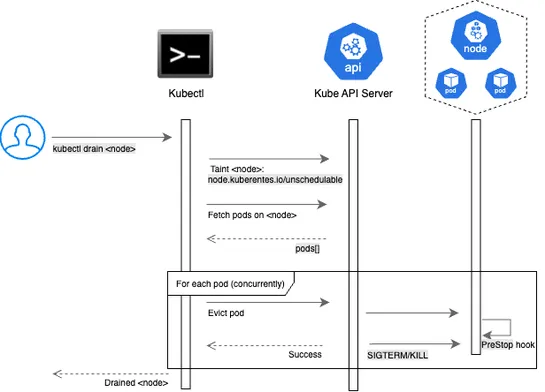
Rethinking Node Drains: A Webhook Based Approach to Graceful Pod Removal

Eviction Reschedule Hooksticks its nose in Kubernetes eviction requests, letting operator-managed stateful apps wriggle their way through node drains without breaking a sweat. 🎯.. read more  

Rethinking Node Drains: A Webhook Based Approach to Graceful Pod Removal
Link
@faun shared a link, 9 months, 1 week ago
FAUN.dev()

Under the hood: Amazon EKS ultra scale clusters

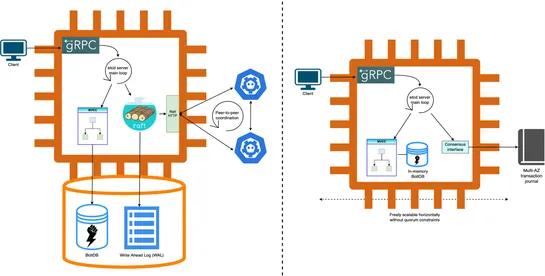
Amazon EKScranked up its gear—you can now spin up clusters with a staggering100,000 nodesat your beck and call. That’s a cozy home for either1.6 million AWS Trainium chipsor800,000 NVIDIA GPUs. Welcome to the playground for ultra-scale AI/ML. Performance soars skyward by ditching old etcd consensus .. read more  

Under the hood: Amazon EKS ultra scale clusters
Link
@faun shared a link, 9 months, 1 week ago
FAUN.dev()

Post-Quantum Cryptography in Kubernetes

Kubernetes v1.33quietly rides thepost-quantum securitywave, thanks to Go 1.24's hybrid key exchanges. Watch out for version mismatches, though—those could sneakily downgrade your defenses... read more  

Link
@faun shared a link, 9 months, 1 week ago
FAUN.dev()

6 Design Principles for Edge Computing Systems

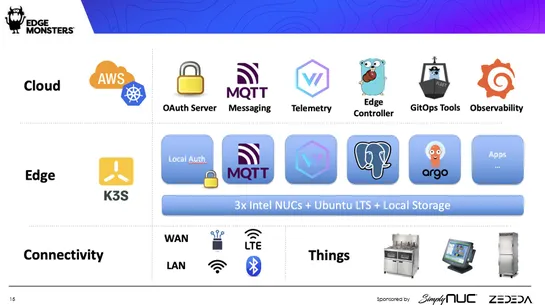
Edge systemseach have their eccentricities, needing solutions as unique as they are:Chick-fil-Aswears byKubernetesto herd its standard operations. TheAir Force, however, prizes nimbleness and ironclad security for deployments scattered across the globe. Smart edge management? It’s a mix ofInfrastruc.. read more  

6 Design Principles for Edge Computing Systems
Link
@faun shared a link, 9 months, 1 week ago
FAUN.dev()

OpenShift LACP bonding performance expectations

Red Hat OpenShift and NIC bonding for high availability is getting popular in data centers. Consider layer2/layer2+3 configurations for balanced traffic distribution across bonded links. Layer3+4 hashing offers highest throughput but may lead to out-of-order packets due to 802.3ad non-compliance. It.. read more  

Link
@faun shared a link, 9 months, 1 week ago
FAUN.dev()

The Evolution of Virtualization Platforms: The Rise of Managed Services and Local Providers’ Edge Against Hyperscalers

Cozystackwants local cloud providers to flex by deliveringKubernetes-based managed serviceswithout breaking a sweat. Who needs hyperscalers anyway? Built on open-source goodness, it ditches vendor lock-in, giving these providers the freedom to roll out next-gen infrastructures in style... read more  

The Evolution of Virtualization Platforms: The Rise of Managed Services and Local Providers’ Edge Against Hyperscalers
Link
@faun shared a link, 9 months, 1 week ago
FAUN.dev()

Kubernetes Observability with OpenTelemetry | A Complete Setup Guide

OpenTelemetrydelivers a full observability package for Kubernetes—traces, metrics, logs—all without handcuffs to a single vendor. Deployyour own OTEL Collectorson Minikube usingHelm charts. Dive into node and pod-level metrics and grab those can't-miss Kubernetes cluster events... read more  

Kubernetes Observability with OpenTelemetry | A Complete Setup Guide
Link
@faun shared a link, 9 months, 1 week ago
FAUN.dev()

Setting up Prometheus Stack on Kubernetes

Devtronis Kubernetes monitoring on overdrive. It ropes inPrometheusandGrafana, automates the pesky setup, and shoots real-time insights straight into a slick UI. Effort? Minimal. Results? Maximal... read more  

Setting up Prometheus Stack on Kubernetes
On the 1st of July 2017, the Indian government introduced the Goods and Services Tax (GST) to the general public. This tax replaced pre-existing taxes with a destination-based, multi-stage, indirect tax system. The GST applies to all eCommerce and Magento stores within India. The World Bank has stated that the GST is one of the most complex tax systems worldwide due to its intricate nature.

As the GST is bifurcated into multiple tax slabs, it has become more difficult to implement such a complex taxing system in Magento 2. Managing a multi-vendor marketplace entails dealing with numerous vendors who sell various products on your platform. 

This necessitates the computation of GST tax rates based on the product and its category, which can be intricate due to varying tax brackets. An automated system is needed to collect and accurately compute vendor tax rates.

The Magento 2 Multi-vendor Indian GST Extension, also called the Magento Multi-vendor GST Module by MageComp, confidently calculates GST for products sold through your Magento stores by vendors. The module fully complies with the Indian government's GST standards and prominently displays the vendor's GST number and summary in all Magento order documents.

Why choose MageComp’s Magento 2 Multi Vendor Indian GST Extension?

Allows admins to enable/disable the module for global, category, and product-specific configuration.
Orders that are placed with the GST module showcase a detailed bifurcation of tax rates in the order view, credit memos, invoices, new order emails and PDFs.
The GST module displays a detailed SGST and CGST tax bifurcation in the order details.
The module automatically calculates IGST, CGST and SGST based on the products added to the cart.

Benefits of Multi Vendor Indian GST for Admins

Allows admins to mention their GSTIN, CIN and PAN number in all order details.
Admins can import the product-specific GST via a CSV file.
Admins have the option to include or exclude GST tax rates from the product prices.
Admins can easily set their business origins and apply IGST (interstate Magento GST)
The module allows the admin to upload an image and a digital signature to display in invoice PDF.
Admins have the option to generate detailed GST reports based on orders and products.

Benefits for Vendors

Vendors are allowed to add their GST number to all invoices and other documents.
Vendors can set a GST rate from the backend grid while creating a product.
Vendors can also set a minimum order price to apply GST rates.

Benefits for Customers

Customers can enter the buyer’s GST number to signup.
Customers can update their buyer’s GST number any time they want from their account grid.