Join us

ContentUpdates and recent posts about Magento 2 Multi Vendor Indian GST Extension..
Link
@faun shared a link, 10 months, 4 weeks ago
FAUN.dev()

Automatically prioritize security issues from different tools with an LLM

Security backlogs resemble a garage sale—clutter everywhere and sorted more by desperation than priority. Here’s whereLLMsswoop in for smart triage. Choose your weapon: "naive" for speed, "bubble" for depth, orElofor that sweet balance. This way, you can organize chaos with logic, anchoring decision.. read more  

Automatically prioritize security issues from different tools with an LLM
Link
@faun shared a link, 10 months, 4 weeks ago
FAUN.dev()

New Linux Flaws Allow Password Hash Theft via Core Dumps in Ubuntu, RHEL, Fedora

Wiz Researchpoked around in over150,000 cloud accountsand unearthed some jaw-dropping screw-ups in data exposure and pitiful access control... read more  

Link
@faun shared a link, 10 months, 4 weeks ago
FAUN.dev()

Beyond API Uptime: Modern Metrics That Matter

Catchpoint's IPM reports a jaw-dropping 51% of companies hemorrhaging over$1 million each monthfrom API disasters. It's about performance, not just uptime. Modern API tools need to zero in on user experience metrics. Ditch the tired up/down routine. Embrace chaos engineering, pair it with proactive .. read more  

Link
@faun shared a link, 10 months, 4 weeks ago
FAUN.dev()

AlloyDB vs Amazon Aurora for PostgreSQL

AlloyDBoutperforms AWS Aurora for PostgreSQL in the TPC-C benchmark, handling2,875,803 TPM compared to Aurora's 1,245,459, and is 2.42 times more cost-effective at $0.075 per transaction. AlloyDB shows superior performance with substantial cost savings, making it a prime choice for transactional wor.. read more  

Link
@faun shared a link, 10 months, 4 weeks ago
FAUN.dev()

Shift Left with Confidence: A Practical Guide to DevSecOps Using GitHub Actions for Python Projects

GitHub Actions turns your Python projects into armored tanks, shifting security left to catch skeletons in your code's closet. It scans for secrets, polices package licenses, and hunts down bugs before they even think of moving in. Automated unit tests, Docker scans, vulnerability checks—your CI/CD .. read more  

Link
@faun shared a link, 10 months, 4 weeks ago
FAUN.dev()

Amazon EKS and Amazon EKS Distro now supports Kubernetes version 1.33

Kubernetes 1.33struts onto the scene with stablesidecar containers, topology-aware routing, and pod topology spread constraints. No beta testing anymore; it's fully unleashed onAWS EKS... read more  

Amazon EKS and Amazon EKS Distro now supports Kubernetes version 1.33
Link
@faun shared a link, 10 months, 4 weeks ago
FAUN.dev()

AI Runs Best On Cloud Native—Who's Managing the Kubernetes Platform?

AI workloads thrive on cloud-native platforms like Kubernetes because they offer the scalability, portability, and speed needed for modern machine learning—but building and running this infrastructure is highly complex and distracts from core AI work. The post argues that unless your business is inf.. read more  

Link
@faun shared a link, 10 months, 4 weeks ago
FAUN.dev()

The Risk of Default Configuration: How Out-of-the-Box Helm Charts Can Breach Your Cluster

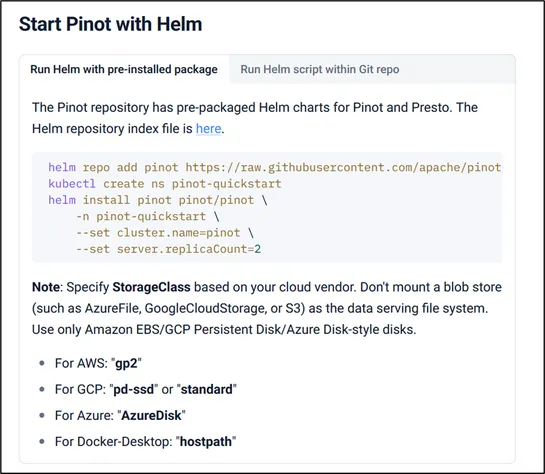
Apache Pinot's Helm setup is a welcome mat for troublemakers.It throws the doors open to critical services without bothering to ask, "Who goes there?" It's the kind of oversight attackers savor.Meshery and Selenium join the party too.Their default settings flirt with disaster, leaving the gates ajar.. read more  

The Risk of Default Configuration: How Out-of-the-Box Helm Charts Can Breach Your Cluster
Link
@faun shared a link, 10 months, 4 weeks ago
FAUN.dev()

Announcing new Model Context Protocol (MCP) Servers for AWS Serverless and Containers - AWS

AWS's Model Context Protocol (MCP) servers arm AI code assistantsto deftly wrangle AWS Lambda, ECS, and EKS. They launch apps at warp speed.MCP servers cram in AWS best practices and operational secrets,freeing you from infrastructure drudgery. You get to dive straight into crafting the heart of you.. read more  

Announcing new Model Context Protocol (MCP) Servers for AWS Serverless and Containers - AWS
Link
@faun shared a link, 10 months, 4 weeks ago
FAUN.dev()

What’s New in Networking for Kubernetes in the Isovalent Platform 1.17

The Isovalent Platform 1.17 release brings major upgrades to Kubernetes networking, including a new standalone Egress Gateway, dynamic BGP features, enhanced multi-tenant security policies, and smoother Calico-to-Cilium migrations. This version also introduces easier observability with integrated Ti.. read more  

On the 1st of July 2017, the Indian government introduced the Goods and Services Tax (GST) to the general public. This tax replaced pre-existing taxes with a destination-based, multi-stage, indirect tax system. The GST applies to all eCommerce and Magento stores within India. The World Bank has stated that the GST is one of the most complex tax systems worldwide due to its intricate nature.

As the GST is bifurcated into multiple tax slabs, it has become more difficult to implement such a complex taxing system in Magento 2. Managing a multi-vendor marketplace entails dealing with numerous vendors who sell various products on your platform. 

This necessitates the computation of GST tax rates based on the product and its category, which can be intricate due to varying tax brackets. An automated system is needed to collect and accurately compute vendor tax rates.

The Magento 2 Multi-vendor Indian GST Extension, also called the Magento Multi-vendor GST Module by MageComp, confidently calculates GST for products sold through your Magento stores by vendors. The module fully complies with the Indian government's GST standards and prominently displays the vendor's GST number and summary in all Magento order documents.

Why choose MageComp’s Magento 2 Multi Vendor Indian GST Extension?

Allows admins to enable/disable the module for global, category, and product-specific configuration.
Orders that are placed with the GST module showcase a detailed bifurcation of tax rates in the order view, credit memos, invoices, new order emails and PDFs.
The GST module displays a detailed SGST and CGST tax bifurcation in the order details.
The module automatically calculates IGST, CGST and SGST based on the products added to the cart.

Benefits of Multi Vendor Indian GST for Admins

Allows admins to mention their GSTIN, CIN and PAN number in all order details.
Admins can import the product-specific GST via a CSV file.
Admins have the option to include or exclude GST tax rates from the product prices.
Admins can easily set their business origins and apply IGST (interstate Magento GST)
The module allows the admin to upload an image and a digital signature to display in invoice PDF.
Admins have the option to generate detailed GST reports based on orders and products.

Benefits for Vendors

Vendors are allowed to add their GST number to all invoices and other documents.
Vendors can set a GST rate from the backend grid while creating a product.
Vendors can also set a minimum order price to apply GST rates.

Benefits for Customers

Customers can enter the buyer’s GST number to signup.
Customers can update their buyer’s GST number any time they want from their account grid.