Join us

ContentUpdates and recent posts about Magento 2 Multi Vendor Indian GST Extension..
Link
@faun shared a link, 11 months, 3 weeks ago
FAUN.dev()

v1.33: Image Pull Policy the way you always thought it worked!

Kubernetes v1.33finally crushesIssue 18787. Now, every pod must authenticate before playing with already pulled private images. Security toughens without missing a beat. A fresh credential verification system zaps a decade-old loophole, slamming the door on unauthorized access... read more  
Link
@faun shared a link, 11 months, 3 weeks ago
FAUN.dev()

v1.33: Updates to Container Lifecycle

Kubernetesv1.33just got a little smarter. Now you can use azero-duration Sleepaction in container lifecycle hooks. That means no more juggling extra binaries—nice and tidy. With alpha support, you get to tweak stop signals within containers. Forget those pesky image-level defaults. The catch? Your c.. read more  

Link
@faun shared a link, 11 months, 3 weeks ago
FAUN.dev()

Platform Engineering’s Role in Fixing Infrastructure Automation

Platform engineeringfuels DevOps with92% automated checks. It slashes infrastructure drift like crop circles in a hayfield. And83%strike gold with automated, self-serve platforms... read more  

Link
@faun shared a link, 11 months, 3 weeks ago
FAUN.dev()

AI at Scale: Serverless or Kubernetes?

At Kingfisher, GCP Vertex AI Pipelines and Kubernetes dance together, tackling AI scaling issues with grace.Serverless sounds dreamy until your budget cries uncle under traffic spikes. Kubernetes, though, delivers predictability, a perfect match for Kingfisher's consistent AI tasks... read more  

Link
@faun shared a link, 11 months, 3 weeks ago
FAUN.dev()

Why Even Stateless AKS Clusters Might Need Backup

Backing up those “stateless”AKS clustersisn’t just nerdy paranoia. Config drift, compliance headaches, and meddling hands make it a real necessity. In the DevOps trenches, clusters often wander off script from Git. Here, automated AKS backups ride in like heroes—capturing real-time snapshots, stream.. read more  

Link
@faun shared a link, 11 months, 3 weeks ago
FAUN.dev()

v1.33: Job's Backoff Limit Per Index Goes GA

Kubernetes v1.33just got a shiny new toy:Backoff Limit Per Index GA. Now, you can wrangle retries per job index like a pro. Say goodbye to those impatient failure-hungry beasts! 🎉.. read more  

Link
@faun shared a link, 11 months, 3 weeks ago
FAUN.dev()

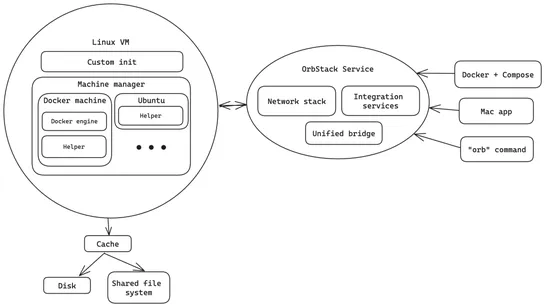
OrbStack: A Deep Dive for Container and Kubernetes Development

OrbStackrockets ahead with 2-5× faster I/O and harnesses Rosetta for blinding x86 speeds on Apple Silicon. For Mac users, it's a zippy Docker alternative. Unified Kubernetes, Linux machines, and effortless file sharing turbocharge development workflows. Meanwhile,Docker Desktopsulks in the corner, w.. read more  

OrbStack: A Deep Dive for Container and Kubernetes Development
Link
@faun shared a link, 11 months, 3 weeks ago
FAUN.dev()

kuberc is Here! Customizing kubectl with Kubernetes 1.33

Kuberc, introduced inKubernetes 1.33as an alpha feature, allows users to personalize their kubectl command-line experience with aliases and default flags. This configuration file separates personal preferences from the kubeconfig file, simplifying complex commands and reducing errors. Teams can pote.. read more  

Link
@faun shared a link, 11 months, 3 weeks ago
FAUN.dev()

How Kubernetes is Built

Kubernetessprang from Google'sBorglike a tech prodigy. It's a lesson in open-source wizardry, orchestrated by 150-200 zealous maintainers who roll out fresh updates every 14-16 weeks like clockwork. But here’s the magic trick: the "lead" and "shadow" setup. It’s a clever mentorship dance that lets r.. read more  

How Kubernetes is Built
Link
@anjali shared a link, 11 months, 3 weeks ago
Customer Marketing Manager, Last9

How to Handle Logging in Microservices Architectures

Learn how to manage logging in microservices—from common challenges to tools and practices that actually help in real-world systems.

log consolidation
On the 1st of July 2017, the Indian government introduced the Goods and Services Tax (GST) to the general public. This tax replaced pre-existing taxes with a destination-based, multi-stage, indirect tax system. The GST applies to all eCommerce and Magento stores within India. The World Bank has stated that the GST is one of the most complex tax systems worldwide due to its intricate nature.

As the GST is bifurcated into multiple tax slabs, it has become more difficult to implement such a complex taxing system in Magento 2. Managing a multi-vendor marketplace entails dealing with numerous vendors who sell various products on your platform. 

This necessitates the computation of GST tax rates based on the product and its category, which can be intricate due to varying tax brackets. An automated system is needed to collect and accurately compute vendor tax rates.

The Magento 2 Multi-vendor Indian GST Extension, also called the Magento Multi-vendor GST Module by MageComp, confidently calculates GST for products sold through your Magento stores by vendors. The module fully complies with the Indian government's GST standards and prominently displays the vendor's GST number and summary in all Magento order documents.

Why choose MageComp’s Magento 2 Multi Vendor Indian GST Extension?

Allows admins to enable/disable the module for global, category, and product-specific configuration.
Orders that are placed with the GST module showcase a detailed bifurcation of tax rates in the order view, credit memos, invoices, new order emails and PDFs.
The GST module displays a detailed SGST and CGST tax bifurcation in the order details.
The module automatically calculates IGST, CGST and SGST based on the products added to the cart.

Benefits of Multi Vendor Indian GST for Admins

Allows admins to mention their GSTIN, CIN and PAN number in all order details.
Admins can import the product-specific GST via a CSV file.
Admins have the option to include or exclude GST tax rates from the product prices.
Admins can easily set their business origins and apply IGST (interstate Magento GST)
The module allows the admin to upload an image and a digital signature to display in invoice PDF.
Admins have the option to generate detailed GST reports based on orders and products.

Benefits for Vendors

Vendors are allowed to add their GST number to all invoices and other documents.
Vendors can set a GST rate from the backend grid while creating a product.
Vendors can also set a minimum order price to apply GST rates.

Benefits for Customers

Customers can enter the buyer’s GST number to signup.
Customers can update their buyer’s GST number any time they want from their account grid.