Join us

ContentUpdates and recent posts about Magento 2 Multi Vendor Indian GST Extension..
Story
@squadcast shared a post, 1 year, 4 months ago

Site Reliability Engineer vs Software Engineer: A Complete Comparison Guide

This comprehensive guide explores the fundamental differences between Site Reliability Engineers (SREs) and Software Engineers, two critical roles in modern technology organizations. The article breaks down how Software Engineers focus on application development and feature implementation, while SREs bridge the gap between development and operations by ensuring system reliability and performance.

Key highlights of the blog include:

Detailed analysis of each role's core responsibilities and daily tasks

Comprehensive comparison of required technical skills and tools

Clear career progression paths for both positions

Decision-making framework for choosing between the two careers

The blog explains that Software Engineers primarily concentrate on coding, application development, and feature implementation using programming languages like Python, Java, and JavaScript. In contrast, SREs combine software engineering principles with operations, focusing on system reliability, automation, and infrastructure management.

Both roles require strong programming fundamentals, but SREs need additional expertise in areas like Linux systems administration, cloud platforms, and infrastructure as code. The article outlines career progression opportunities for both paths, from junior positions to leadership roles.

Story
@squadcast shared a post, 1 year, 4 months ago

Grafana vs Datadog: A Comprehensive Comparison of Modern Monitoring Tools (2025)

This comprehensive guide compares two leading monitoring and visualization tools: Grafana vs Datadog. The article provides an in-depth analysis of their features, capabilities, and use cases to help organizations make an informed decision based on their specific needs.

The comparison covers five key areas:

Monitoring Capabilities: Contrasts Datadog's comprehensive all-in-one monitoring solution with Grafana's visualization-first approach that supports monitoring through integrations.

Alerting Systems: Details Datadog's built-in alert management features versus Grafana's plugin-based alerting framework, highlighting the strengths of each approach.

Data Visualization: Examines how Datadog offers user-friendly, pre-built solutions while Grafana provides highly customizable visualization options.

Integration Ecosystem: Compares Datadog's 600+ built-in integrations against Grafana's flexible plugin architecture and community-driven ecosystem.

Pricing Structure: Analyzes the cost implications of choosing between Datadog's SaaS model and Grafana's open-source approach with optional paid features.

The article concludes that both tools excel in different scenarios: Datadog is ideal for organizations seeking a comprehensive, ready-to-use monitoring solution, while Grafana is perfect for teams that prioritize visualization flexibility and have existing monitoring tools in place.

Link
@anjali shared a link, 1 year, 4 months ago
Customer Marketing Manager, Last9

Pingdom Alternatives: The Best 7 Options for Website Monitoring

Looking for a Pingdom alternative? Explore the 7 best website monitoring tools for better insights, uptime tracking, and performance optimization.

pingdom
Story
@squadcast shared a post, 1 year, 4 months ago

What is Site Reliability Engineering and How it Transforms IT Operations?

The blog explores Site Reliability Engineering (SRE), a discipline that combines software engineering and IT operations to build scalable, reliable, and efficient systems. Originating at Google, SRE has become a critical practice for modern IT operations, ensuring systems remain robust and performant even under high demand. The blog delves into the core principles of SRE, such as embracing risk, setting Service Level Objectives (SLOs), automation, monitoring, and incident management. It highlights the role of SREs in designing reliable systems, optimizing performance, and fostering collaboration between development and operations teams. The blog also outlines the benefits of implementing SRE practices, including increased reliability, cost savings, and faster incident resolution. Finally, it provides actionable steps for organizations to adopt SRE, emphasizing the importance of automation, monitoring, and a blameless culture.

Link
@anjali shared a link, 1 year, 4 months ago
Customer Marketing Manager, Last9

Kubernetes Pods vs Nodes: What Sets Them Apart

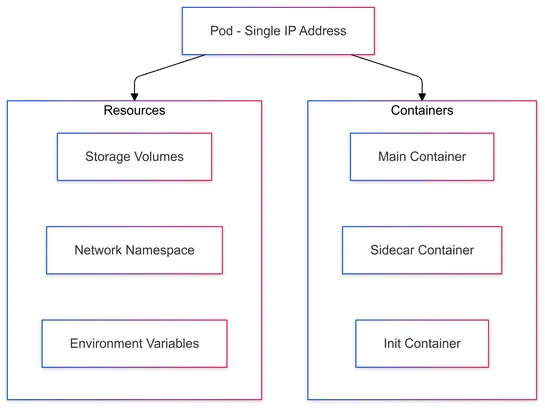
Explore the key differences between Kubernetes Pods and Nodes to better understand their roles in container orchestration.

pod
Link
@anjali shared a link, 1 year, 4 months ago
Customer Marketing Manager, Last9

Pod Exec in K8s: Advanced Exec Scenarios and Best Practices

Learn advanced kubectl exec techniques in Kubernetes, covering best practices for troubleshooting, security, and resource management.

kubectl-exec_-Commands--Examples--and-Best-Practices
Link
@anjali shared a link, 1 year, 4 months ago
Customer Marketing Manager, Last9

OpenMetrics vs OpenTelemetry: A Detailed Comparison

Discover the key differences between OpenMetrics and OpenTelemetry, from scope and use cases to adoption and flexibility, to make an informed choice.

otel
Link
@anjali shared a link, 1 year, 4 months ago
Customer Marketing Manager, Last9

5 Common Incident Severity Levels You Should Know

Learn about the 5 common incident severity levels and how they impact your response to system issues, ensuring faster resolutions.

incident
Link
@anjali shared a link, 1 year, 4 months ago
Customer Marketing Manager, Last9

What Are Syslog Levels and Why Should You Care?

Syslog levels help categorize log messages by severity, making it easier to monitor, troubleshoot, and prioritize system events.

logging
Link
@anjali shared a link, 1 year, 4 months ago
Customer Marketing Manager, Last9

TCP Monitoring Made Simple: Keep Your Network in Check

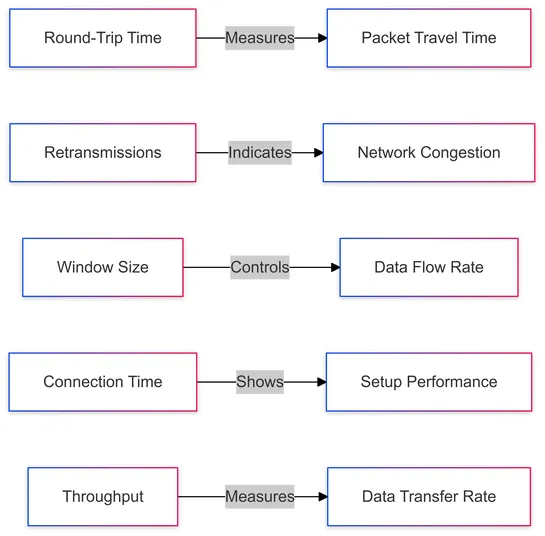
Learn how TCP monitoring keeps your network fast, reliable, and free from issues like latency, packet loss, and connection hiccups.

tcp
On the 1st of July 2017, the Indian government introduced the Goods and Services Tax (GST) to the general public. This tax replaced pre-existing taxes with a destination-based, multi-stage, indirect tax system. The GST applies to all eCommerce and Magento stores within India. The World Bank has stated that the GST is one of the most complex tax systems worldwide due to its intricate nature.

As the GST is bifurcated into multiple tax slabs, it has become more difficult to implement such a complex taxing system in Magento 2. Managing a multi-vendor marketplace entails dealing with numerous vendors who sell various products on your platform. 

This necessitates the computation of GST tax rates based on the product and its category, which can be intricate due to varying tax brackets. An automated system is needed to collect and accurately compute vendor tax rates.

The Magento 2 Multi-vendor Indian GST Extension, also called the Magento Multi-vendor GST Module by MageComp, confidently calculates GST for products sold through your Magento stores by vendors. The module fully complies with the Indian government's GST standards and prominently displays the vendor's GST number and summary in all Magento order documents.

Why choose MageComp’s Magento 2 Multi Vendor Indian GST Extension?

Allows admins to enable/disable the module for global, category, and product-specific configuration.
Orders that are placed with the GST module showcase a detailed bifurcation of tax rates in the order view, credit memos, invoices, new order emails and PDFs.
The GST module displays a detailed SGST and CGST tax bifurcation in the order details.
The module automatically calculates IGST, CGST and SGST based on the products added to the cart.

Benefits of Multi Vendor Indian GST for Admins

Allows admins to mention their GSTIN, CIN and PAN number in all order details.
Admins can import the product-specific GST via a CSV file.
Admins have the option to include or exclude GST tax rates from the product prices.
Admins can easily set their business origins and apply IGST (interstate Magento GST)
The module allows the admin to upload an image and a digital signature to display in invoice PDF.
Admins have the option to generate detailed GST reports based on orders and products.

Benefits for Vendors

Vendors are allowed to add their GST number to all invoices and other documents.
Vendors can set a GST rate from the backend grid while creating a product.
Vendors can also set a minimum order price to apply GST rates.

Benefits for Customers

Customers can enter the buyer’s GST number to signup.
Customers can update their buyer’s GST number any time they want from their account grid.