Join us

ContentUpdates and recent posts about Magento 2 Multi Vendor Indian GST Extension..
Link
@varbear shared a link, 1 week, 3 days ago
FAUN.dev()

When Code Becomes Cheap, What's Left?

Teams that use Claude Opus 4.6 for spec-driven development generate code at low cost, so they spend scarce developer time on review and QA. Developers create more value by judging code than by typing it... read more  

When Code Becomes Cheap, What's Left?
Link
@varbear shared a link, 1 week, 3 days ago
FAUN.dev()

I Did 11 Technical Interviews in 60 Days. Here Is the Pattern Nobody Tells You.

The key insight from the article is that at mid-to-senior backend levels, coding rounds matter least while judgment, communication, structure, and ability to defend decisions are critical. Focus on rehearsing key design, incident, and behavioral answer structures to succeed, not just LeetCode... read more  

Link
@varbear shared a link, 1 week, 3 days ago
FAUN.dev()

Design Patterns Are Dead. Long Live Design Patterns.

Design patterns were created for human comprehension, not machines, serving as a shared vocabulary to communicate complex ideas quickly, manage working memory, and standardize solutions. Even in the era of AI-generated code, design patterns are crucial for containing the limitations of AI models and.. read more  

Link
@varbear shared a link, 1 week, 3 days ago
FAUN.dev()

GitHub breach: The development ecosystem is in the hot seat

GitHub is reeling from an infrastructure breach by TeamPCP, highlighting the vulnerability of developer environments. Privileged access was achieved not through traditional perimeter exploitation, but by targeting trusted developer tools like IDE extensions. This incident serves as a stark reminder .. read more  

GitHub breach: The development ecosystem is in the hot seat
Link
@varbear shared a link, 1 week, 3 days ago
FAUN.dev()

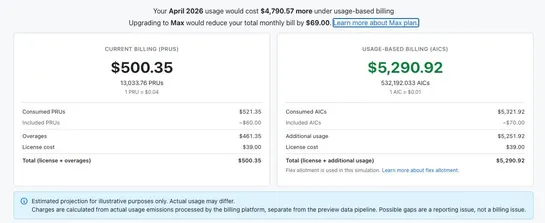
AI costs how much? GitHub Copilot users react to new usage-based pricing system.

GitHub began usage-based Copilot billing, and some developers say they used up the AI credits GitHub grants for a month in under 24 hours. Developers burn credits through "premium requests". GitHub counts prompts to advanced models, agent tasks, edits, and some Copilot features against the allowance.. read more  

AI costs how much? GitHub Copilot users react to new usage-based pricing system.
Link
@kaptain shared a link, 1 week, 3 days ago
FAUN.dev()

The Case for VM and Container Consolidation in 2026

With KubeVirt, enterprise platform teams can run VMs and containers on Kubernetes, so separate VM and container platforms remain a choice teams keep through habit... read more  

Link
@kaptain shared a link, 1 week, 3 days ago
FAUN.dev()

Buzzing Beyond Clouds: The Illustrated Children's Guide to Cilium

"Buzzing Beyond Clouds"continues the eBPF adventure with Obee as a Jedi bee, showcasing how Cilium powers networking, cluster mesh, observability, security, and service mesh in the Kubulous galaxy. Each chapter parallels Cilium's real-world functionalities, making complex concepts accessible to all .. read more  

Buzzing Beyond Clouds: The Illustrated Children's Guide to Cilium
Link
@kaptain shared a link, 1 week, 3 days ago
FAUN.dev()

Runtime Observability and Enforcement for Opaque AI Agents with eBPF: Beyond Sandboxes and Approvals

Platform teams should verify side effects at the OS layer, separate from tool approvals and sandbox rules, because engineers cannot treat AI agent harnesses as security boundaries... read more  

Runtime Observability and Enforcement for Opaque AI Agents with eBPF: Beyond Sandboxes and Approvals
Link
@kaptain shared a link, 1 week, 3 days ago
FAUN.dev()

Fixing Ghost Drops: How eBPF Rescued IPv6 Telemetry

In this walkthrough, you use eBPF to patch malformed flow-export packets before the host network stack drops them... read more  

Fixing Ghost Drops: How eBPF Rescued IPv6 Telemetry
Link
@kaptain shared a link, 1 week, 3 days ago
FAUN.dev()

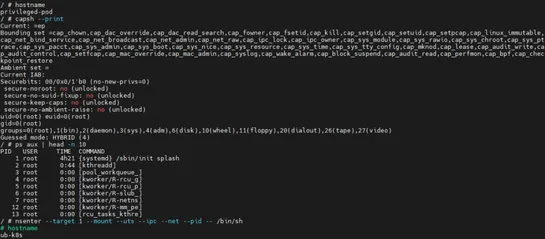
Containers on fire: from container escapes to supply chain attacks

Kaspersky researchers explain how attackers use a compromised container to take over aKubernetescluster or host, with misconfigured APIs and permissions driving most escapes... read more  

Containers on fire: from container escapes to supply chain attacks
On the 1st of July 2017, the Indian government introduced the Goods and Services Tax (GST) to the general public. This tax replaced pre-existing taxes with a destination-based, multi-stage, indirect tax system. The GST applies to all eCommerce and Magento stores within India. The World Bank has stated that the GST is one of the most complex tax systems worldwide due to its intricate nature.

As the GST is bifurcated into multiple tax slabs, it has become more difficult to implement such a complex taxing system in Magento 2. Managing a multi-vendor marketplace entails dealing with numerous vendors who sell various products on your platform. 

This necessitates the computation of GST tax rates based on the product and its category, which can be intricate due to varying tax brackets. An automated system is needed to collect and accurately compute vendor tax rates.

The Magento 2 Multi-vendor Indian GST Extension, also called the Magento Multi-vendor GST Module by MageComp, confidently calculates GST for products sold through your Magento stores by vendors. The module fully complies with the Indian government's GST standards and prominently displays the vendor's GST number and summary in all Magento order documents.

Why choose MageComp’s Magento 2 Multi Vendor Indian GST Extension?

Allows admins to enable/disable the module for global, category, and product-specific configuration.
Orders that are placed with the GST module showcase a detailed bifurcation of tax rates in the order view, credit memos, invoices, new order emails and PDFs.
The GST module displays a detailed SGST and CGST tax bifurcation in the order details.
The module automatically calculates IGST, CGST and SGST based on the products added to the cart.

Benefits of Multi Vendor Indian GST for Admins

Allows admins to mention their GSTIN, CIN and PAN number in all order details.
Admins can import the product-specific GST via a CSV file.
Admins have the option to include or exclude GST tax rates from the product prices.
Admins can easily set their business origins and apply IGST (interstate Magento GST)
The module allows the admin to upload an image and a digital signature to display in invoice PDF.
Admins have the option to generate detailed GST reports based on orders and products.

Benefits for Vendors

Vendors are allowed to add their GST number to all invoices and other documents.
Vendors can set a GST rate from the backend grid while creating a product.
Vendors can also set a minimum order price to apply GST rates.

Benefits for Customers

Customers can enter the buyer’s GST number to signup.
Customers can update their buyer’s GST number any time they want from their account grid.