Join us

ContentUpdates and recent posts about Magento 2 Multi Vendor Indian GST Extension..
Link
@varbear shared a link, 4 weeks ago
FAUN.dev()

Formatting an entire 25 million line codebase overnight: the rubyfmt story

Stripe's Developer Productivity team rolled out rubyfmt, a Rust-based zero-config Ruby autoformatter, across 25 million lines of Ruby in one Saturday morning in 2024, after the project had been in flight since 2018 as Fable Tales's personal OSS work. The hard parts were Ruby itself (no Ruby parser e.. read more  

Formatting an entire 25 million line codebase overnight: the rubyfmt story
Link
@varbear shared a link, 4 weeks ago
FAUN.dev()

Why I'm leaving GitHub for Forgejo

The Dutch Ministry of the Interior launched code.overheid.nl, a self-hosted Forgejo instance for government source code. This move was driven by the need to own and control the platform where code is published. Forgejo was chosen over GitLab for its open-source nature and alignment with the ministry.. read more  

Link
@varbear shared a link, 4 weeks ago
FAUN.dev()

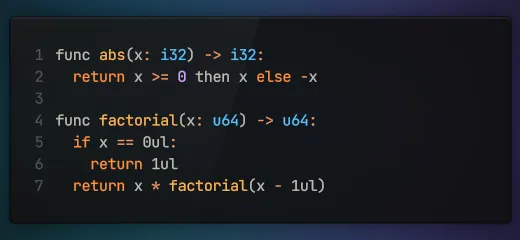
Making your own programming language is easier than you think (but also harder)

A game developer explains how he built a low-level modding language, including sandbox constraints, an AArch64 JIT, and a small C++ compiler... read more  

Making your own programming language is easier than you think (but also harder)
Link
@varbear shared a link, 4 weeks ago
FAUN.dev()

Replacing a 3 GB SQLite database with a 10 MB FST (finite state transducer) binary

Andrew Quinn shipped Taskusanakirja (tsk), a Finnish-English pocket dictionary with search-as-you-type, originally backed by a trie for ~400k base words plus a 3 GB SQLite FTS database to cover the 40-60M inflected forms that Finnish's agglutinative morphology demands. Reaching for BurntSushi'sIndex.. read more  

Link
@varbear shared a link, 4 weeks ago
FAUN.dev()

The Pulse: AI load breaks GitHub – why not other vendors?

GitHub leaders created the reliability problems through weak capacity planning. As AI-agent users drove heavier traffic, GitHub engineers found migration risk and engineering debt that teams had allowed to build up... read more  

The Pulse: AI load breaks GitHub – why not other vendors?
Link
@kaptain shared a link, 4 weeks ago
FAUN.dev()

Mirantis has entered into an agreement to be acquired by IREN

Mirantis has agreed to an acquisition by IREN. The companies have announced no customer-facing product changes... read more  

Mirantis has entered into an agreement to be acquired by IREN
Link
@kaptain shared a link, 4 weeks ago
FAUN.dev()

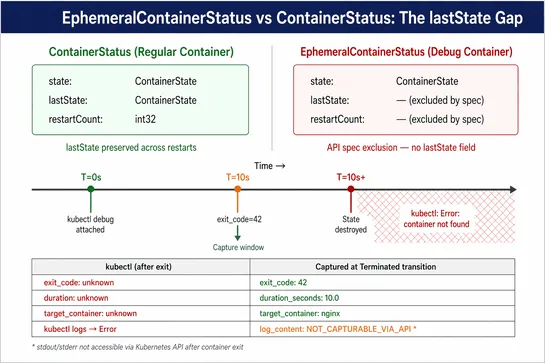
What kubectl debug doesn’t tell you: The silent evidence gap

kubectl debugsessions leave almost no forensic trace: by design,EphemeralContainerStatushas nolastStateorrestartCount, so the exit code, session duration, target container, and debugger logs disappear from the Kubernetes API the moment anything else updates the pod. That breaks incident handoffs (th.. read more  

What kubectl debug doesn’t tell you: The silent evidence gap
Link
@kaptain shared a link, 4 weeks ago
FAUN.dev()

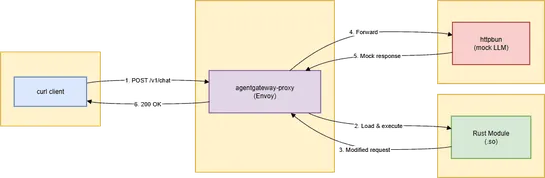
Extending AI gateways with Rust

Every gateway ships with a set of built-in policies. Authentication. Rate limiting. Request routing. Prompt guards. These cover most use cases. But what about the ones they don’t cover? What if you need to add a custom header based on a database lookup? What if you need to transform a request body i.. read more  

Extending AI gateways with Rust
Link
@kaptain shared a link, 4 weeks ago
FAUN.dev()

v1.36: Deprecation and removal of Service ExternalIPs

Kubernetes v1.36 deprecatesService.spec.externalIPsand starts the removal path, finally closing CVE-2020-8554, the trust-everyone hole the field has carried since the early days. The project has recommended disabling it via theDenyServiceExternalIPsadmission controller since v1.21, but SIG Network h.. read more  

Link
@kaptain shared a link, 4 weeks ago
FAUN.dev()

When AI agents become contributors: How KubeStellar reached 81% PR acceptance

The KubeStellar Console team learned that AI coding agents improve after engineers build deterministic feedback loops into the codebase. Engineers who grant more autonomy give agents more room to guess, with no new correction signal... read more  

When AI agents become contributors: How KubeStellar reached 81% PR acceptance
On the 1st of July 2017, the Indian government introduced the Goods and Services Tax (GST) to the general public. This tax replaced pre-existing taxes with a destination-based, multi-stage, indirect tax system. The GST applies to all eCommerce and Magento stores within India. The World Bank has stated that the GST is one of the most complex tax systems worldwide due to its intricate nature.

As the GST is bifurcated into multiple tax slabs, it has become more difficult to implement such a complex taxing system in Magento 2. Managing a multi-vendor marketplace entails dealing with numerous vendors who sell various products on your platform. 

This necessitates the computation of GST tax rates based on the product and its category, which can be intricate due to varying tax brackets. An automated system is needed to collect and accurately compute vendor tax rates.

The Magento 2 Multi-vendor Indian GST Extension, also called the Magento Multi-vendor GST Module by MageComp, confidently calculates GST for products sold through your Magento stores by vendors. The module fully complies with the Indian government's GST standards and prominently displays the vendor's GST number and summary in all Magento order documents.

Why choose MageComp’s Magento 2 Multi Vendor Indian GST Extension?

Allows admins to enable/disable the module for global, category, and product-specific configuration.
Orders that are placed with the GST module showcase a detailed bifurcation of tax rates in the order view, credit memos, invoices, new order emails and PDFs.
The GST module displays a detailed SGST and CGST tax bifurcation in the order details.
The module automatically calculates IGST, CGST and SGST based on the products added to the cart.

Benefits of Multi Vendor Indian GST for Admins

Allows admins to mention their GSTIN, CIN and PAN number in all order details.
Admins can import the product-specific GST via a CSV file.
Admins have the option to include or exclude GST tax rates from the product prices.
Admins can easily set their business origins and apply IGST (interstate Magento GST)
The module allows the admin to upload an image and a digital signature to display in invoice PDF.
Admins have the option to generate detailed GST reports based on orders and products.

Benefits for Vendors

Vendors are allowed to add their GST number to all invoices and other documents.
Vendors can set a GST rate from the backend grid while creating a product.
Vendors can also set a minimum order price to apply GST rates.

Benefits for Customers

Customers can enter the buyer’s GST number to signup.
Customers can update their buyer’s GST number any time they want from their account grid.