Join us

ContentUpdates and recent posts about Magento 2 Multi Vendor Indian GST Extension..
Link
@devopslinks shared a link, 5 months, 1 week ago
FAUN.dev()

A complete guide to HTTP caching

A fresh guide reframes HTTP caching as less of a tweak, more of an architectural move. It breaks caching into layers - browser memory, CDNs, reverse proxies, app stores - and shows how each one plays a part (or gets in the way). It gets granular with headers likeCache-Control,ETag, andVary, calling .. read more  

A complete guide to HTTP caching
Link
@devopslinks shared a link, 5 months, 1 week ago
FAUN.dev()

WTF is ... - AI-Native SAST?

AI-native SAST is replacing the “LLM as magic scanner” myth. Instead, the smart play is combining language models with real static analysis. That’s how teams are catching the gnarlier stuff - like business logic bugs - that usually slip through. The trick?Use static analysis to grab clean, relevant .. read more  

Link
@devopslinks shared a link, 5 months, 1 week ago
FAUN.dev()

Post-quantum (ML-DSA) code signing with AWS Private CA and AWS KMS

AWS Private CA now supportspost-quantum ML-DSA X.509 certificates. That means quantum-resistant roots of trust - for code signing, mTLS, and device auth. It's wired up with AWS KMS, so you can handle signing workflows usingML-DSA keysand verify them with standard tools like OpenSSL usingCMS detached.. read more  

Post-quantum (ML-DSA) code signing with AWS Private CA and AWS KMS
Link
@devopslinks shared a link, 5 months, 1 week ago
FAUN.dev()

Unlocking self-service LLM deployment with platform engineering

A new platform stack - Port+GitHub Actions+HCP Terraform** - is turning LLM deployment into a clean self-service flow. The result => predictable, governed pipelines that ship faster. Infra gets standardized. Provisioning? Handled through GitHub Actions. Policies? Baked in via HCP Terraform. Port tie.. read more  

Unlocking self-service LLM deployment with platform engineering
Link
@devopslinks shared a link, 5 months, 1 week ago
FAUN.dev()

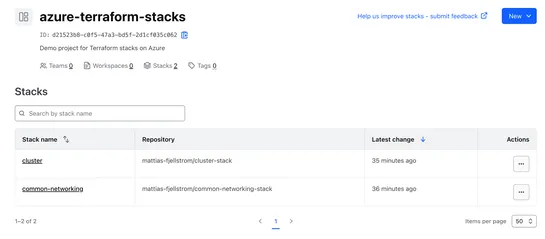
Terraform Stacks: A Deep-Dive for Azure Practitioners in Europe

Terraform Stacksjust hit GA onHCP Terraform, and they bring some real structure to the chaos. Think modular, declarative, and way less workspace spaghetti. Build reusablecomponents(a.k.a. modules), bundle them intodeployments, and wire up stacks usingpublish/consume patterns- complete with automated.. read more  

Terraform Stacks: A Deep-Dive for Azure Practitioners in Europe
News FAUN.dev() Team
@varbear shared an update, 5 months, 2 weeks ago
FAUN.dev()

New MCP Release v0.10.0 Supercharges AI-Assisted Web Development

chrome-devtools-mcp

Chrome DevTools MCP v0.10.0 unlocks deeper AI-powered debugging with new tools for DOM access, network request detection, page reload automation, performance insights, and snapshot saving.

Google Launches Chrome DevTools MCP Server Preview for AI-Driven Web Debugging
News FAUN.dev() Team
@varbear shared an update, 5 months, 2 weeks ago
FAUN.dev()

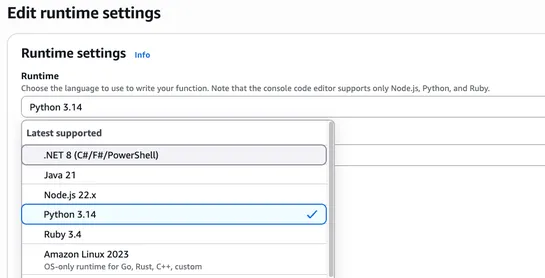
AWS Lambda Gets Python 3.14: Faster, Smarter, and More Serverless-Friendly

AWS Lambda

Python 3.14 is now available in AWS Lambda, enabling developers to leverage new Python features for serverless applications.

AWS Lambda Gets Python 3.14: Faster, Smarter, and More Serverless-Friendly
News FAUN.dev() Team
@kaptain shared an update, 5 months, 2 weeks ago
FAUN.dev()

The Most Absurd (and Brilliant) Kubernetes Cluster at KubeCon 2025

Kubernetes Talos Linux

Engineer Justin Garrison showcased a backpack-sized PETAFLOP Kubernetes cluster at KubeCon 2025, demonstrating localized AI capabilities without cloud reliance.

The Most Absurd (and Brilliant) Kubernetes Cluster at KubeCon 2025
News FAUN.dev() Team
@kaptain shared an update, 5 months, 2 weeks ago
FAUN.dev()

Google Breaks Kubernetes Limits Again: Inside the 130,000-Node GKE Cluster

#GKE  #Google ...  #Google  #AI  #kuberne... 
Google Kubernetes Engine (GKE) kueue

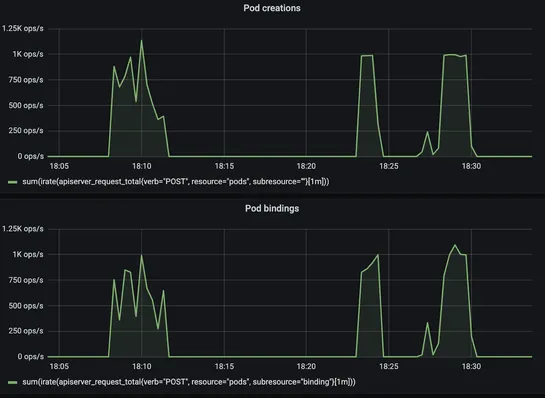
Google successfully operates a 130,000-node Kubernetes cluster to enhance GKE's scalability for AI workloads.

Control plane throughput: Sustaining up to 1,000 operations per second for both Pod creation and Pod binding during intense scheduling phases.
News FAUN.dev() Team
@devopslinks shared an update, 5 months, 2 weeks ago
FAUN.dev()

Inside Cloudflare's Worst Outage Since 2019: How a Single Config File Broke the Internet

Cloudflare Cloudflare Workers

A database permissions change led to a Cloudflare outage by creating an oversized feature file, causing network failures initially mistaken for a DDoS attack.

Inside Cloudflare's Worst Outage Since 2019: How a Single Config File Broke the Internet
On the 1st of July 2017, the Indian government introduced the Goods and Services Tax (GST) to the general public. This tax replaced pre-existing taxes with a destination-based, multi-stage, indirect tax system. The GST applies to all eCommerce and Magento stores within India. The World Bank has stated that the GST is one of the most complex tax systems worldwide due to its intricate nature.

As the GST is bifurcated into multiple tax slabs, it has become more difficult to implement such a complex taxing system in Magento 2. Managing a multi-vendor marketplace entails dealing with numerous vendors who sell various products on your platform. 

This necessitates the computation of GST tax rates based on the product and its category, which can be intricate due to varying tax brackets. An automated system is needed to collect and accurately compute vendor tax rates.

The Magento 2 Multi-vendor Indian GST Extension, also called the Magento Multi-vendor GST Module by MageComp, confidently calculates GST for products sold through your Magento stores by vendors. The module fully complies with the Indian government's GST standards and prominently displays the vendor's GST number and summary in all Magento order documents.

Why choose MageComp’s Magento 2 Multi Vendor Indian GST Extension?

Allows admins to enable/disable the module for global, category, and product-specific configuration.
Orders that are placed with the GST module showcase a detailed bifurcation of tax rates in the order view, credit memos, invoices, new order emails and PDFs.
The GST module displays a detailed SGST and CGST tax bifurcation in the order details.
The module automatically calculates IGST, CGST and SGST based on the products added to the cart.

Benefits of Multi Vendor Indian GST for Admins

Allows admins to mention their GSTIN, CIN and PAN number in all order details.
Admins can import the product-specific GST via a CSV file.
Admins have the option to include or exclude GST tax rates from the product prices.
Admins can easily set their business origins and apply IGST (interstate Magento GST)
The module allows the admin to upload an image and a digital signature to display in invoice PDF.
Admins have the option to generate detailed GST reports based on orders and products.

Benefits for Vendors

Vendors are allowed to add their GST number to all invoices and other documents.
Vendors can set a GST rate from the backend grid while creating a product.
Vendors can also set a minimum order price to apply GST rates.

Benefits for Customers

Customers can enter the buyer’s GST number to signup.
Customers can update their buyer’s GST number any time they want from their account grid.