Join us

ContentUpdates and recent posts about Pelagia..
Link
@varbear shared a link, 5 months ago
FAUN.dev()

Rust unit testing: file writing

To test file writes without hitting the disk, the author swaps in a closure that takes a file handle. That handle’s a test double, so after the code runs, you can crack it open and inspect what got written... read more  
Link
@varbear shared a link, 5 months ago
FAUN.dev()

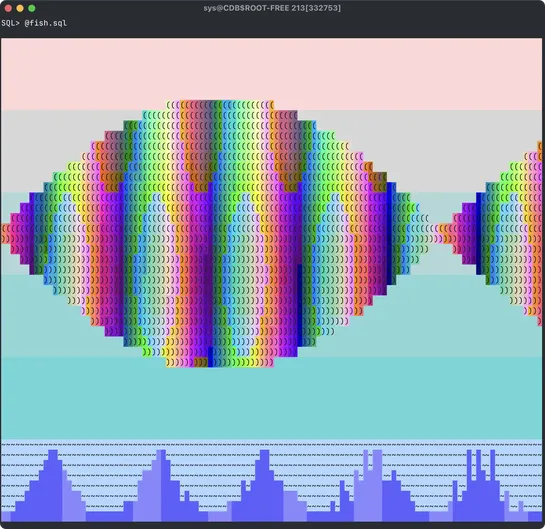
pqr.sql: Generate QR Codes with Pure SQL in PostgreSQL

A developer jammed out aQR code generator in pure SQL, just PostgreSQL, no extensions or libraries. One gnarly single-statement query. It even runs faster onPostgreSQL 17than on 16, thanks to engine tweaks... read more  

pqr.sql: Generate QR Codes with Pure SQL in PostgreSQL
Link
@varbear shared a link, 5 months ago
FAUN.dev()

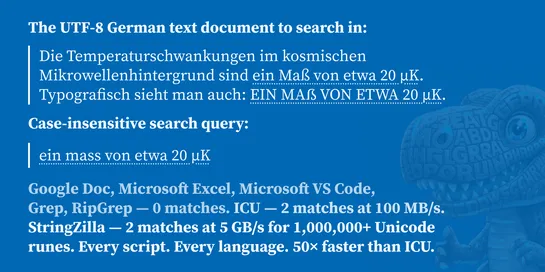
Full Unicode Search at 50× ICU Speed with AVX‑512

StringZilla v4.5drops a major speed bomb on Unicode text processing. Think10× faster tokenization and case folding. Up to150× faster for case-insensitive substring search. It leaves ICU and PCRE2 wheezing in the dust. Under the hood: SIMD all the way, AVX-512 on newer chips, plus script-aware SIMD k.. read more  

Full Unicode Search at 50× ICU Speed with AVX‑512
Link
@varbear shared a link, 5 months ago
FAUN.dev()

5 engineering dogmas it's time to retire

Dependencies are risky, especially in smaller companies - avoid unnecessary packages to prevent security incidents and maintain code simplicity. Feature flags can become overwhelming if abused, leading to complex codebases and false sense of security - use them wisely. Commenting code is a balance -.. read more  

Link
@kaptain shared a link, 5 months ago
FAUN.dev()

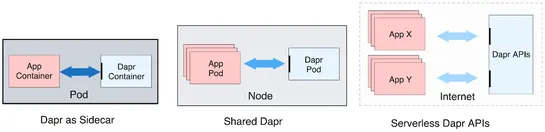
Dapr Deployment Models

Daprstarted as a humble Kubernetes sidecar. Now? It's a full-blownmulti-mode runtimethat runs wherever you need it,edge,VM, orserverless APIs. Diagrid’sCatalysttakes that further. It wraps Dapr in a fully managed API layer that’s detached from your app’s lifecycle. No infra lock-in, just token-based.. read more  

Dapr Deployment Models
Link
@kaptain shared a link, 5 months ago
FAUN.dev()

v1.35: Job Managed By Goes GA

In Kubernetes v1.35,spec.jobControllerManagedByhits GA. That means full handoff of Job reconciliation to external controllers is now official. It unlocks tricks likeMultiKueue, where a single management cluster fires off Jobs to multiple worker clusters, without losing sight of what’s running where... read more  

Link
@kaptain shared a link, 5 months ago
FAUN.dev()

Troubleshooting Cilium network policies: Four common pitfalls

Cilium’s Day 2 playbook covers the real work: dialing inL7 policy controls, tuningHubble observability, and wringing performance fromBPF. It's how you keep big Kubernetes clusters sane. The focus?Multi-tenant isolation,node-to-node encryption, and scaling cleanly withexternal etcdso the network does.. read more  

Link
@kaptain shared a link, 5 months ago
FAUN.dev()

93% Faster Next.js in (your) Kubernetes

Next.js brings advanced capabilities to developers out-of-the-box, but scaling it in your own environment can be challenging due to uneven load distribution and high latency. Watt addresses these issues by leveragingSO_REUSEPORTin the Linux kernel, resulting in significantly improved performance met.. read more  

Link
@kaptain shared a link, 5 months ago
FAUN.dev()

1.35: In-Place Pod Resize Graduates to Stable

In-Place Pod Resizehits GA in Kubernetes 1.35. You can now tweak CPU and memory on live pods without restarts. This is finally production-ready! What’s new since beta? It now handlesmemory limit decreases, doesprioritized resizes, and gives you betterobservabilitywith fresh Kubelet metrics and Pod e.. read more  

Link
@kaptain shared a link, 5 months ago
FAUN.dev()

Kubernetes OptimizationInPlace Pod Resizing,ZoneAware Routin

Halodoc cut EC2 costs and shaved latency by leaning into two Kubernetes tricks: In-place pod resizing(v1.33) lets them dial pod resources up or down on the fly, especially handy during off-peak hours. Zone-aware routingviatopology-aware hintskeeps inter-service traffic close to home (same AZ), skipp.. read more  

Kubernetes OptimizationInPlace Pod Resizing,ZoneAware Routin
Pelagia is a Kubernetes controller that provides all-in-one management for Ceph clusters installed by Rook. It delivers two main features:

Aggregates all Rook Custom Resources (CRs) into a single CephDeployment resource, simplifying the management of Ceph clusters.
Provides automated lifecycle management (LCM) of Rook Ceph OSD nodes for bare-metal clusters. Automated LCM is managed by the special CephOsdRemoveTask resource.

It is designed to simplify the management of Ceph clusters in Kubernetes installed by Rook.

Being solid Rook users, we had dozens of Rook CRs to manage. Thus, one day we decided to create a single resource that would aggregate all Rook CRs and deliver a smoother LCM experience. This is how Pelagia was born.

It supports almost all Rook CRs API, including CephCluster, CephBlockPool, CephFilesystem, CephObjectStore, and others, aggregating them into a single specification. We continuously work on improving Pelagia's API, adding new features, and enhancing existing ones.

Pelagia collects Ceph cluster state and all Rook CRs statuses into single CephDeploymentHealth CR. This resource highlights of Ceph cluster and Rook APIs issues, if any.

Another important thing we implemented in Pelagia is the automated lifecycle management of Rook Ceph OSD nodes for bare-metal clusters. This feature is delivered by the CephOsdRemoveTask resource, which automates the process of removing OSD disks and nodes from the cluster. We are using this feature in our everyday day-2 operations routine.