Join us

ContentUpdates and recent posts about Rancher..
Story
@laura_garcia shared a post, 8 months, 2 weeks ago
Software Developer, RELIANOID

🚀 RELIANOID is heading to Washington, DC!

From September 9–12, 2025, we’ll be at the 16th Billington CyberSecurity Summit — the premier government cybersecurity event gathering 2,500+ leaders and innovators to shape the future of AI, Zero Trust, cloud security, and critical infrastructure protection. Meet our team and discover how RELIANOID..

billington cybersecurity summit washington event
Story
@idjuric660 shared a post, 8 months, 2 weeks ago
Technical Content Writer, Mailtrap

Send emails with v0 and Mailtrap

Vercel Mailtrap.io

Learn how to integrate Mailtrap with your v0 application to send transactional emails and manage contacts without writing complex code.

Link
@faun shared a link, 8 months, 2 weeks ago
FAUN.dev()

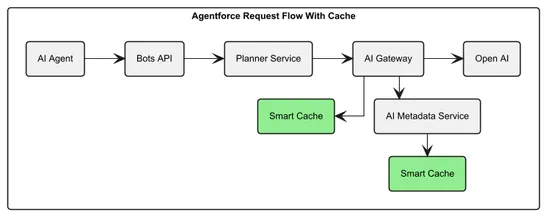
How Salesforce Delivers Reliable, Low-Latency AI Inference

Salesforce’s AI Metadata Service (AIMS) just got a serious speed boost. They rolled out a multi-layer cache—L1 on the client, L2 on the server—and cut inference latency from 400ms to under 1ms. That’s over 98% faster. But it’s not just about speed anymore. L2 keeps responses flowing even when the b.. read more  

How Salesforce Delivers Reliable, Low-Latency AI Inference
Link
@faun shared a link, 8 months, 2 weeks ago
FAUN.dev()

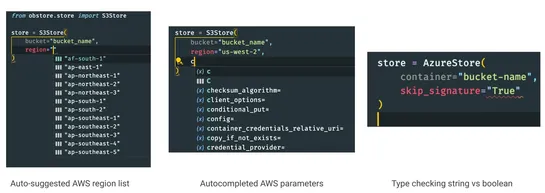
We Needed Better Cloud Storage for Python so We Built Obstore

Obstoreis a new stateless object store that skips fsspec-style caching and keeps its API tight and predictable across S3, GCS, and Azure. Sync and async both work. Under the hood? Fast, zero-copy Rust–Python interop. And on small concurrent async GETs, it reportedly crushes S3FS with up to9x better .. read more  

We Needed Better Cloud Storage for Python so We Built Obstore
Link
@faun shared a link, 8 months, 2 weeks ago
FAUN.dev()

From Python to Go: Why We Rewrote Our Ingest Pipeline at Telemetry Harbor

Telemetry Harbor tossed out Python FastAPI and rebuilt its ingest pipeline inGo. The payoff?10x faster, no more CPU freakouts, and strongerdata integritythanks to strict typing. PostgreSQL is now the slowest link in the chain—not the app—which is the kind of bottleneck you actuallywant. Means the s.. read more  

From Python to Go: Why We Rewrote Our Ingest Pipeline at Telemetry Harbor
Link
@faun shared a link, 8 months, 2 weeks ago
FAUN.dev()

The unexpected productivity boost of Rust

Lubeno's backend is100% Rust, providing strong safety guarantees for refactoring confidence. Rust's type checker catches async bugs, unlikeTypeScript. Rust excels in tracking lifetimes and borrowing rules.Zig, on the other hand, can be alarming with its compiler choices, such as overlooking typos in.. read more  

Link
@faun shared a link, 8 months, 2 weeks ago
FAUN.dev()

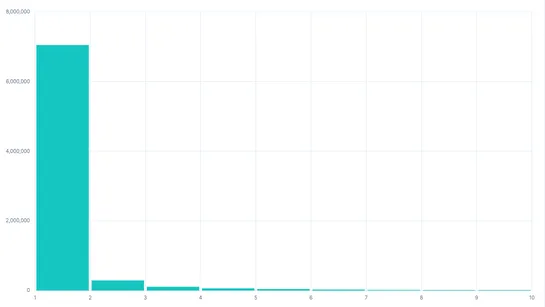
Open Source is one person

New data from ecosyste.ms drops a hard truth:almost 60% of 11.8M open source projects are solo acts. Even among NPM packages topping 1M monthly downloads, about half still rest on one pair of hands. The world runs on open source. But the scaffolding seems shakier than anyone wants to admit—millions.. read more  

Open Source is one person
Link
@faun shared a link, 8 months, 2 weeks ago
FAUN.dev()

Everything I know about good API design

This guide lays out the playbook for running tough, user-first APIs: no breaking changes, stick to familiar patterns, honor long-lived API keys, and make every write idempotent. It pushes cursor-based pagination for heavy data, rate limits that come with context, and optional fields to keep things .. read more  

Link
@faun shared a link, 8 months, 2 weeks ago
FAUN.dev()

Bash Explained: How the Most Popular Linux Shell Works

Bash isn't going anywhere. It's still the glue for CI/CD, cron jobs, and whatever janky monitoring stack someone duct-taped together at 2am. If automation runs the show, Bash is probably in the pit orchestra. It keeps things moving on Linux, old-school macOS (think pre-Catalina), and even WSL. Stil.. read more  

Link
@faun shared a link, 8 months, 2 weeks ago
FAUN.dev()

Go is still not good

Go’s been catching flak for years, and the hits keep coming: stiff variable scoping, no destructor patterns, clunky error handling, and brittle build directives. Critics point out how Go’s design often blocks best practices like RAII and makes devs contort logic just to clean up resources or manage .. read more  

Rancher is a Kubernetes management platform originally created by Rancher Labs and now maintained by SUSE. It is designed to simplify the deployment, operation, and security of Kubernetes clusters at scale, whether they run on public cloud, private cloud, on-premises data centers, or at the edge.

At its core, Rancher provides a centralized control plane that allows teams to create, import, and manage multiple Kubernetes clusters from a single UI and API. It supports a wide range of Kubernetes distributions, including upstream Kubernetes, RKE / RKE2, K3s, and managed cloud services like EKS, GKE, and AKS.

Rancher focuses heavily on enterprise needs such as multi-cluster management, role-based access control (RBAC), authentication integration (LDAP, Active Directory, OIDC), policy enforcement, and cluster lifecycle management. It enables platform teams to enforce consistent configurations and security policies while allowing application teams to self-serve Kubernetes resources safely.

The platform also integrates tightly with the broader cloud-native ecosystem. Rancher provides built-in support for Helm, monitoring (Prometheus, Grafana), logging, and GitOps workflows, and works well alongside tools like Argo CD, Fleet, and Longhorn for storage.

Rancher is often used as the foundation for platform engineering initiatives, helping organizations standardize Kubernetes operations, reduce operational complexity, and safely scale containerized workloads across environments.