Join us

ContentUpdates and recent posts about Rancher..
Link
@faun shared a link, 8 months, 3 weeks ago
FAUN.dev()

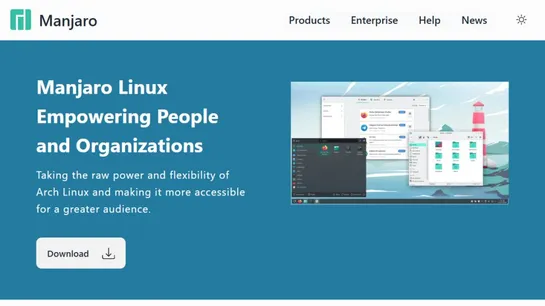
Best Linux distro for developers of 2025

TechRadar rounds up the best Linux distros for devs.Manjarodelivers Arch power without the pain.DebianandUbuntu LTShold steady for those who put uptime over edge.Fedorakeeps the new stuff flowing. Solusrolls with a tight curation hand—smooth updates, no chaos.Mocaccinoaims at Gentoo lovers who want.. read more  
Best Linux distro for developers of 2025
Link
@faun shared a link, 8 months, 3 weeks ago
FAUN.dev()

Using DuckDB in AWS Lambda

DuckDB is an open-source in-process SQL OLAP database management system optimized for analytical queries. It can efficiently handle large datasets in a memory-efficient manner, making it suitable for serverless architectures. A DuckDB Lambda layer can be used to run performant queries on remote data.. read more  

Link
@faun shared a link, 8 months, 3 weeks ago
FAUN.dev()

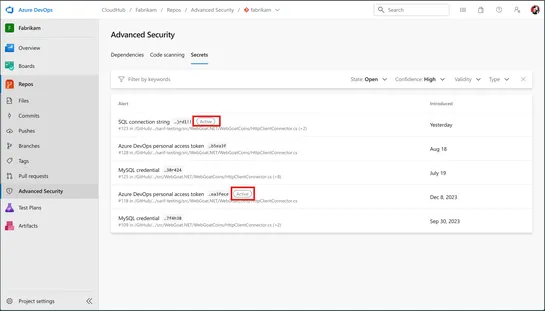
Hunting Living Secrets: Secret Validity Checks Arrive in GitHub Advanced Security for Azure DevOps

GitHub Advanced Security for Azure DevOps just got sharper: it now checks if leaked secrets are actuallyvalid. Secrets are flagged asActiveorUnknownby pinging providers in real time. No setup needed. It auto-kicks in for supported secret types. Why care?Because not every secret leak is an emergenc.. read more  

Hunting Living Secrets: Secret Validity Checks Arrive in GitHub Advanced Security for Azure DevOps
Link
@faun shared a link, 8 months, 3 weeks ago
FAUN.dev()

Migrating Airbnb’s JVM Monorepo to Bazel

Airbnb yanked tens of millions of lines of Java, Kotlin, and Scala out of Gradle and dropped them intoBazel. Why? Faster builds, reproducible results, and smoother dev workflows. They didn’t just swap tools—they rewired the whole thing. A customautomated build file generatornow slices up targets fi.. read more  

Migrating Airbnb’s JVM Monorepo to Bazel
Link
@faun shared a link, 8 months, 3 weeks ago
FAUN.dev()

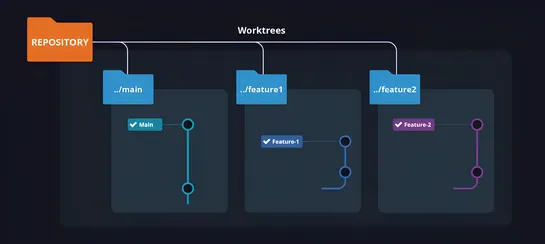
Worktrees: Git's best kept secret (and why you should use them)

Git worktrees have been around since 2015, but few devs use them like they could. They let you work on multiple branches at once—each in its own directory—without the usual stash-switch-stash-repeat dance. The real power move? Pair them with abare repo. That gives you a clean, central base where ea.. read more  

Worktrees: Git's best kept secret (and why you should use them)
Link
@faun shared a link, 8 months, 3 weeks ago
FAUN.dev()

Dynamo, DynamoDB, and Aurora DSQL

Marc Brooker breaks down the jump fromAmazon DynamotoDynamoDBandAurora DSQL, tracing how the guts of cloud databases have changed. It’s a story about dropping old trade-offs and picking up stronger guarantees. DynamoDB ditches the old hash-ring replication for multi-AZ replica sets backed by Paxos... read more  

Link
@faun shared a link, 8 months, 3 weeks ago
FAUN.dev()

Elon Musk's xAI Offers Up To $440K For Infrastructure Engineers, Calls It 'Adventure Of A Lifetime'

xAI wants infrastructure engineers to help scale itssupercomputing stack—and they're not playing small. They're after folks who knowKubernetes, can wrangleL4/L7 proxies, and speak fluentcloud networking. The goal: pushmulti-cluster production inferenceacross the Memphis supercluster (yeah, the one .. read more  

Elon Musk's xAI Offers Up To $440K For Infrastructure Engineers, Calls It 'Adventure Of A Lifetime'
Link
@faun shared a link, 8 months, 3 weeks ago
FAUN.dev()

OpenTelemetry configuration gotchas

Zero-code OpenTelemetry still feels like a myth. Python skips logs out of the box. Quarkus wires up tracing, nothing else. Micrometer Tracing (Spring Boot) ignores OTel env vars unless you’re on 3.5 or later. Every stack plays by its own rules... read more  

OpenTelemetry configuration gotchas
Link
@faun shared a link, 8 months, 3 weeks ago
FAUN.dev()

Kubernetes v1.34 Sneak Peek: A Game-Changer for the Kubernetes Expert’s Lifecycle

Kubernetes v1.34 lands August 2025 with a clear agenda: smarter scheduling, tighter control, fewer surprises. Dynamic Resource Allocationgoes stable, letting clusters actually reason about GPUs, FPGAs, and NICs. AI/ML and HPC jobs stop guessing and start requesting what they need. ServiceAccount t.. read more  

Link
@faun shared a link, 8 months, 3 weeks ago
FAUN.dev()

Kubernetes costs keep rising. Can AI bring relief?

88% of Kubernetes users say their total costs keep climbing—thanks to overprovisioned clusters, messy architectures, and hands-on ops. So now, 92% are bringing inAI-driven cost toolsto automate rightsizing and squeeze waste from sprawling workloads. System shift:AI isn't just sneaking into cluster .. read more  

Kubernetes costs keep rising. Can AI bring relief?
Rancher is a Kubernetes management platform originally created by Rancher Labs and now maintained by SUSE. It is designed to simplify the deployment, operation, and security of Kubernetes clusters at scale, whether they run on public cloud, private cloud, on-premises data centers, or at the edge.

At its core, Rancher provides a centralized control plane that allows teams to create, import, and manage multiple Kubernetes clusters from a single UI and API. It supports a wide range of Kubernetes distributions, including upstream Kubernetes, RKE / RKE2, K3s, and managed cloud services like EKS, GKE, and AKS.

Rancher focuses heavily on enterprise needs such as multi-cluster management, role-based access control (RBAC), authentication integration (LDAP, Active Directory, OIDC), policy enforcement, and cluster lifecycle management. It enables platform teams to enforce consistent configurations and security policies while allowing application teams to self-serve Kubernetes resources safely.

The platform also integrates tightly with the broader cloud-native ecosystem. Rancher provides built-in support for Helm, monitoring (Prometheus, Grafana), logging, and GitOps workflows, and works well alongside tools like Argo CD, Fleet, and Longhorn for storage.

Rancher is often used as the foundation for platform engineering initiatives, helping organizations standardize Kubernetes operations, reduce operational complexity, and safely scale containerized workloads across environments.