Join us

ContentUpdates and recent posts about Rust..
Link
@faun shared a link, 1 year, 2 months ago
FAUN.dev()

How to add Kubernetes-powered leader election to your Go apps

k8s.io/client-go/tools/leaderelectionturns any Kubernetes app into a leader with a snap of your fingers. But there's a catch—brace yourself for possible twin leaders. It's the Wild West of leadership where balance hangs by a thread... read more  

Link
@faun shared a link, 1 year, 2 months ago
FAUN.dev()

KubeCon Europe: How Kubernetes Handles 6G, LLMs and Deep Space

Kuberneteswrangles with the chaos of infrastructure stretching across continents, but the community's already crafting clever fixes... read more  

Link
@faun shared a link, 1 year, 2 months ago
FAUN.dev()

Cold-Starting LLMs on Kubernetes in Under 30 Seconds

RedesigningLLM cold start strategy sliced launch times from 10 minutes tounder 30 secondsby exploitingFUSEandobject storagefor on-demand GPU loading—a revelation for Kubernetes scaling... read more  

Cold-Starting LLMs on Kubernetes in Under 30 Seconds
Link
@faun shared a link, 1 year, 2 months ago
FAUN.dev()

The Next Evolution of DigitalOcean Kubernetes: Introducing Features that Unlock Superior Scalability for Growing Businesses

DigitalOceanjust cranked up the cluster game to a cool1,000nodes, injectedeBPF-based routingfor a performance boost, and rolled outManaged Ciliumto keep things rock steady. Scale orchestration? Now it's on rocket fuel... read more  

The Next Evolution of DigitalOcean Kubernetes: Introducing Features that Unlock Superior Scalability for Growing Businesses
Link
@faun shared a link, 1 year, 2 months ago
FAUN.dev()

Introducing kube-scheduler-simulator

kube-scheduler-simulatorlets you peek into the mind of Kubernetes’ scheduler. You can poke and prod at scheduling decisions without risking a real cluster meltdown. Add custom plugins like a pro, no sweat. Forget blindsiding surprises. The simulator mirrors production with eerie accuracy—sync resour.. read more  

Introducing kube-scheduler-simulator
Link
@faun shared a link, 1 year, 2 months ago
FAUN.dev()

CKA Prep: CKA Exam Overview and Preparation Strategy

CKA exam:Juggle up to 6 Kubernetes clusters like a pro. Command rolling updates, Ingress, and persistent storage with flair. Imperative commands? Your secret weapon to snatch victory... read more  

Link
@faun shared a link, 1 year, 2 months ago
FAUN.dev()

Google Cloud unveils AI-focused updates to Kubernetes Engine

Meet theCluster Director for GKE. This beast masters GPU/TPU clusters seamlessly, herding them with Kubernetes APIs like a rodeo star. Meanwhile, theGKE Inference Gatewayramps up AI model performance. It's like magic but real: Serving costs tumble by up to30%. Tail latency? Chopped by up to60%... read more  

Link
@faun shared a link, 1 year, 2 months ago
FAUN.dev()

Optimize Gemma 3 Inference: vLLM on GKE 🏎️💨

GKE Autopilot's GPUmeans business—AI inference tasks don’t stand a chance. Just two arguments and, bam, you’ve unleashed NVIDIA's beastly Gemma 3 27B model, which chugs a massive46.4GB VRAM. ⚡️ Meanwhile, vLLM squeezes the models with bf16 precision, though optimization requires wrestling with algor.. read more  

Optimize Gemma 3 Inference: vLLM on GKE 🏎️💨
Link
@faun shared a link, 1 year, 2 months ago
FAUN.dev()

Kubernetes 1.33 – What you need to know

Kubernetes 1.33 shakes things up with game-changing updates.LIST streaming encodingtrims down API Server memory like a chef with a sharp knife. Deliberate deletion orders lock down security tighter than a drum. And get this:in-place updatesfor Pod resources ditch those annoying restarts! Finally, us.. read more  

Kubernetes 1.33 – What you need to know
Link
@anjali shared a link, 1 year, 2 months ago
Customer Marketing Manager, Last9

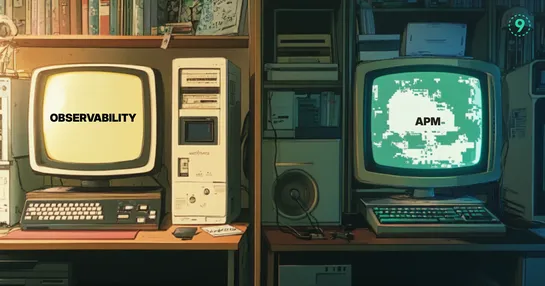
Observability vs APM: What’s the Real Difference?

Observability goes beyond APM—it's not just about metrics, it's about understanding why things break, not just that they did.

o11Y VS APM
Rust is a systems programming language originally developed at Mozilla and now stewarded by the Rust Foundation. It is designed to enable developers to build fast, reliable, and secure software by preventing entire classes of bugs at compile time. Rust achieves this through its ownership model, which enforces strict rules around memory access, lifetimes, and mutability, eliminating common issues such as null pointer dereferences, use-after-free errors, and data races.

Unlike traditional systems languages such as C and C++, Rust provides strong safety guarantees while maintaining low-level control and predictable performance. Its zero-cost abstractions allow developers to write expressive, high-level code that compiles down to efficient machine instructions. Rust’s type system and concurrency model make it especially well suited for multithreaded and security-critical software.

Rust is widely used across domains including operating systems, browsers, networking infrastructure, cryptography, blockchain, and embedded systems. It has also gained strong adoption in large-scale production environments due to its excellent tooling, package ecosystem (Cargo and crates.io), and emphasis on long-term maintainability. Today, Rust is recognized as a leading language for building safe, high-performance infrastructure software.