Join us

ContentUpdates and recent posts about Rust..
Link
@anjali shared a link, 4 months, 1 week ago
Customer Marketing Manager, Last9

OTel Updates: OpenTelemetry Proposes Changes to Stability, Releases, and Semantic Conventions

OpenTelemetry proposes stability changes: stable-by-default distributions, decoupled instrumentation, and epoch releases for production deployments.

otel_stability_update
Story
@laura_garcia shared a post, 4 months, 2 weeks ago
Software Developer, RELIANOID

deploy the RELIANOID Load Balancer Community Edition v7 on Azure using Terraform

🚀 New Technical Guide Available! You can now deploy the RELIANOID Load Balancer Community Edition v7 on Azure using Terraform in just a few minutes: ✔️ Install prerequisites (Terraform, Azure CLI, SSH keys) ✔️ Use the official Terraform module from the Registry ✔️ Automatically provision all Azure r..
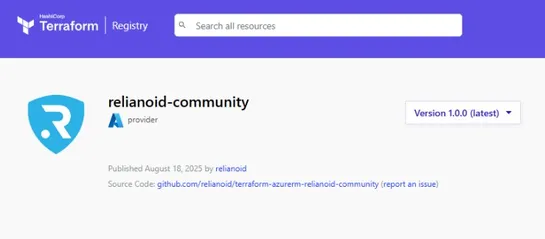
terraform_relianoid_community_azure_img2
 Activity
@tairascott gave 🐾 to Helm 4 or Nelm? What's the difference , 4 months, 2 weeks ago.
 Activity
@tairascott gave 🐾 to Hidden Correlations Traditional Monitoring Misses , 4 months, 2 weeks ago.
 Activity
Link
@anjali shared a link, 4 months, 2 weeks ago
Customer Marketing Manager, Last9

How to Track Down the Real Cause of Sudden Latency Spikes

Sudden latency spikes rarely have a single cause. This blog shows how to uncover the real source using traces, histograms, and modern debugging signals.

track_latency
Link
@anjali shared a link, 4 months, 2 weeks ago
Customer Marketing Manager, Last9

Hidden Correlations Traditional Monitoring Misses

Last9 is built to work with high-cardinality telemetry, and we’ve been covering it in detail through our series. This piece looks at a familiar pain: issues that only show up for a specific tenant or deployment. Why does that context disappear in most monitoring setups?

anamoly_detection
Story Trending
@shurup shared a post, 4 months, 2 weeks ago
@palark

Helm 4 or Nelm? What's the difference

Helm werf

Helm 4.0.0 brought several new features to its users, such as Server-Side Apply support and kstatus-based resource watching.Nelm, an alternative to Helm created in werf, a CNCF Sandbox project, has been offering these capabilities even before. Nelm has many more new features for Kubernetes deploymen..

Link
@anjali shared a link, 4 months, 2 weeks ago
Customer Marketing Manager, Last9

Which Observability Tool Helps with Visibility Without Overspend

A detailed look at observability platforms so you can choose tools that keep visibility high and costs steady as your systems scale.

go
Story
@laura_garcia shared a post, 4 months, 2 weeks ago
Software Developer, RELIANOID

🚀 RELIANOID at DevOpsDays Tel Aviv 2025

📅 December 11, 2025 • 📍 Tel Aviv, Israel What a week ahead! Our team is working full-throttle as we prepare to attend three major events in just a few days — and we’re thrilled to add DevOpsDays Tel Aviv to the list. We’ll be joining the community to share how RELIANOID helps DevOps and platform tea..

devopsdays telaviv relianoid
Rust is a systems programming language originally developed at Mozilla and now stewarded by the Rust Foundation. It is designed to enable developers to build fast, reliable, and secure software by preventing entire classes of bugs at compile time. Rust achieves this through its ownership model, which enforces strict rules around memory access, lifetimes, and mutability, eliminating common issues such as null pointer dereferences, use-after-free errors, and data races.

Unlike traditional systems languages such as C and C++, Rust provides strong safety guarantees while maintaining low-level control and predictable performance. Its zero-cost abstractions allow developers to write expressive, high-level code that compiles down to efficient machine instructions. Rust’s type system and concurrency model make it especially well suited for multithreaded and security-critical software.

Rust is widely used across domains including operating systems, browsers, networking infrastructure, cryptography, blockchain, and embedded systems. It has also gained strong adoption in large-scale production environments due to its excellent tooling, package ecosystem (Cargo and crates.io), and emphasis on long-term maintainability. Today, Rust is recognized as a leading language for building safe, high-performance infrastructure software.