Join us

ContentUpdates and recent posts about Slurm..
Link
@faun shared a link, 8 months, 1 week ago
FAUN.dev()

OpenAI eats jobs, then offers to help you find a new one

OpenAI just fired a shot across LinkedIn’s bow. Its new jobs platform—part ofOpenAI Academy—aims to certify AI skills, then plug users directly into hiring pipelines. Walmart's already on board. Market signal:OpenAI’s not just training people anymore. It's moving in on talent placement, pulling the .. read more  

OpenAI eats jobs, then offers to help you find a new one
Link
@faun shared a link, 8 months, 1 week ago
FAUN.dev()

AI Models Need a Virtual Machine

Microsoft and academic researchers want to give AI models a new kind of home: theAI Model Virtual Machine (MVM). Think of it like theJVM, but for LLMs—an interface layer that standardizes how models plug into host software. The MVM enforcessecurity,isolation, andtool-calling rules, while also unloc.. read more  

Link
@faun shared a link, 8 months, 1 week ago
FAUN.dev()

Cursor looks into selling your data for AI training

Anysphere—the team behind Cursor, the AI coding sidekick—is looking to license user behavior data to the big model labs: OpenAI, Anthropic, and the usual suspects. Why? Training costs are brutal, and this could ease the burn. Strategic Implication:Selling real developer telemetry to model competito.. read more  

Link
@faun shared a link, 8 months, 1 week ago
FAUN.dev()

In a first, Google has released data on how much energy an AI prompt uses

Google dropped detailed stats on energy, water, and carbon use per query for its Gemini models. Median energy:0.24 Wh, with TPUs eating58%of that. They’re claiming a33× efficiency boostin the last year—credit goes to model and software tuning. System shift:A public hyperscaler posting this means th.. read more  

In a first, Google has released data on how much energy an AI prompt uses
Link
@faun shared a link, 8 months, 1 week ago
FAUN.dev()

Writing effective tools for AI agents—using AI agents

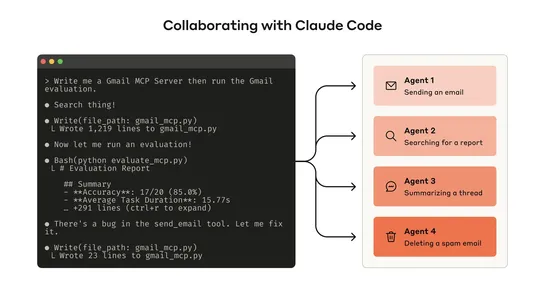
Anthropic’s sharpening the blueprint for building tools that play nice withLLM agents. TheirModel Context Protocol (MCP)leans hard into three pillars: test in loops, design for humans, format like context matters—because it does. They co-develop tools with agents like Claude Code. That means protot.. read more  

Writing effective tools for AI agents—using AI agents
Link
@faun shared a link, 8 months, 1 week ago
FAUN.dev()

Building Etsy Buyer Profiles with LLMs

Every day, nearly 90M buyers look for unique items out of over 100 million listings on the Etsy. The platform uses large language models to create detailed buyer profiles anonymously capturing their interests. Adjustments in data retrieval and processing have reduced the time and cost of generating .. read more  

Link
@faun shared a link, 8 months, 1 week ago
FAUN.dev()

OpenAI announces new mentorship program for budding tech founders

OpenAI introduced a new program called "OpenAI Grove" for early tech entrepreneurs to build with AI. The program is aimed at individuals in the pre-idea to pre-seed stage and offers mentoring, access to tools and models, and in-person workshops. Grove's first cohort will run from Oct. 20 to Nov. 21,.. read more  

Link
@faun shared a link, 8 months, 1 week ago
FAUN.dev()

Zero-Click Remote Code Execution: Exploiting MCP & Agentic IDEs

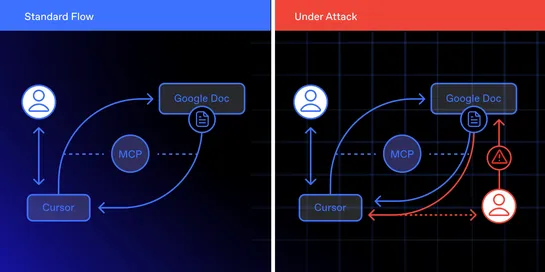
A zero-click exploit is making the rounds—nasty stuff targeting agentic IDEs likeCursor. The trick? Slip a malicious Google Doc into the system. If MCP integration and allow-listedPython executionare on, the document gets auto-pulled, parsed, and runs code. No clicks. No prompts. Justremote code exe.. read more  

Zero-Click Remote Code Execution: Exploiting MCP & Agentic IDEs
Link
@faun shared a link, 8 months, 1 week ago
FAUN.dev()

OpenAI reorganizes research team behind ChatGPT's personality

OpenAI just folded itsModel Behavior team—the crew behind AI personality design and anti-sycophant training—into thePost Training group. Behavior tuning now lives inside the same house as model refinement. Joanne Jang, who led Model Behavior, now runsOAI Labs, a fresh research unit digging intopost.. read more  

OpenAI reorganizes research team behind ChatGPT's personality
Link
@faun shared a link, 8 months, 1 week ago
FAUN.dev()

24 Best Command Line Performance Monitoring Tools for Linux

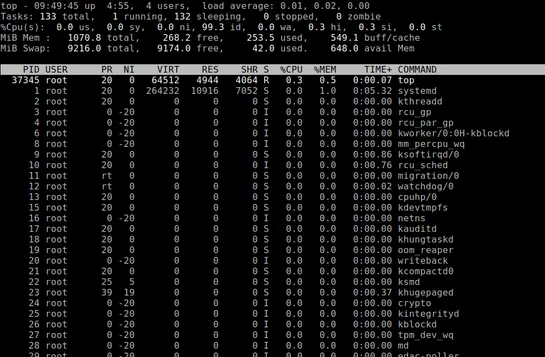
A fresh look at Linux monitoring tools shows the classics still hold—but the visual crowd’s moving in. Old-school command-liners liketopandvmstatremain go-to’s for quick reads. But picks likeNetdata,btop, andMonitbring dashboards, colors, and actual UX. Tools likeiftop,Nmon, andSuricatastretch deep.. read more  

24 Best Command Line Performance Monitoring Tools for Linux
Slurm Workload Manager is an open-source, fault-tolerant, and highly scalable cluster management and scheduling system widely used in high-performance computing (HPC). Designed to operate without kernel modifications, Slurm coordinates thousands of compute nodes by allocating resources, launching and monitoring jobs, and managing contention through its flexible scheduling queue.

At its core, Slurm uses a centralized controller (slurmctld) to track cluster state and assign work, while lightweight daemons (slurmd) on each node execute tasks and communicate hierarchically for fault tolerance. Optional components like slurmdbd and slurmrestd extend Slurm with accounting and REST APIs. A rich set of commands—such as srun, squeue, scancel, and sinfo—gives users and administrators full visibility and control.

Slurm’s modular plugin architecture supports nearly every aspect of cluster operation, including authentication, MPI integration, container runtimes, resource limits, energy accounting, topology-aware scheduling, preemption, and GPU management via Generic Resources (GRES). Nodes are organized into partitions, enabling sophisticated policies for job size, priority, fairness, oversubscription, reservation, and resource exclusivity.

Widely adopted across academia, research labs, and enterprise HPC environments, Slurm serves as the backbone for many of the world’s top supercomputers, offering a battle-tested, flexible, and highly configurable framework for large-scale distributed computing.