Join us

ContentUpdates and recent posts about Slurm..
Link
@faun shared a link, 10 months, 1 week ago
FAUN.dev()

Understand CPU Branch Instructions Better

Branch prediction matters. Why? About a quarter of instructions are branches, and modern CPUs nail an accuracyabove 90%. Yet, those often-pesky branches can choke CPUs, stalling instruction flow. So, take a wrench to yourif-else logic. Trim indirect branches whenever you can—your CPU will thank you... read more  

Link
@faun shared a link, 10 months, 1 week ago
FAUN.dev()

Exhausted man defeats AI model in world coding championship

A weary-eyed Polish coder,Przemysław Dębiak, bested an OpenAI model in a grueling 10-hour face-off, reminiscent ofJohn Henry’sepic duel against the steam-powered behemoth... read more  

Exhausted man defeats AI model in world coding championship
Link
@faun shared a link, 10 months, 1 week ago
FAUN.dev()

Parsing 1 Billion Rows in Bun/Typescript Under 10 Seconds

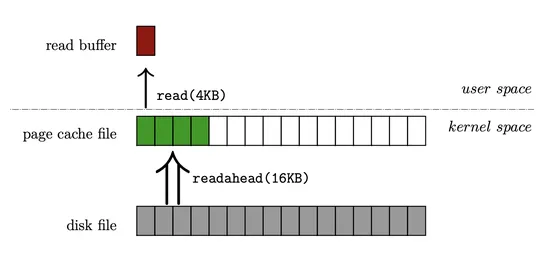
Buntries to swallow files over 4GB and promptly chokes. The culprit? ItsBuffercaps out at 4GB. The fix? Slice files into chunks under 4GB but keep the buffer lean, no more than 128KB, to keep things zippy. Pull out the big guns—workers. This move fires up all CPU cores, slashing processing time from.. read more  

Parsing 1 Billion Rows in Bun/Typescript Under 10 Seconds
Link
@faun shared a link, 10 months, 1 week ago
FAUN.dev()

Lessons from scaling PostgreSQL queues to 100K events

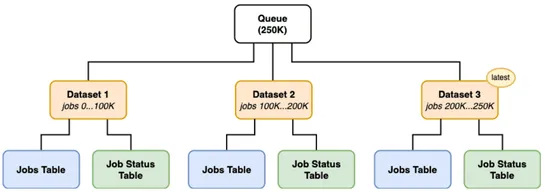
PostgreSQLjuggles 100,000 events per second. Just needs some index wizardry and query twerking. The problem? Table bloat and Write Amplification. Gross. Enter the mightyCOPY—it bulldozes through bulk data, politely ignoring the usualInsertdrag. And those recursiveCTEs? They pull off loose index scan.. read more  

Lessons from scaling PostgreSQL queues to 100K events
Link
@faun shared a link, 10 months, 1 week ago
FAUN.dev()

AV1 @ Scale: Film Grain Synthesis, The Awakening

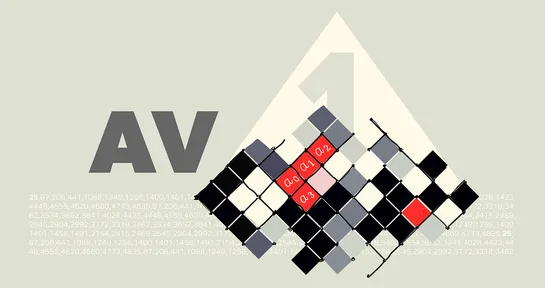
AV1 Film Grain Synthesis (FGS)tricks the eye by imitating film grain after compression. Cuts bitrates like a ninja and keeps the artistry alive. Models grasp grain's pattern and punch, ensuring sharp visuals on bandwidth-challenged gadgets. Grainy magic, delivered neatly!.. read more  

AV1 @ Scale: Film Grain Synthesis, The Awakening
Link
@faun shared a link, 10 months, 1 week ago
FAUN.dev()

Death by a thousand slops

By 2025,AI slopwill infect20%of curl's security submissions. Meanwhile, a mere5%reveal actual threats. Cutting the$90,000bounty might fend off the slopsters, but it'll scare away the real wizards, too... read more  

Death by a thousand slops
Link
@faun shared a link, 10 months, 1 week ago
FAUN.dev()

Scalability is not performance

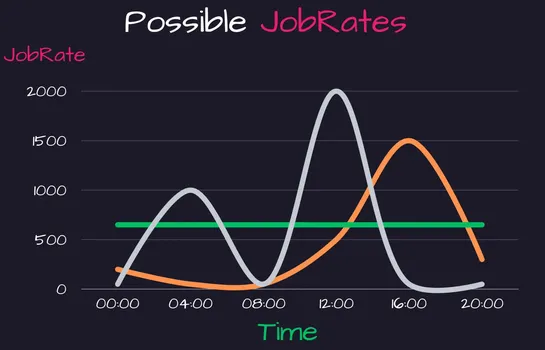
Boostingscalabilityin distributed systems isn't just a mad dash for speed. It's about morphing resources to tackle shifting demand. Nail scalability, and you balance infrastructure costs with job handling efficiency, all while juggling resource utilization at a sweet spot around 0.5. Crave a drama-f.. read more  

Scalability is not performance
Link
@faun shared a link, 10 months, 1 week ago
FAUN.dev()

The Micro-Frontend Architecture Handbook

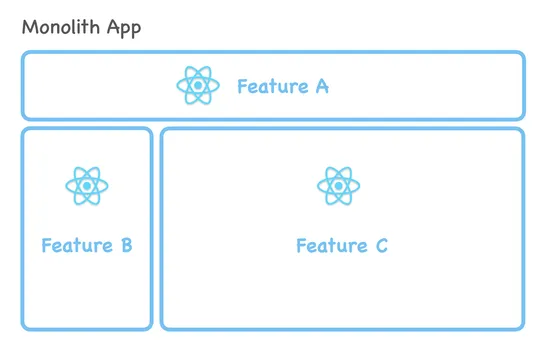
iframes: Secure and isolated, but clunky as dial-up. Best for legacy cleanup missions.Web Components: Native and framework-agnostic, perfect for reusable UI with Shadow DOM flair.single-spa: Juggles multiple SPAs with the finesse of a circus, though it gets chatty.Module Federation: Real-time module.. read more  

The Micro-Frontend Architecture Handbook
Link
@faun shared a link, 10 months, 1 week ago
FAUN.dev()

How Go 1.24's Swiss Tables saved us hundreds of gigabytes

Uncovered a memory regression inGo 1.24. Pored over memory patterns in countless pods like a detective with too much caffeine. Pinpointed sneaky allocation blunders... read more  

Link
@faun shared a link, 10 months, 1 week ago
FAUN.dev()

Rethinking CLI interfaces for AI

LLMs fumble with CLI tools because they lack context. Tweaking APIs and tools for LLM savvy could cut mistakes and boost context efficiency.Smarter interfaces might keep them from getting stuck in infinite loops or bungling directories, slashing tool calls and making automation crisp and tidy... read more  

Rethinking CLI interfaces for AI
Slurm Workload Manager is an open-source, fault-tolerant, and highly scalable cluster management and scheduling system widely used in high-performance computing (HPC). Designed to operate without kernel modifications, Slurm coordinates thousands of compute nodes by allocating resources, launching and monitoring jobs, and managing contention through its flexible scheduling queue.

At its core, Slurm uses a centralized controller (slurmctld) to track cluster state and assign work, while lightweight daemons (slurmd) on each node execute tasks and communicate hierarchically for fault tolerance. Optional components like slurmdbd and slurmrestd extend Slurm with accounting and REST APIs. A rich set of commands—such as srun, squeue, scancel, and sinfo—gives users and administrators full visibility and control.

Slurm’s modular plugin architecture supports nearly every aspect of cluster operation, including authentication, MPI integration, container runtimes, resource limits, energy accounting, topology-aware scheduling, preemption, and GPU management via Generic Resources (GRES). Nodes are organized into partitions, enabling sophisticated policies for job size, priority, fairness, oversubscription, reservation, and resource exclusivity.

Widely adopted across academia, research labs, and enterprise HPC environments, Slurm serves as the backbone for many of the world’s top supercomputers, offering a battle-tested, flexible, and highly configurable framework for large-scale distributed computing.