Join us

ContentUpdates and recent posts about Slurm..
Link
@faun shared a link, 1 year, 1 month ago
FAUN.dev()

Recyling a OnePlus 6T into a Kubernetes Node

Connected a 7-year-old OnePlus 6T as a Kubernetes node in my homelab—tagged on "8" cores, 6GB RAM—but postmarketOS kernel didn’t have nftables' numgen!Wrestled with manual kernel compilation and untangled DNS snafus, but now the project's chugging along mighty fine... read more  

Recyling a OnePlus 6T into a Kubernetes Node
Link
@faun shared a link, 1 year, 1 month ago
FAUN.dev()

Headlamp Project to Provide Graphical User Interface for Kubernetes

Microsoft'sHeadlamp—now part of theCNCF family—wants to shred Kubernetes' intimidating reputation. Think Windows, but for clusters. Their plan? Hook 10 million fresh recruits with their slickGUI. Here's the kicker: 61% of workloads already bow to Kubernetes, andAI/MLworkloads rule 56% of them. Who k.. read more  

Headlamp Project to Provide Graphical User Interface for Kubernetes
Link
@faun shared a link, 1 year, 1 month ago
FAUN.dev()

Automated Testing for Terraform, Docker, Packer, Kubernetes, and More

Automated tests crush infrastructure anxiety. Use tools likeTerratestto deploy, validate, and clean up—all without a stealth deployment... read more  

Automated Testing for Terraform, Docker, Packer, Kubernetes, and More
Link
@faun shared a link, 1 year, 1 month ago
FAUN.dev()

Running Docker Containers on Kubernetes Without a Container Runtime Using WasmEdge

WasmEdgedoesn't just compete with old-school OCI runtimes—it obliterates them with lightning-fast startups. It takes a chainsaw to resource waste and security headaches, thanks to its ironclad sandboxing. Its cross-platform magic dances acrossx86, ARM, and RISC-Vwith zero configuration drama. A drea.. read more  

Link
@faun shared a link, 1 year, 1 month ago
FAUN.dev()

Introducing kro: Kube Resource Orchestrator

TheKube Resource Orchestrator (kro)dreams big by letting you turn complex Kubernetes APIs into elegant, singleResourceGroupCRDs. Think of it as Kubernetes without the migraines—dependencies and configurations quietly managed in the background. An AWS experiment still cooking, it's not quite ready fo.. read more  

Introducing kro: Kube Resource Orchestrator
Link
@faun shared a link, 1 year, 1 month ago
FAUN.dev()

How autoscaling took down my application..!!

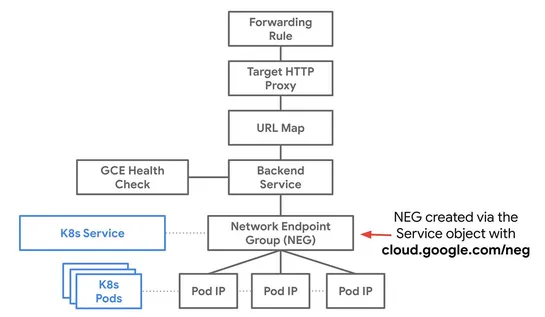
A glitch in the autoscaling settings skewed the NEGs, cramming them into a single AZ. Boom. Next thing you know, pods flounder and the app goes belly-up... read more  

How autoscaling took down my application..!!
Link
@faun shared a link, 1 year, 1 month ago
FAUN.dev()

This Open Source Tool Lets You Build Your Own LMS on Kubernetes

Canvas LMS + Kubernetes:DeployKomposeto morph Docker configs into sleekKubernetesresources. Dive deep into LTI 1.3's superior integration.Instructure's hosted instances miss out on this magic trick. Self-host to unlock the full experience... read more  

Link
@faun shared a link, 1 year, 1 month ago
FAUN.dev()

Platformless: How Choreo Built a Secure Kubernetes Platform with GitOps

Choreo by WSO2dreams big, plotting to eclipse Kubernetes. It's not just any platform; it's anenterprise-grade Internal Developer Platformwrapped in an elegant UI. Think of it as a tech ballerina effortlessly twirling around more than 20 CNCF tools. The goal? Make code deployment child's play while b.. read more  

Story
@viktoriiagolovtseva shared a post, 1 year, 1 month ago

How to Calculate Productivity in Jira: A Comprehensive Guide

Struggling to measure your team’s performance in Jira? Discover how to turn raw data into actionable productivity insights!

Screenshot 2025-04-04 at 14.39.16
Link
@anjali shared a link, 1 year, 1 month ago
Customer Marketing Manager, Last9

The Role of Log Shippers in Your Stack

Log shippers quietly move logs to where they’re needed—making debugging, monitoring, and observability possible without the chaos.

log_shipper
Slurm Workload Manager is an open-source, fault-tolerant, and highly scalable cluster management and scheduling system widely used in high-performance computing (HPC). Designed to operate without kernel modifications, Slurm coordinates thousands of compute nodes by allocating resources, launching and monitoring jobs, and managing contention through its flexible scheduling queue.

At its core, Slurm uses a centralized controller (slurmctld) to track cluster state and assign work, while lightweight daemons (slurmd) on each node execute tasks and communicate hierarchically for fault tolerance. Optional components like slurmdbd and slurmrestd extend Slurm with accounting and REST APIs. A rich set of commands—such as srun, squeue, scancel, and sinfo—gives users and administrators full visibility and control.

Slurm’s modular plugin architecture supports nearly every aspect of cluster operation, including authentication, MPI integration, container runtimes, resource limits, energy accounting, topology-aware scheduling, preemption, and GPU management via Generic Resources (GRES). Nodes are organized into partitions, enabling sophisticated policies for job size, priority, fairness, oversubscription, reservation, and resource exclusivity.

Widely adopted across academia, research labs, and enterprise HPC environments, Slurm serves as the backbone for many of the world’s top supercomputers, offering a battle-tested, flexible, and highly configurable framework for large-scale distributed computing.